

By continuing to browser our site and use the services you agree to our use of cookies, Privacy Policy and Terms of Use. You can change your cookie settings through your browser.
I agree


Recognized by the Food and Agriculture Organization (FAO) of the United Nations as a "21st century fish”, tilapia has the advantage of providing people with high-quality protein at an affordable price, which is identified as an animal protein equally as important as chicken. For China, its huge export volume also makes it an "international fish." With roughly 28% coming from China, worldwide annual tilapia production is approximately seven million tons.
Optimistic about Hainan’s climactic conditions and the opportunities available in Lin’gao, Norwegian citizen Yuan Wen'er came back to China 19 years ago. With offices in the province’s capital city of Haikou, his company, Progift Aqua-Tech Co., Ltd., continues up till now with maintaining fish farms in Ma’niao Village and other places in Bohou Town. With annual production value in excess of 100 million yuan (approx. $13.7 million) —and accounting for 15% of the national market for tilapia fry and fingerlings—Progift exports an incredible one billion healthy tilapia fry per year.
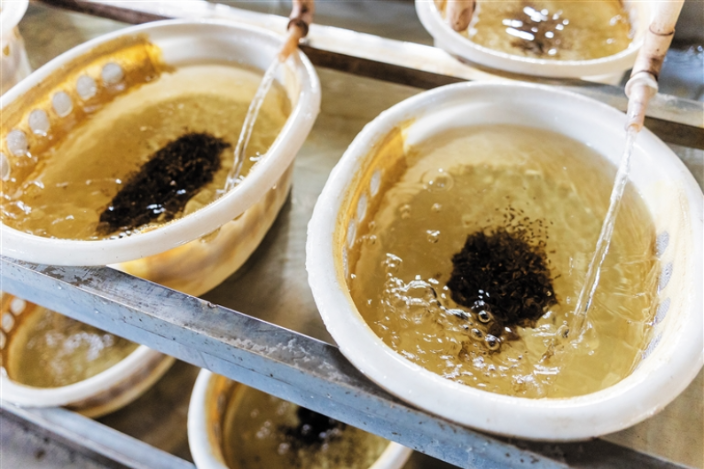
Tilapia fry. (Photo: New Hainan App)
“Established 19 years ago, our company has already cultivated 19 generations of tilapia.” At Progift’s Bohou Town Base in Ma’niao Village, breeding manager Chen Jiahai is busily implanting cylindrical microchips into members of the company’s 19th generation of tilapia.Once he's done, all someone will need to do is run a scanner over a fish and immediately get a dataset including the fish's weight, age, and pedigree.
According to Mr. Chen, each of these microchips costs over 20 yuan ($2.7). However, the outlaid cost doesn’t stop him and his colleagues from implanting them into tens of thousands of fish. Via the information these chips provide, they can quickly and accurately grasp important information about their stock.
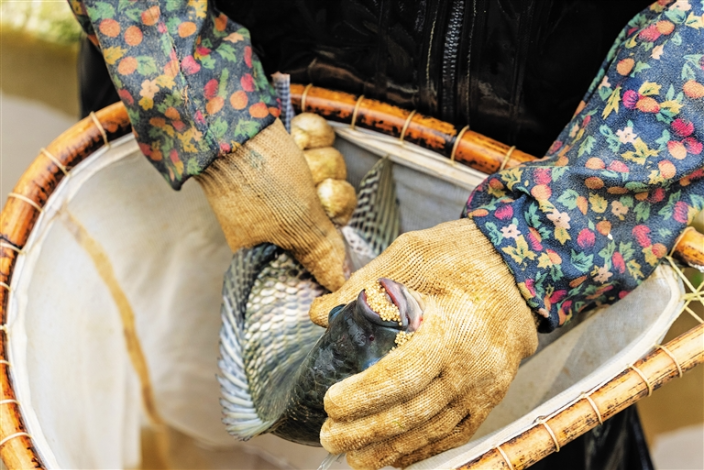
Worker artificially removing fertilized eggs from an adult tilapia. (Photo: New Hainan App)
This generation of tilapia is made up of a total of 150 different lineages. The lineage that grows the fastest and has the highest survival rate is the genetic "winner” that will proceed to the next round of screening and breeding. Repeating this process over and over again over the past 19 years has not only allowed Progift to choose the best of the best but has also allowed them to establish huge tilapia germplasm and gene banks.
Yuan's company has—in order to better understand tilapia— established an international scientific research team covering fish nutrition, animal genetics and breeding, and aquaculture-related diseases and their prevention. "We want to avoid problems such as inbreeding and breed degradation," he said, "therefore scientific breeding is critically important."
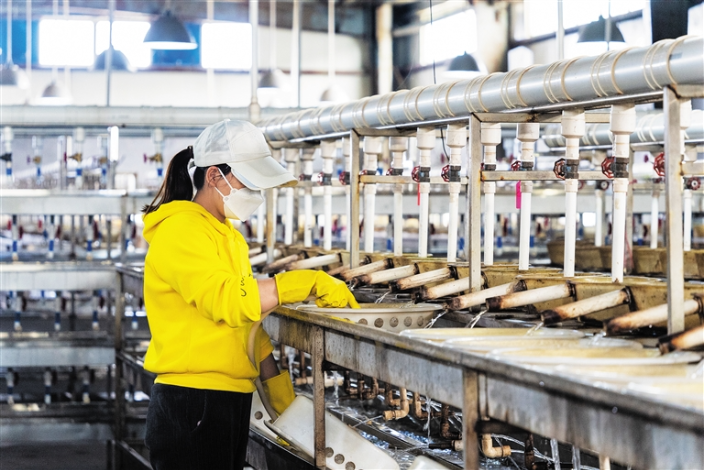
Workers checking tilapia fry’s hatching status. (Photo: New Hainan App)
Do tilapia have senses of smell and vision? What's their favorite color? After conducting vast amounts of basic research, Progift has not only come up with answers to these questions, they’ve even published four tilapia-related articles in the field's top international journal - Aquaculture .
As a profit-oriented enterprise, no one wants to lose money for 14 consecutive years. Why, then, did Progift insist on spending so much money on scientific research?
According to Yuan, scientific research is a long-term investment. "It is precisely because Norway has been studying salmon for more than 50 years that they had a deep enough understanding of the fish to create their world-famous salmon industry." Inspired by Norway’s success with salmon, he is determined to be equally successful with tilapia.
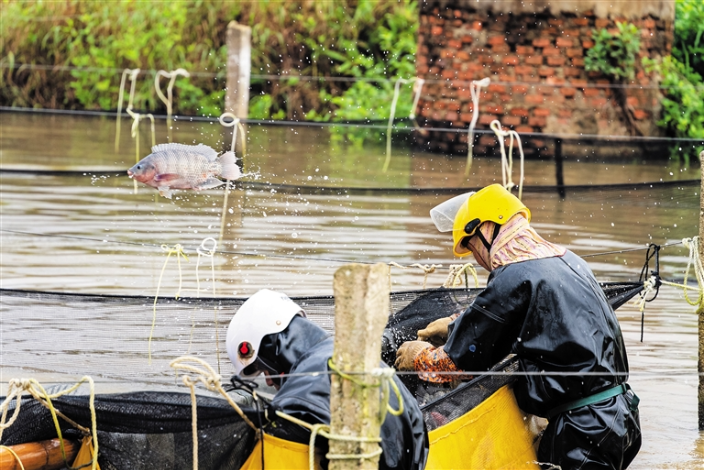
Year after year, gradually improving the quality of tilapia has been paying off for Progift. (Photo: New Hainan App)
As their scientific research continues, Progift is also building a new tilapia breeding facility at their base in Lin’gao. "By using new methods such as factory-based recirculating aquaculture systems, we hope to explore a more intensive and sustainable standardized farming model," Yuan said.
FTP Expert Talks | Xiaodong Lee, Vice President of the Internet Society of China and Founder of the Fuxi Institution: Hainan is the "Nebula" of New Digital Youth
09:47, 12-September-2025Hainan Issues Offshore RMB Bonds in HK for 4th Consecutive Year
09:46, 12-September-20252025 Hainan FTP International Students Content Creation Project
02:28, 12-September-2025What Makes "Hainan Travel" So Appealing?
09:38, 11-September-2025100 Days to Go: What's Next for Hainan-Hong Kong Cooperation?
09:38, 11-September-2025Expert Talks Ep. 4: The Future of the FTP's Digital Economy
09:35, 11-September-2025
By continuing to browser our site and use the services you agree to our use of cookies, Privacy Policy and Terms of Use. You can change your cookie settings through your browser.

Copyright © 2021 hiHainan.All rights reserved.琼ICP备09005000号-13
 thisishainan@163.com
Partner: Hainan College of Foreign Studies