

By continuing to browser our site and use the services you agree to our use of cookies, Privacy Policy and Terms of Use. You can change your cookie settings through your browser.
I agree


The Hainan Gibbon, unique to Hainan Island in southern China, is currently the most endangered primate species in the world. Only thirty-seven of them exist, spread across six family groups in the Bawangling area of the Hainan Tropical Rainforest National Park in the southwest of Hainan Island. Let's follow Li Wenyong, a member of the Hainan Gibbon Monitoring Team, as he steps into the daily life of these aboriginal Hainan rainforest dwellers.
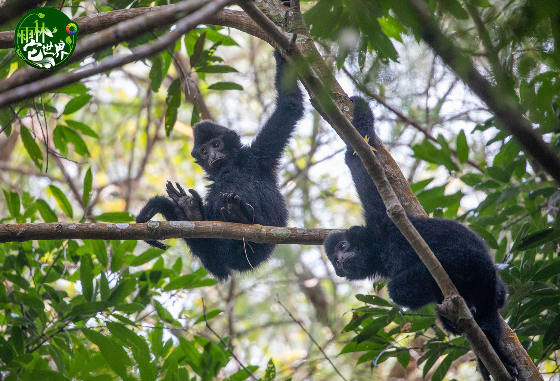
Hainan gibbons monkeying about in the canopy of the Bawangling area of Hainan Tropical Rainforest National Park on March 5. (Photo: Li Tianping / Hainan Daily)
Ook, ook, ook... "Listen, I can hear a gibbon calling over here," Li Wenyong wades through the dense forest in the direction of the gibbon's chirping. Li can't count the number of mornings he's risen early just to capture this sound.
The call of the Hainan Gibbon is a melodious and gentle whistle and is always led by a male. Females and juveniles make short, powerful, yet chaotic "klaxon" sounds that differ in length. Two groups of gibbons not far apart sometimes chirp at the same time, seemingly competing on volume.
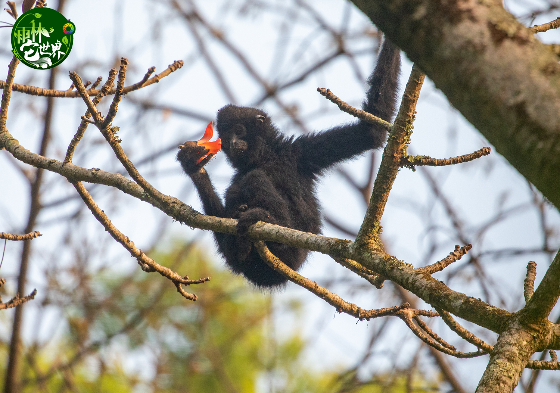
A Hainan gibbon feeds on kapok blossom. (Photo: Li Tianping / Hainan Daily)
During a gibbon's lifetime, its coat will change color many times. Newborns are grayish-yellow all over, with their coats slowly turning black during the first six months of their life. By the time she sexually matures between the ages of seven and nine, the female gibbon will turn golden yellow. However, it is difficult to judge the sex of juvenile gibbons on the color of their coats alone.
Led the males, the gibbons swing through their territory in search of a meal. Berries such as Burmese grapes (Baccaurea ramiflora), Roxburg figs (Ficus auriculata), and wild lychees are all a treat, and young leaves, flowers, and insects also go down very well.
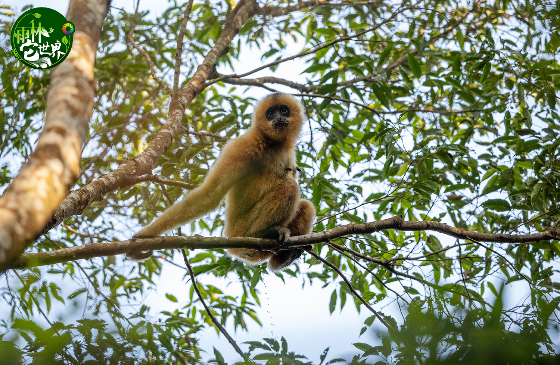
A Hainan gibbon observes its surroundings from the treetop. (Photo: Li Tianping / Hainan Daily)
Gibbons are typical arboreal primates that never go to the ground and are highly dependent on mature primeval rainforests. They have incredibly special ball wrist joints that rotate in all directions. Gibbons swing their arms in opposing directions, grabbing onto branches to move through the canopy and traveling up to several meters in a single swing. Swinging, climbing, hanging upside down; movements that take Cirque du Soleil performers years to master come with ease to these gibbons. Encountering steep slopes and cliffs, all the monitoring team could do was watch the gibbons as advanced.
Hainan gibbons are the true "aborigines" of Hainan Island, with gibbon fossils dating back more than 10,000 years having been found at the Luobi Cave site in Sanya. Additionally, the Hainan Gibbon is the flagship species of the Hainan rainforest and can be found only in the Bawangling area of the Hainan Tropical Rainforest National Park. Far more endangered than the giant panda, it is the rarest primate in the world. However, with the creation and development of the Hainan Tropical Rainforest National Park, the Hainan Gibbon population has seen a strong recovery.
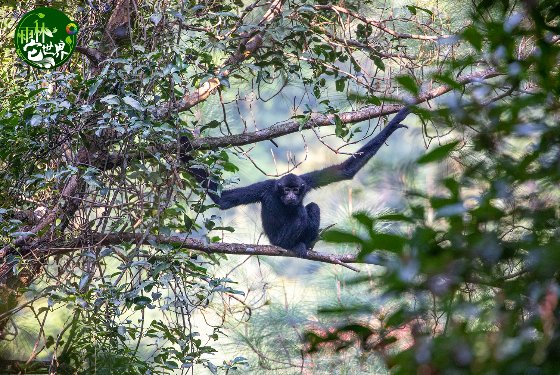
A male Hainan gibbon unfolds his arms in the Bawangling area of Hainan Tropical Rainforest National Park on March 5. (Photo: Li Tianping / Hainan Daily)
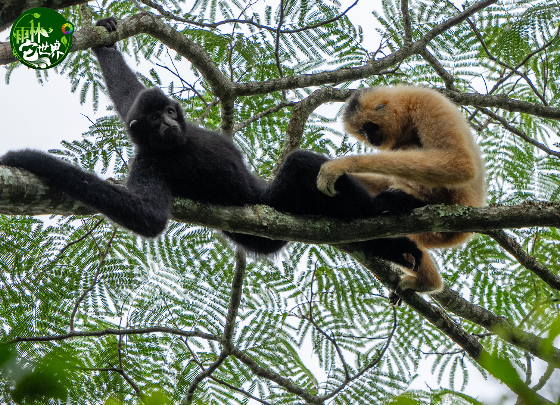
A female gibbon grooms a male in the Bawangling area of Hainan Tropical Rainforest National Park on June 15. (Photo: Li Tianping / Hainan Daily)
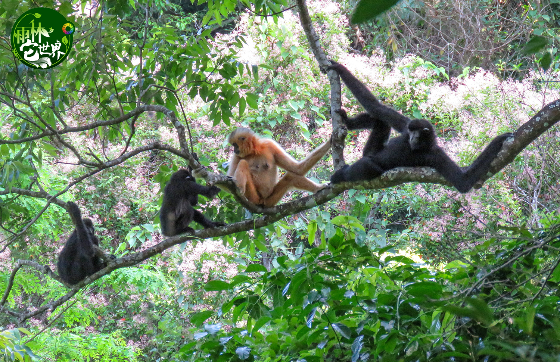
Four Hainan gibbons rest on a branch in the Bawangling area of Hainan Tropical Rainforest National Park. (Photo: Li Wenyong)
(Video by Li Tianping / Hainan Daily, Subtitles by Wang Zixi / HIMC)
FTP Expert Talks | Xiaodong Lee, Vice President of the Internet Society of China and Founder of the Fuxi Institution: Hainan is the "Nebula" of New Digital Youth
09:47, 12-September-2025Hainan Issues Offshore RMB Bonds in HK for 4th Consecutive Year
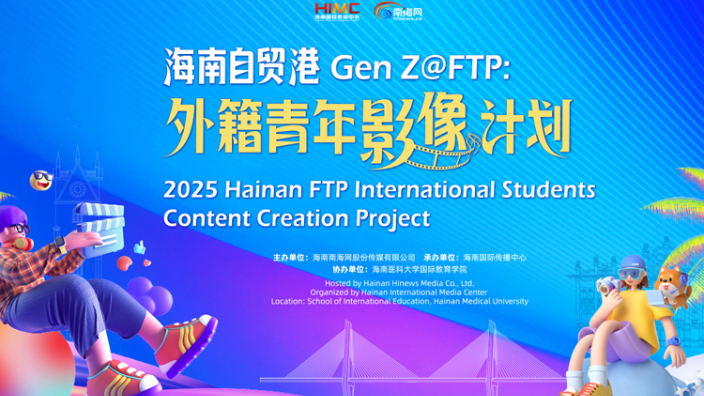
09:46, 12-September-20252025 Hainan FTP International Students Content Creation Project
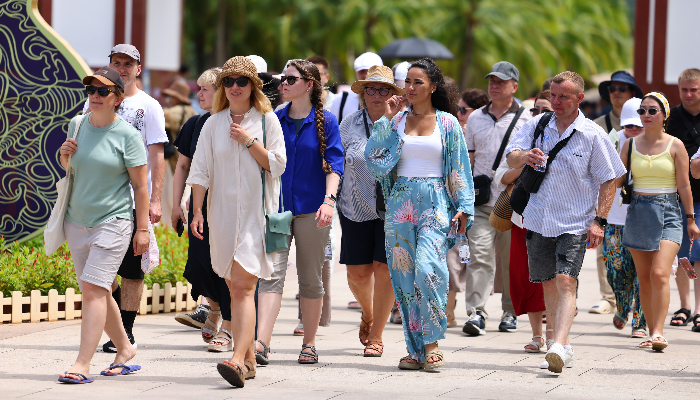
02:28, 12-September-2025What Makes "Hainan Travel" So Appealing?
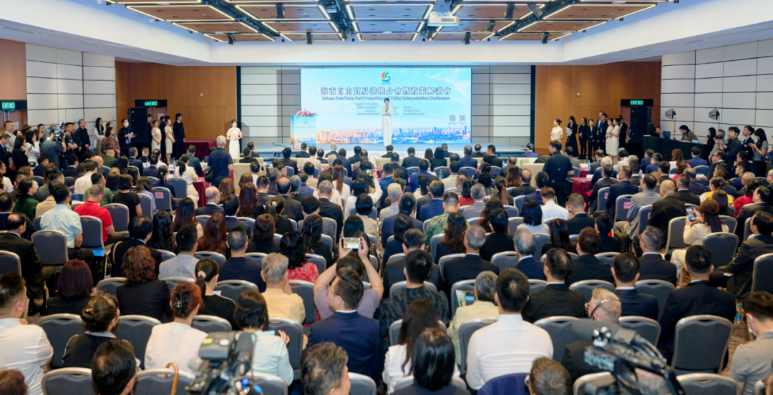
09:38, 11-September-2025100 Days to Go: What's Next for Hainan-Hong Kong Cooperation?
09:38, 11-September-2025Expert Talks Ep. 4: The Future of the FTP's Digital Economy
09:35, 11-September-2025
By continuing to browser our site and use the services you agree to our use of cookies, Privacy Policy and Terms of Use. You can change your cookie settings through your browser.

Copyright © 2021 hiHainan.All rights reserved.琼ICP备09005000号-13
 thisishainan@163.com
Partner: Hainan College of Foreign Studies