

By continuing to browser our site and use the services you agree to our use of cookies, Privacy Policy and Terms of Use. You can change your cookie settings through your browser.
I agree


On June 10, China’s 7th Cultural and Natural Heritage Day, the protection and development of the country’s cultural and natural heritage were again in the spotlight. Hainan’s vibrant, wide variety of cultural heritage practices includes the traditional spinning, dyeing, weaving, and embroidering arts of Li Brocade, Danzhou Folk Music (Diaosheng), Hainan Opera (Qiongju), Coconut Carving, the Madam Xian Festival, and the art of making Hainan Rice Noodles, while the province’s natural heritage is represented by the lush, thick tropical rainforests of the island.
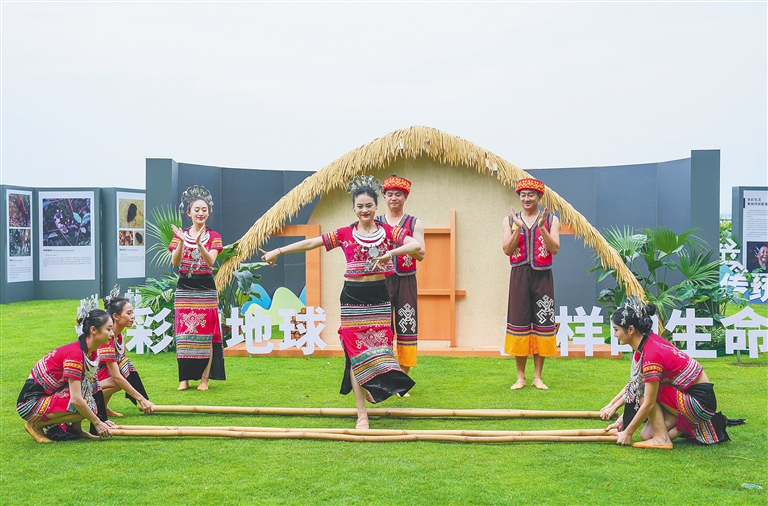
On June 10, Cultural and Natural Heritage Day activities were held in Haikou. Photo shows the traditional Bamboo Dance of the Li People. (Photo: Hainan Daily)
Hainan ICH Highlights at the International Cultural Industries Fair
On June 11, the 19th China (Shenzhen) International Cultural Industries Fair came to a close. The Hainan cultural exhibits at the Fair achieved an on-site turnover of 12.4533 million yuan (about $1.74 million), with additional orders totaling 62.452 million yuan (about $8.74 million).
“Your work is very special and beautiful,” Canadian artist Peter exclaimed, running his fingertips along the exquisitely woven Li Brocades on display at the Hainan Pavilion.
He chose a long men’s vest with hand-woven brocade adorning the collar and pockets. The vest’s elegant shape and tailoring fit right in with modern fashion aesthetics, making this a timeless piece combining traditional art and current trends. The vest was created by Wang Binni, a designer at the Hainan Qinyun Youlan Culture and Arts Company.

Peter tries on a long men’s vest adorned with Li Brocade. (Photo: Hainan Daily)
This is not the first time that Wang Binni’s Li Brocade clothing has found favor with customers from all over the world. This is her second year exhibiting at the Cultural Fair, and she has gotten quite a few orders from a variety of different countries.
“I truly love Li Brocade. Weaving brocades is an ancient, fascinating intangible cultural heritage art.” Over the past 10 years, Wang Binni has been committed to bringing Li Brocade into the modern world by skillfully interweaving tradition and fashion, bringing Li Brocade into everyday life, and making the art form more and more popular with the younger generation. Her creativity is giving the Li Brocade industry many new avenues of development.
Hainan is proud of its ‘Mixed Heritage’
Hainan holds a vast treasure of natural resources and cultural relics from different periods of history. The “Hainan Tropical Rainforest and Traditional Settlements of the Li Ethnic People”, excellent examples of Hainan’s natural and cultural inheritance, were included on the UNESCO World Heritage Tentative List, released in April, 2022.
On June 10, the Forestry Department of Hainan Province announced that Hainan is applying for recognition of the “Hainan Tropical Rainforest and Traditional Settlements of the Li Ethnic People” as “Mixed Cultural and Natural Heritage”, or “Mixed Heritage” for short.
What is “Mixed Heritage”? Simply put, it is an item that meets the conditions to be considered both of natural and cultural heritage significance. Currently, there are just 39 recognized “Mixed Heritage” sites in the world, with four of them located in China: Mount Tai, Mount Huang, Mount Emei (including Leshan Giant Buddha), and Mount Wuyi. If Hainan’s application is successful, it will the first Chinese addition to the list in over 20 years.
Why is Hainan so confident in its “Mixed Heritage”? One important reason is that Hainan’s rainforests are the densest, best preserved, largest contiguous tropical rainforests in China. They are one of the world’s most important biodiversity hot-spots as well as a key area for many bird species and an “Alliance for Zero Extinction” protected area.
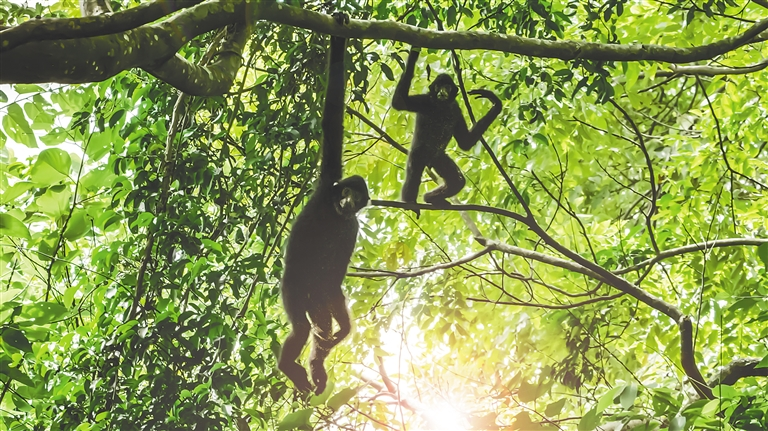
The Hainan Gibbon, native to the province, is a flagship species of the Hainan tropical rainforest. (Photo: Forestry Department of Hainan Province)
The form of Hainan’s Li Minority villages and the architecture of their traditional houses reflects the ability of the Li people to adapt to the local environment while also building homes that meet the needs of their customs and lifestyle.
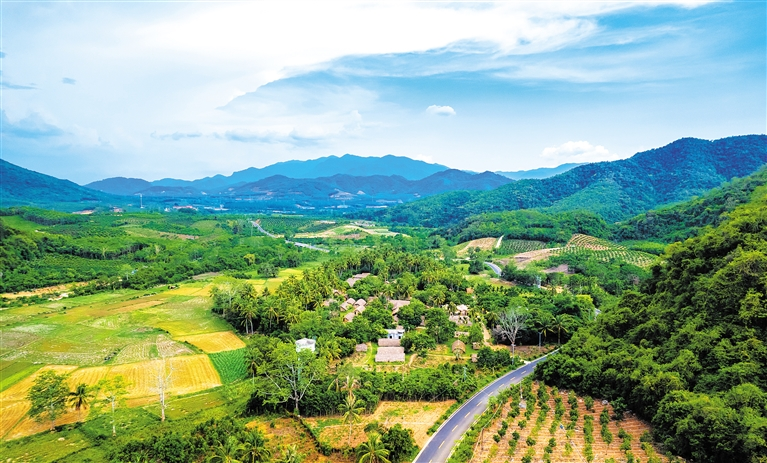
Baicha Village, Dongfang - a traditional Li village. (Photo: Hinews)
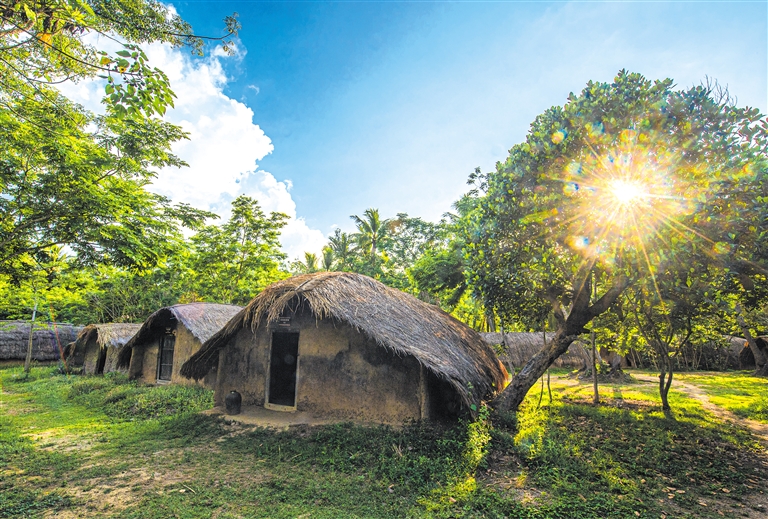
Li Boat-shaped houses in Baicha Village, Dongfang. (Photo: Xinhua)
According to the preliminary assessment of the expert group, the “Hainan Tropical Rainforest and Traditional Settlements of the Li Ethnic People” meets three of the basic criterion for “Outstanding Universal Value”, showing that traditional Li villages are home to unique cultural traditions and that the island’s tropical rainforests are important natural habitats for biodiversity conservation.
“If the application is successful, it would mean that Hainan has become a global cultural tourism brand.” Song Feng, member of the World Heritage Expert Committee of the National Forestry and Grassland Administration, said that this “Mixed Heritage” is expected to become another “golden feather” in the cap of the Hainan Free Trade Port.
Systematically Protecting Hainan’s Inheritance
In recent years, protection of Hainan’s intangible cultural heritage has greatly benefited from increased legal protection. Laws have strengthened the protection and cultivation of cultural practitioners, and more of the island’s “living fossils” are being put on proud display, to great effect. Hainan passed the “"Regulations on Intangible Cultural Heritage of Hainan Province" and the "Three-Year Action Plan for the Protection and Development of the Li Traditional Spinning, Dyeing, Weaving, and Embroidery Skills (2021-2023)" in order to build a stronger foundation for the protection and passing down of the province’s priceless intangible cultural heritage.
The Department of Tourism, Culture, Radio, Television, and Sports of Hainan Province regularly holds events such as the Hainan Intangible Cultural Heritage Shopping Festival, the Hainan Brocade and Embroidery World Culture Week, and the Sanya Nanshan Intangible Cultural Heritage Festival in order to integrate traditional culture with the modern fashion industry and widen the reach of Hainan’s intangible cultural heritage.
Currently, Hainan has 19 national-level intangible cultural heritage representatives, with another 149 at the province level and over 900 at the city or county level. In 2022, the province completed two intangible cultural heritage representative recording projects, each with 12 participants. The third project is currently underway, planting precious seeds for the future of Hainan’s intangible cultural heritage.
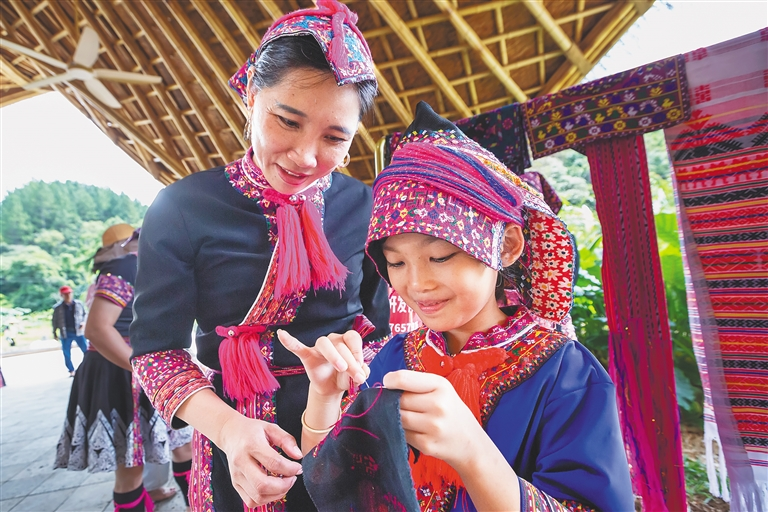
A girl practices Miao Embroidery techniques on June 10 in Maona Village, located in the Shuiman area of Wuzhishan. (Photo: Hainan Daily)
FTP Expert Talks | Xiaodong Lee, Vice President of the Internet Society of China and Founder of the Fuxi Institution: Hainan is the "Nebula" of New Digital Youth
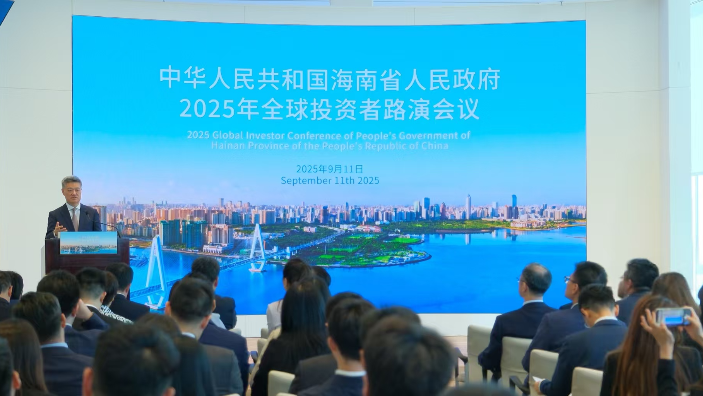
09:47, 12-September-2025Hainan Issues Offshore RMB Bonds in HK for 4th Consecutive Year
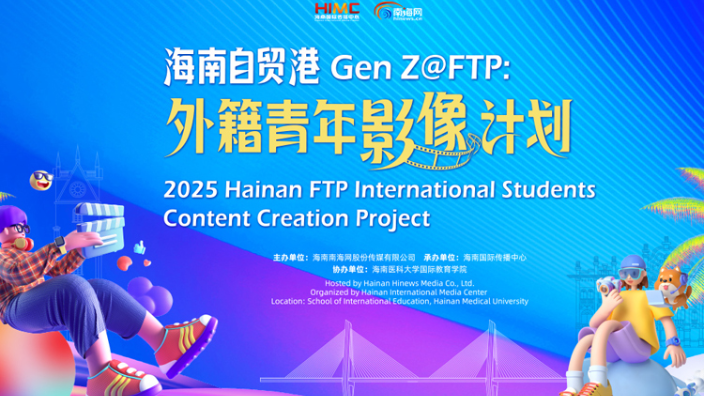
09:46, 12-September-20252025 Hainan FTP International Students Content Creation Project
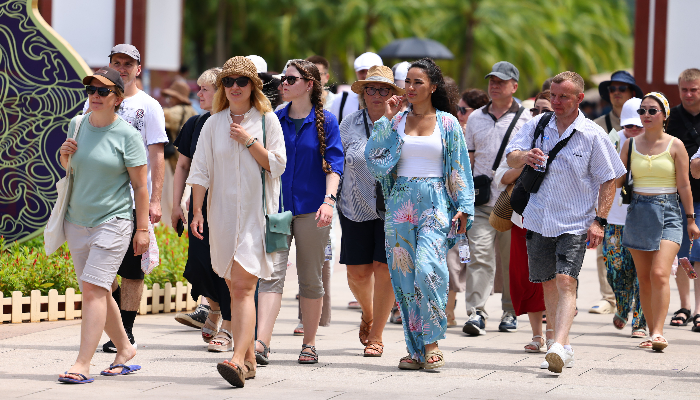
02:28, 12-September-2025What Makes "Hainan Travel" So Appealing?
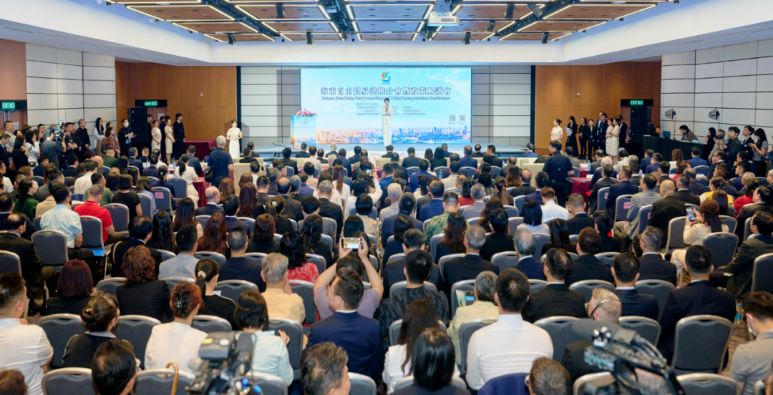
09:38, 11-September-2025100 Days to Go: What's Next for Hainan-Hong Kong Cooperation?
09:38, 11-September-2025Expert Talks Ep. 4: The Future of the FTP's Digital Economy
09:35, 11-September-2025
By continuing to browser our site and use the services you agree to our use of cookies, Privacy Policy and Terms of Use. You can change your cookie settings through your browser.

Copyright © 2021 hiHainan.All rights reserved.琼ICP备09005000号-13
 thisishainan@163.com
Partner: Hainan College of Foreign Studies