


By continuing to browser our site and use the services you agree to our use of cookies, Privacy Policy and Terms of Use. You can change your cookie settings through your browser.
I agree


On October 11, the Hainan Tropical Rainforest National Park Administration released the "Hainan Tropical Rainforest National Park Development Report (2019-2022)" to the public. The comprehensive research report, the first on the Hainan Tropical Rainforest National Park, systematically laid out and summarized the construction process of Hainan Tropical Rainforest National Park System since its pilot implementation.
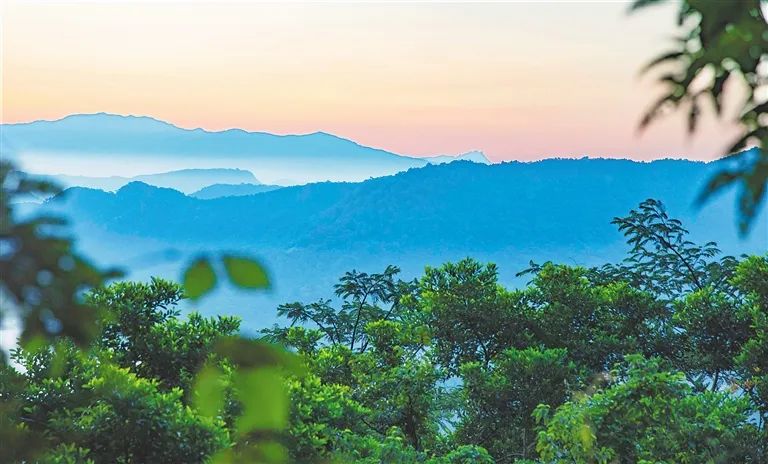
The Bawangling area of the Hainan Tropical Rainforest National Park. (Photo/Hainan Daily)
The report states that over the past three years, the ecological environment of Hainan's tropical rainforest has been continuously improved, creating more space and better living conditions for wild animals and plants. The population of the Hainan Gibbon has increased from 30 individuals distributed among 4 groups in 2019 to 36 individuals distributed across 5 groups in 2022. In addition, since the establishment of Hainan Tropical Rainforest National Park, at least 28 new species of wild animals and plants have been discovered, including 9 new plant species, 6 new animal species and 13 new species of massive fungus.
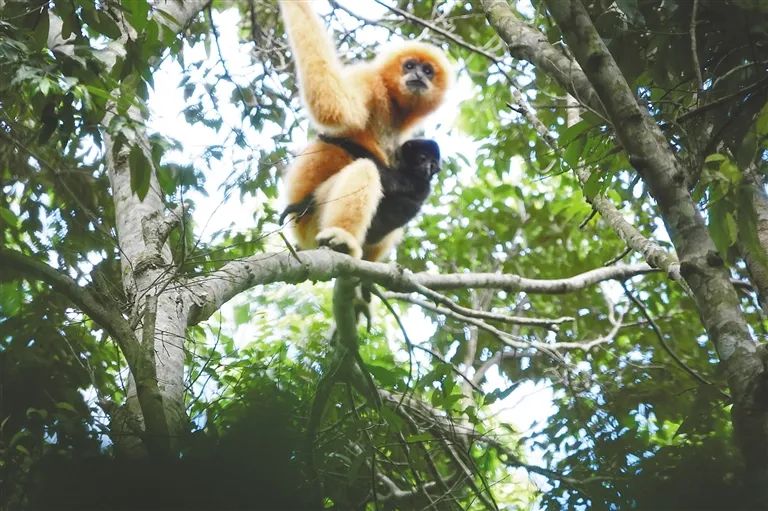
An adult Hainan Gibbon and its infant, belonging to group D, photographed in August 2021. (Photo/Hainan Tropical Rainforest National Park Administration)
According to the preliminary investigation of the Park by the scientific research department, there are more than 3,600 species of vascular plants within Hainan's tropical rainforest, belonging to 1,142 genera in 220 families. 428 of these species are endemic to Hainan Island. Additionally, mature areas of the rainforest can store more than 340 metric tons of net carbon per hectare. Preliminary estimates show that each hectare of tropical rainforest in Hainan can absorb an average of 1 to 2 tons of carbon per year, with carbon sink capacity increasing an average of 3-4% per year as vegetation in the forest grows. This increase in capacity will help Hainan to accelerate the realization of the dual goals of peak carbon and carbon neutrality.
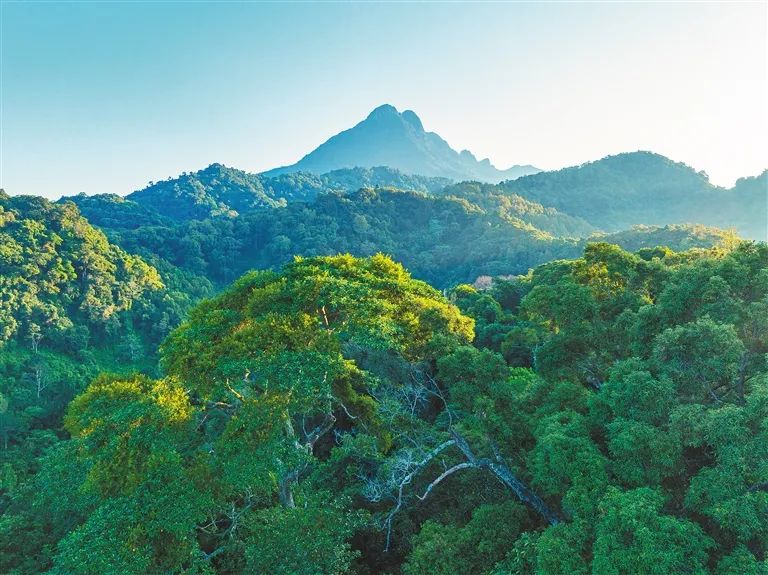
The Wuzhishan area of Hainan Tropical Rainforest National Park in early autumn. (Photo/Hainan Daily)
Hainan Tropical Rainforest National Park was established on October 12, 2021. Over the past year, Hainan has built and improved its biodiversity conservation system. An example of the system in practice can be seen in the work done on protecting the Hainan Gibbon. Hainan fully mobilized the resources of the public sector through project cooperation and cooperated extensively with the international community. It also strengthened conservation awareness and grassroots participation of local communities, gathered together the collective wisdom of domestic and foreign experts, and proposed corresponding conservation plans.
In 2021, at the 15th Conference of the Parties to the Convention on Biological Diversity (COP 15), the "Hainan Plan" and "Bawangling Model" were highly praised by international conservation organizations and experts, arousing widespread attention at home and abroad, and becoming success stories for the Hainan Tropical Rainforest National Park.
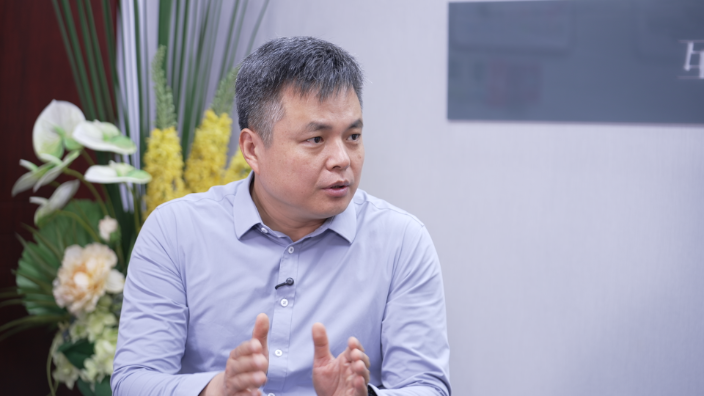
FTP Expert Talks | Xiaodong Lee, Vice President of the Internet Society of China and Founder of the Fuxi Institution: Hainan is the "Nebula" of New Digital Youth
09:47, 12-September-2025Hainan Issues Offshore RMB Bonds in HK for 4th Consecutive Year
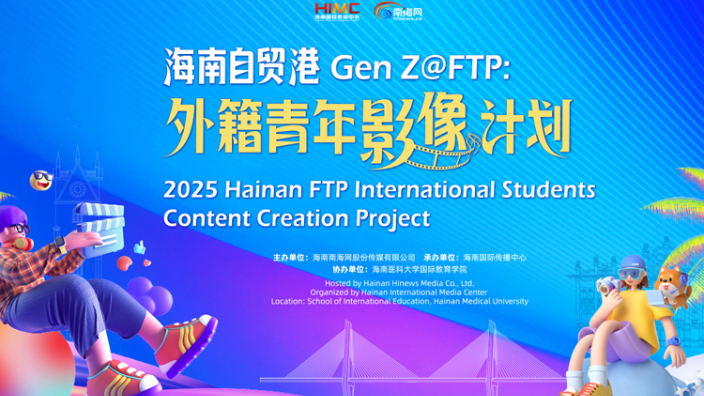
09:46, 12-September-20252025 Hainan FTP International Students Content Creation Project
02:28, 12-September-2025What Makes "Hainan Travel" So Appealing?
09:38, 11-September-2025100 Days to Go: What's Next for Hainan-Hong Kong Cooperation?
09:38, 11-September-2025Expert Talks Ep. 4: The Future of the FTP's Digital Economy
09:35, 11-September-2025
By continuing to browser our site and use the services you agree to our use of cookies, Privacy Policy and Terms of Use. You can change your cookie settings through your browser.

Copyright © 2021 hiHainan.All rights reserved.琼ICP备09005000号-13
 thisishainan@163.com
Partner: Hainan College of Foreign Studies