



By continuing to browser our site and use the services you agree to our use of cookies, Privacy Policy and Terms of Use. You can change your cookie settings through your browser.
I agree


The term 'CO2 Allowance' might not ring a bell.
But lately, this concept (and the practices to which it pertains) is gradually infiltrating industry and becoming an issue that many enterprises must face head on, as heat waves strike around the globe due to climate change mainly caused by the emission of carbon dioxide (CO2).
On December 7 last year, the first batch of seven key emission enterprises in the power generation industry in southern China’s Hainan Province were included in the national carbon emission trading market. These units successfully balanced their allowances within the first compliance period, allowing Hainan to become the first province in China to achieve a 100% compliance rate.
What is a ‘carbon allowance’?
Wu Leya, head of the Climate Change Research Center of the Hainan Research Academy of Environmental Sciences, explained that 'carbon allowance' generally refers to the carbon emission allowances allotted to enterprises that are included in carbon emissions trading. Enterprises must balance their allowance according to their own annual emissions. If their emissions exceed the allowance allocated to them by the government, they can remain compliant by purchasing the outstanding allowance from the carbon emissions trading market. Conversely, companies that have excess allowance can sell it to other enterprises.
On July 16, 2021, the national carbon emissions trading market officially launched online trading; just over three months later, the relevant work of the first compliance cycle began. The power generation industry became the first to be included in the national carbon emissions trading market.
In Hainan Province, seven key emission units in the power generation industry were included in the first compliance cycle of the national carbon emissions trading market. Their carbon emissions accounted for about 40% of the province's total. Among the 7 enterprises, the subsidiaries of Huaneng Hainan Power Generation Co., Ltd. (hereinafter referred to as "Huaneng Hainan") accounted for three of the emission units.
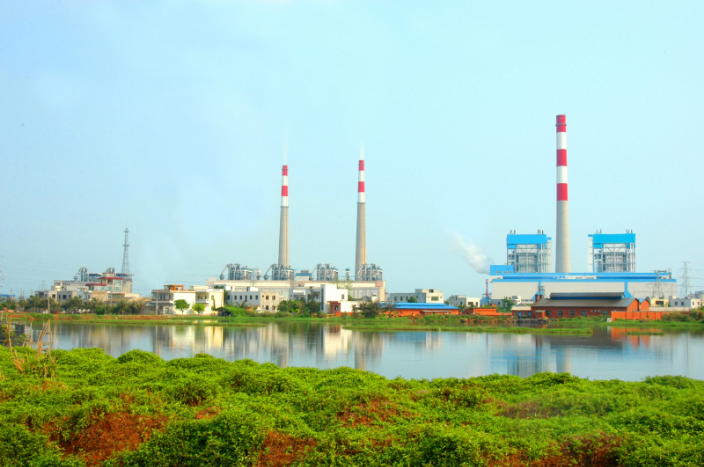
Huaneng Haikou Power Plant. (Photo provided to New Hainan App)
The other four units were CNOOC Hainan Power Generation Co., Ltd., China Energy Ledong Power Generation Co., Ltd., Hainan Pumped Storage Power Generation Co., Ltd. Wenchang Branch, and Hainan Jinhai Pulp and Paper Co., Ltd. (on-site power plant).
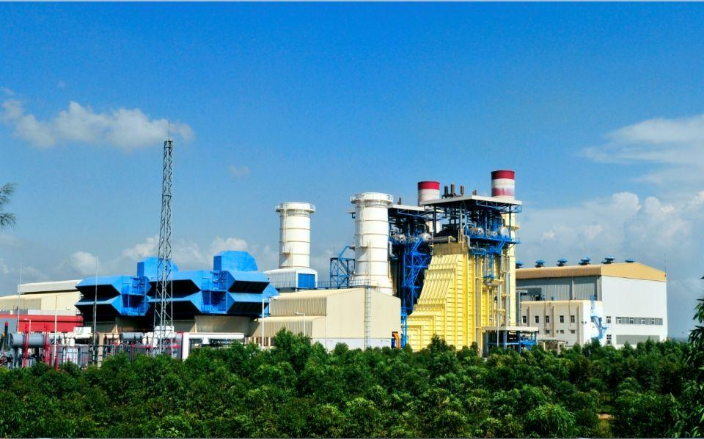
CNOOC Hainan Power Generation Co., Ltd., located in Yangpu Economic Development Zone in Danzhou City, has played a key role in Hainan's peak summer power supply and various other power supply efforts over the years. (Photo provided to New Hainan App)
Why was the power generation industry one of the first industries to be included in the carbon emissions trading market?
Ma Mingming, a staff member of the Climate Change, Science and Technology and Finance Division at the Hainan Provincial Department of Ecology and Environment, explained that the power generation industry is a main producer of carbon emissions in China, and the data on carbon emissions in the power generation sector is relatively solid. Internationally, the power generation industry is also a preferred industry to be included in carbon emissions trading markets in regions such as the EU and North America. Consequently, the national carbon emissions trading market, which is still in its infancy, currently only includes the power industry, and only emission-controlled enterprises can participate in trading.
Hainan's success in becoming the first province in the country to achieve a 100% compliance rate has not only laid a solid foundation for the next compliance cycle, but has also helped accumulate experience to improve the ability of other industries to participate in carbon emissions trading.
Achieving green, low-carbon development in Hainan
Being green and low-carbon isn't a choice for Hainan. It's an imperative.
China has stated its commitment to the international community to reduce CO2 emissions progressively after they peak in 2030 and to achieve carbon neutrality by 2060, so it is critical to take related measures and actions in the coming years during the national "14th Five-Year (2021-2025) Plan" period.
Together with the master plan for Hainan Free Trade Port issued in June 2020, the implementation plan to develop Hainan into a national ecological civilization pilot zone released in 2019 and other policies, Hainan has both the advantages and imperative to lead China in hitting peak carbon and achieving carbon neutrality.
In other words, it is more urgent and significant than ever for enterprises go green and achieve a low-carbon transformation. Liu Qiao, Dean of the Guanghua School of Management at Peking University, believes that carbon peaking and carbon neutrality concern not just purely technical issues, but also very profound economic and management issues.
"Achieving carbon neutrality requires a lot of investment. Our research group estimates that by 2050, nearly RMB250 trillion (USD37 trillion) of investment will be needed in China alone.” Liu also explained that from the perspective of the financial system, the most important thing is to quickly formulate a carbon price discovery mechanism. This would not only involve a pure carbon emissions trading spot market, but also figuring out how to reflect pricing through financial products and financial markets.
Liu added that the growth paradigm of enterprises will change during this process. If carbon emissions are understood as factors of production, it will enter the production function and affect the consumer utility function.
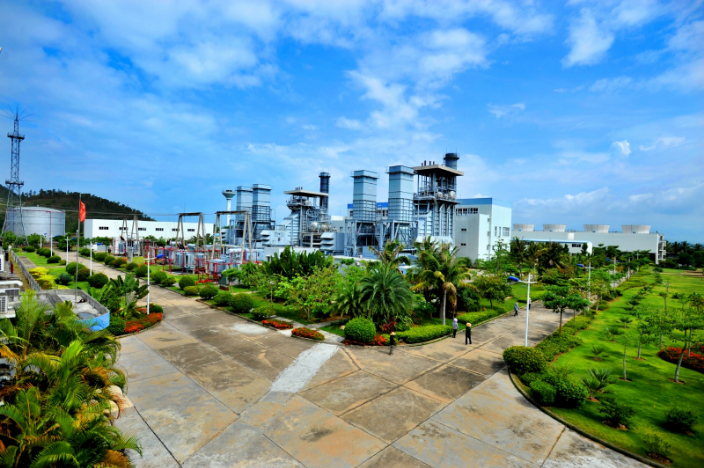
Huaneng Nanshan Power Plant in Sanya, Hainan. (Photo provided to New Hainan App)
To a certain extent, this will force enterprises to reduce carbon emissions through measures such as technological innovation and equipment renewal while continuing to move in a green and low-carbon direction to enhance green competitiveness.
According to a representative of Huaneng Hainan, in recent years, the company has promoted energy conservation and carbon reduction work in a solid and orderly manner by taking the initiative to shut down backward production capacity, carrying out energy-saving and emission-reduction technology transformation, heating transformation, building onshore power supply for ships, and scientific and technological carbon reduction. In practical terms, this means that the emissions created in generating one kilowatt-hour of electricity are lower today than ever before.
FTP Expert Talks | Xiaodong Lee, Vice President of the Internet Society of China and Founder of the Fuxi Institution: Hainan is the "Nebula" of New Digital Youth
09:47, 12-September-2025Hainan Issues Offshore RMB Bonds in HK for 4th Consecutive Year
09:46, 12-September-20252025 Hainan FTP International Students Content Creation Project
02:28, 12-September-2025What Makes "Hainan Travel" So Appealing?
09:38, 11-September-2025100 Days to Go: What's Next for Hainan-Hong Kong Cooperation?
09:38, 11-September-2025Expert Talks Ep. 4: The Future of the FTP's Digital Economy
09:35, 11-September-2025
By continuing to browser our site and use the services you agree to our use of cookies, Privacy Policy and Terms of Use. You can change your cookie settings through your browser.

Copyright © 2021 hiHainan.All rights reserved.琼ICP备09005000号-13
 thisishainan@163.com
Partner: Hainan College of Foreign Studies