

By continuing to browser our site and use the services you agree to our use of cookies, Privacy Policy and Terms of Use. You can change your cookie settings through your browser.
I agree


Flanking the Meishe River, the Fengxiang Wetland Park is not only Haikou's largest wetlands park and a national water conservancy scenic area, but is also a popular spot for locals and tourists to come for leisurely exercise and relaxation.
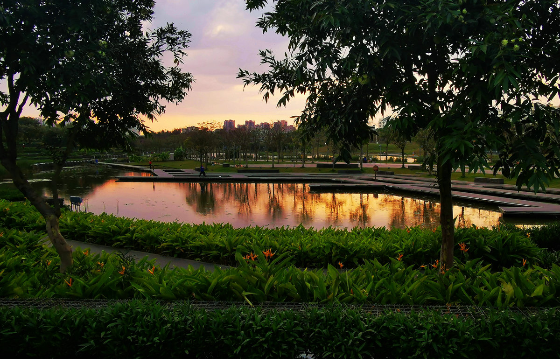
Combining the waters of the Meishe with the remarkable achievements of modern ecological civilization construction, the park stretches from the Yangshan Wetlands' Yulong Spring in the south to Baisha First Bridge in the north. The nearly 470 hectares of public green space—of which 253 hectares (or 54.09%) are wetlands—consists of Yulong Spring, Yangshan Reservoir, and Shapo Reservoir.
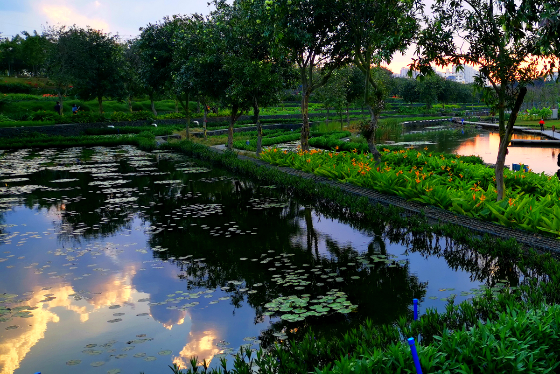
The Fengxiang Wetland Park in Haikou, Hainan. ZHANG YONGJIAN
The Meishe River is a key tributary of the Nandu River (the longest river on the island). Flowing south to north through the volcanic lava landforms of the highlands south of the urban area and into the city, the river and the park are one of Haikou's important ecological landscape systems. The park's ecosystems include the Yangshan volcanic lava wetlands and Meishe River Basin wetlands with biodiversity and rare local species like water cauliflower, water fern and common wild rice being the priority object of conservation.
At present, conservationists have identified 137 kinds of vertebrates and 301 types of plants within the boundaries of the park.
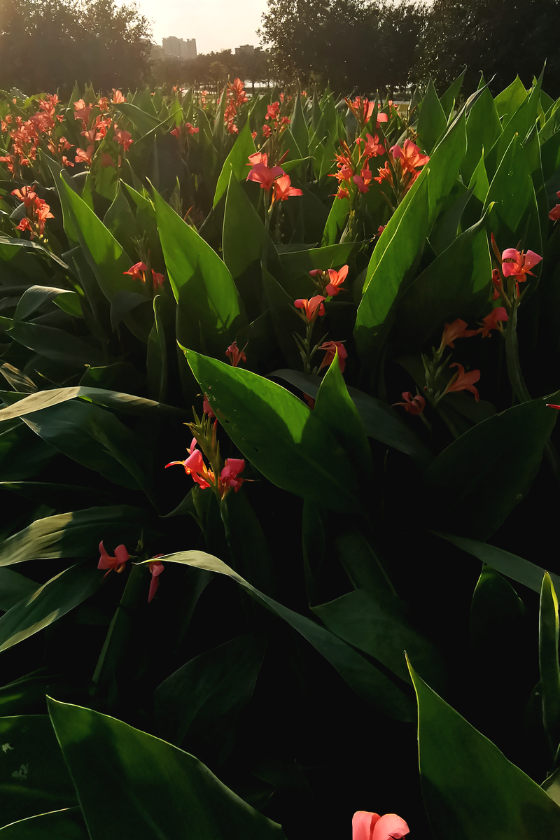
Indian shot (Canna indica) planted in the Fengxiang Wetland Park in Haikou, Hainan. Zhang Yongjian
Officially recognized as a “National Wetland Park” on December 25, 2019 through the acceptance by the State Forestry and Grassland Administration of the 2019 pilot wetlands park program, Fengxiang was listed on June 5, 2020 as one of China's “Key National Wetlands”.
Although the Meishe River was once seriously polluted, rewilding efforts have given it a new lease on life. From any point within the park, visitors are met with the sights, sounds, and smells of roosting birds and babbling waters. Although work is still ongoing, this vibrant green painting already serves as an exemplary model for Chinese nature conservancy and restoration.
FTP Expert Talks | Xiaodong Lee, Vice President of the Internet Society of China and Founder of the Fuxi Institution: Hainan is the "Nebula" of New Digital Youth
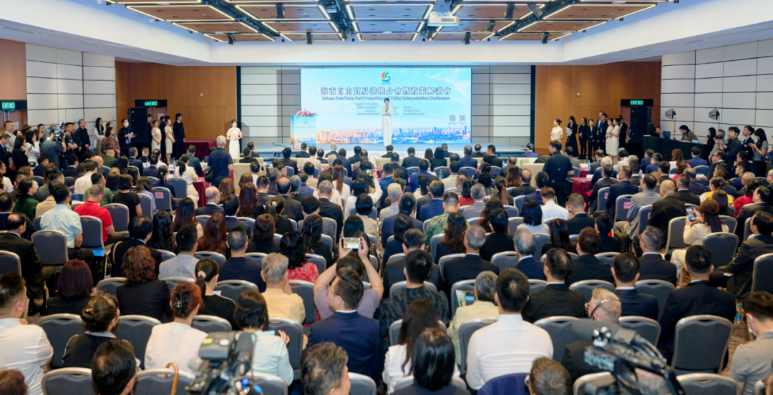
09:47, 12-September-2025Hainan Issues Offshore RMB Bonds in HK for 4th Consecutive Year
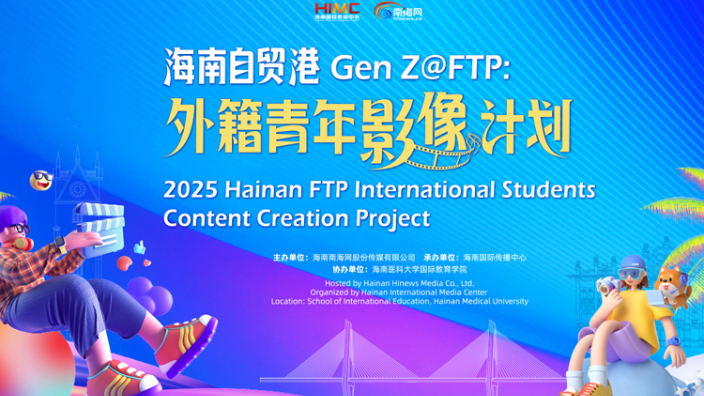
09:46, 12-September-20252025 Hainan FTP International Students Content Creation Project
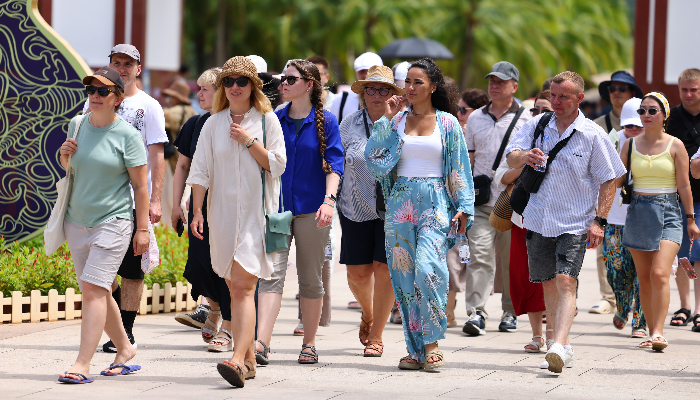
02:28, 12-September-2025What Makes "Hainan Travel" So Appealing?
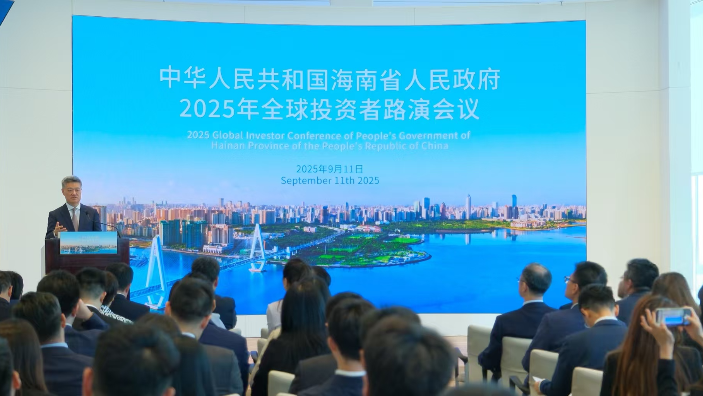
09:38, 11-September-2025100 Days to Go: What's Next for Hainan-Hong Kong Cooperation?
09:38, 11-September-2025Expert Talks Ep. 4: The Future of the FTP's Digital Economy
09:35, 11-September-2025
By continuing to browser our site and use the services you agree to our use of cookies, Privacy Policy and Terms of Use. You can change your cookie settings through your browser.

Copyright © 2021 hiHainan.All rights reserved.琼ICP备09005000号-13
 thisishainan@163.com
Partner: Hainan College of Foreign Studies