


Since its release, the film Dear You has seen its reputation soar. As of May 9, it has garnered a high score of 9.1 from over 100,000 viewers on a certain major Chinese film review site.
Through Qiaopi, the movie presents an emotional journey spanning over half a century. These letters carry long-distance longing across the ocean, weaving a tale of diaspora connections and family ties.
"This might be the best Chinese-language film I’ve seen this year," one netizen commented. Another noted, "It wasn't until I watched this movie that I truly understood how heavy and precious a single Qiaopi is. It’s not just 'nostalgia'; it’s literally life and love."
The stream of letters sent from Southeast Asia that the film centers on contains a profound sense of yearning that has moved countless audiences to tears.
In reality, this deep affection and steadfast vigil are part of the collective memory of Wenchang, a famous hometown of overseas Chinese in the northeast of Hainan Island.
What is Qiaopi?
In the words of the renowned scholar Jao Tsung-I, Qiaopi is a precious piece of world documentary heritage carrying "the lingering fragrance of the maritime regions."
It refers to a unique historical document—a combination of a remittance voucher and a family letter—sent by overseas Chinese to their relatives in China via private channels such as "Shuike" (couriers) or Qiaopi agencies.
Wenchang has long been a hub for departing migrants. As early as the Song and Yuan dynasties (between the 10th and 14th centuries), merchants and sailors from Hainan Island set sail across the seas, with many eventually settling abroad.
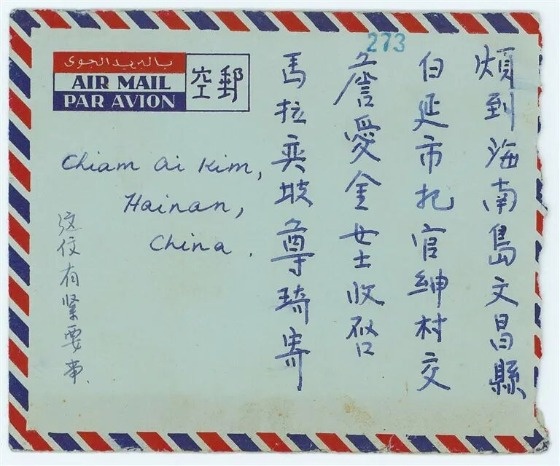
The cover of a Qiaopi postcard.
The Qiaopi industry developed rapidly between World War I and 1930. Most overseas Chinese would enclose a brief family letter with their remittance.
Once these reached Haikou, a local Qiaopi agency would snip a small notch in the top right corner of the envelope, insert a printed "return receipt," and pay the double-journey postage. A courier would then deliver it to the local agencies in various counties, who would finally bring it to the recipient's doorstep.
Upon receiving the money, the recipient would sign or seal the receipt, which the agency would then send back to the remitter as proof of delivery.
At that time, the He Ji Qiaopi Agency was a well-known establishment in Wenchang’s Baiyan Village.
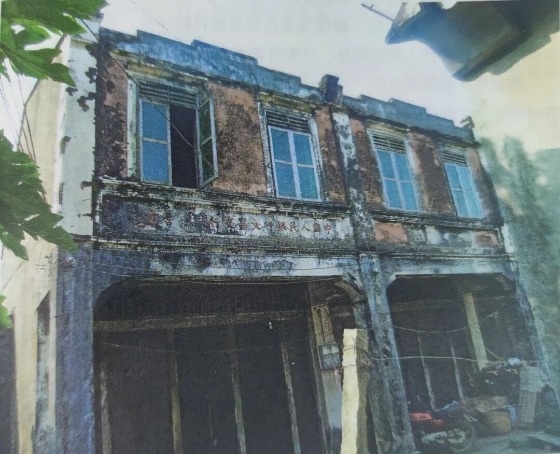
The former site of He Ji Qiaopi Agency.
Snippets of Life within the Letters
In Wenchang, almost every household has relatives who "Xia Nanyang" (emigrated to Southeast Asia).
In 1948, a woman surnamed Xing lived in Lantian Village, received a Qiaopi from her son, Zhao Tianxiu, who was far away in Singapore:
"I received your letter in September. After reading it, I wept many tears. Learning that everyone at home is safe and well brings me great comfort... Today, I am asking a fellow Hainanese friend to bring back four bottles of milk, one tin of biscuits, two bottles of Golden Oil (medicated oil), two bags of partridge tea, one iron cleaver, and one bottle of milk powder... I hope Mother takes care of your health and arranges for the little kids to go to school."
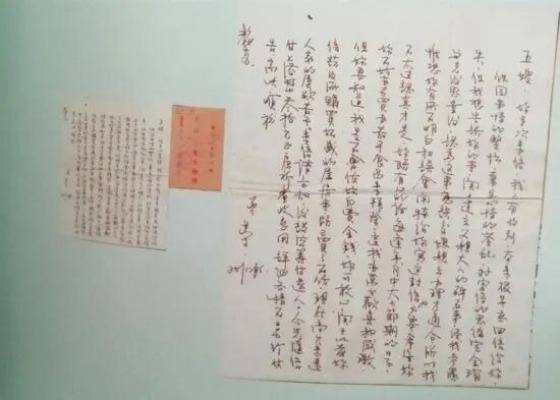
In his letter, Zhao Tianxiu meticulously listed every item—milk, biscuits, oil, tea, and even the iron cleaver—and gave instructions on household matters, even specifying how the enclosed money should be distributed.
Though the contents were mundane and domestic, they were the only bridge between mother and son. While the supplies and money were modest, they sustained the Xing family’s daily life.
In the 1960s and 1970s, Lin Yuxin of Baiyan received letters from her father, Lin Daqin, in Malacca. His writing was filled with concern:
"To my daughter Xin: It has been a long time since we last corresponded, and I think of you often. It gladdens me to know that you are all well. We are all safe and sound here, so please do not worry."
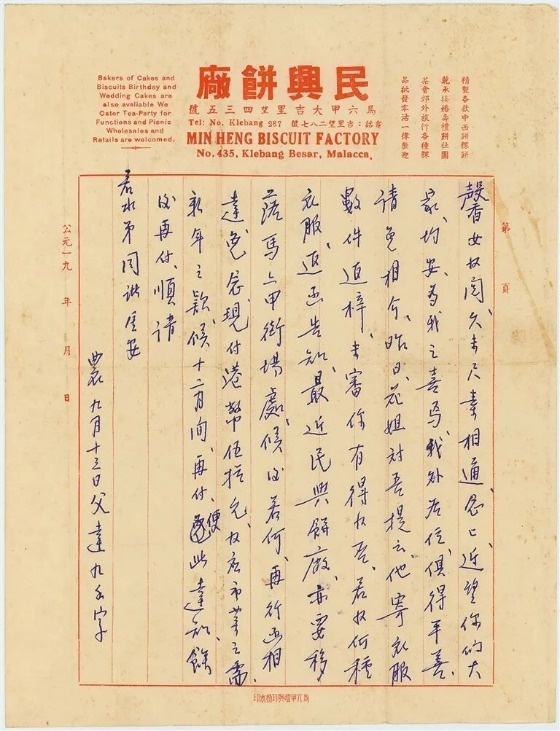
He also specifically mentioned:
"Yesterday, Sister Hua told me she sent several pieces of clothing back to the village. Once you receive them, let me know which ones you got in your reply." These few words conveyed a simple, profound care—he worried whether a package from across the sea would reach his daughter's hands.
On April 23, 1952, Huang Defu, a Wenchang native in Kuala Lumpur, sent a letter to his nephew.
He remitted 40 Hong Kong Dollars and expressed his concern for his nephew and mother. He lamented the pressure to survive caused by the skyrocketing prices in Kuala Lumpur at the time. Even though his business was doing okay, it was hard to support the whole family in such economic conditions.
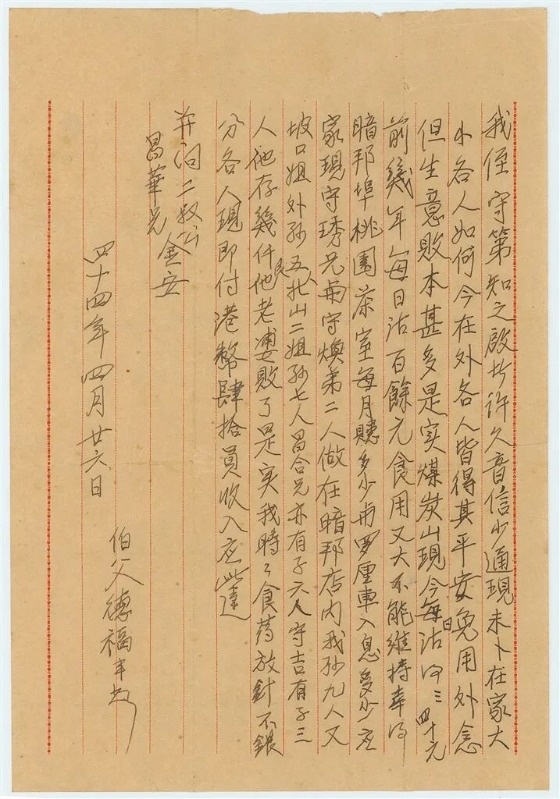
He wrote of his desire to return to Wenchang—to go home. He reminded his nephew to farm well to make a living and blamed himself for being unable to provide more help.
Behind every yellowed page lies a longing that spans mountains and seas.
Hainan Firm Develops Inspection Robots, Wins Indonesian Orders
10:34,29-September-2026
The Nearest Place to Ancient Life: A Visit to Hainan’s Crocodile Village
10:33,29-September-2026
Chinese Film ‘Successor’ Shown in Cairo at Hainan FTP Promotion
15:49,28-September-2026
TransNusa Launches Jakarta–Haikou Service
10:53,27-September-2026
What Does Hainan Offer NEV Businesses?
10:53,27-September-2026
Inira from Russia Celebrates Mid-Autumn Festival in Hainan
23:41,25-September-2026

Copyright © 2021 hiHainan.All rights reserved.琼ICP备09005000号-13
 thisishainan@163.com
Partner: Hainan College of Foreign Studies