


By Arlindo do Rosário, Ambassador of Cape Verde to China
Beijing, July 23,2026
There are anniversaries that fit on calendars. And there are anniversaries that fit in hearts. Cooperation between Cabo Verde and the People's Republic of China has a rich and consistent history, marked by solid diplomatic relations, mutual support and projects that have contributed to the development of our country. As we mark this year, on April 25, 50 years of cooperation relations between China and Cabo Verde, we are not just celebrating dates: we are celebrating the presence of a friendship that has crossed oceans, overcome distances and, over time, has gained voice, face and history. This important milestone calls for a sincere assessment of what has been accomplished, recognition of the value of the journey undertaken, and, above all, a reaffirmation of the commitment to the future.
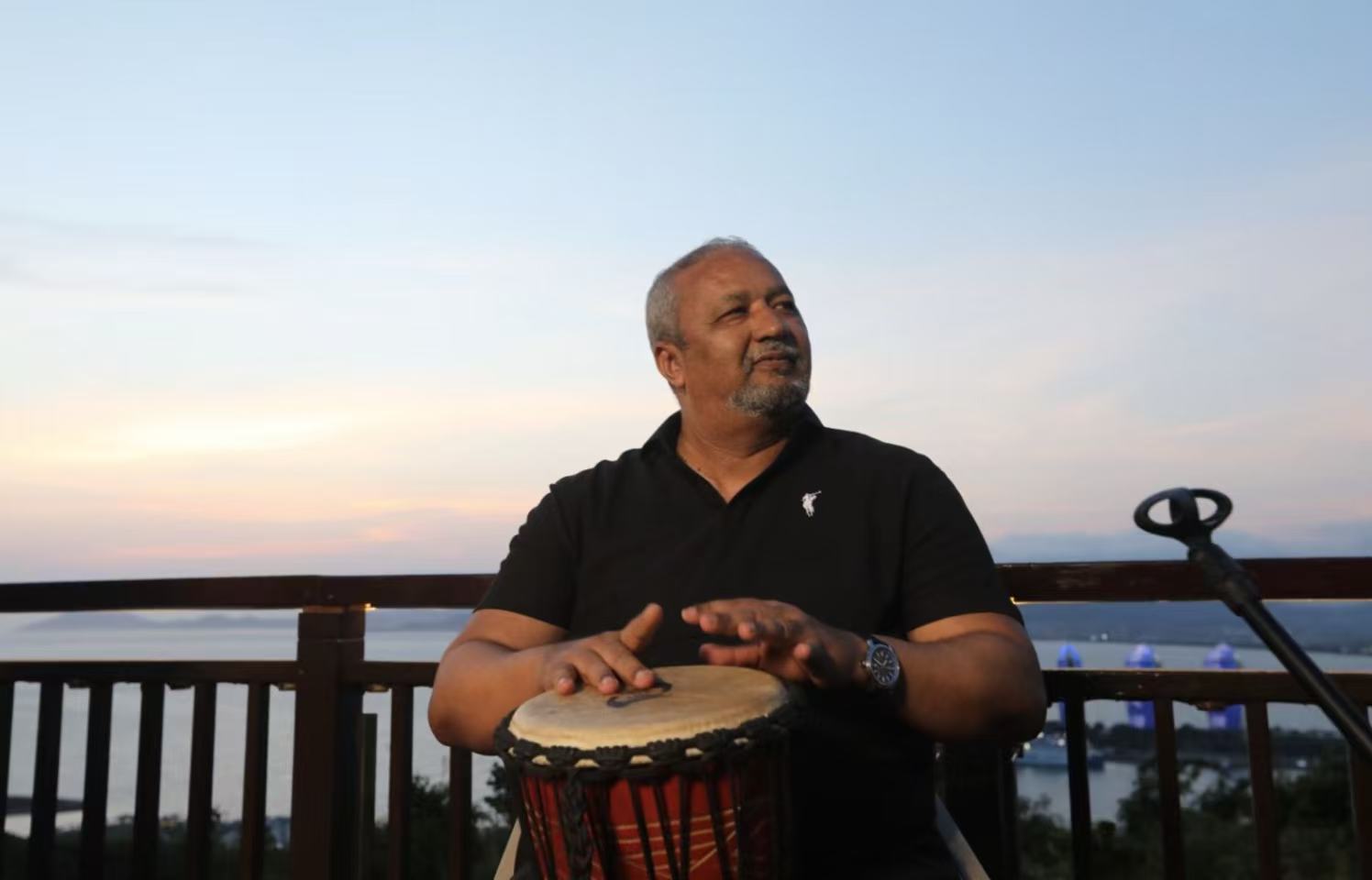
Cabo Verde is a land of crossings. Of the wind that arrives by sea, of the rhythm of the islands, of the words that travel from mouth to mouth, of the gaze of those who wait, build, and believe. That is why, when I think about this partnership with China—built with seriousness, respect, and will—I feel that it is also a crossing. A crossing made of cooperation, but also of human encounters: teachers and students, technicians and families, delegations and communities, partners who met and decided to continue walking together.
Over these five decades, the bilateral partnership has translated into cooperation in strategic areas such as infrastructure, training, institutional capacity building, trade facilitation, and support for sustainable development. More than numbers and diplomatic milestones, this journey reflects a trust built on respect, friendship, and the political will of both sides.
At this moment, our gaze does not only dwell on the past. It seeks paths forward. Because friendship, like bridges, only has meaning if it serves to cross over—and then to continue. As we project the next 50 years, the focus should be on consolidating results and creating new opportunities, with greater depth and scope. In a rapidly transforming world—with new economic, energy, climate, and technological challenges—Cape Verde and China have renewed reasons to move forward with strategic vision, flexibility, and a focus on concrete benefits for citizens.
Sanya and Sal Island: the affection of a twinning that began in 2009.
One of the most inspiring elements of this bilateral rapprochement is the twinned cooperation between Sanya and Sal Island, initiated in 2009. The twinning has become a privileged channel for cultural, tourist, and best practice exchange, strengthening relations beyond the strictly governmental sphere.
Sanya, with its coastal light and the way it transforms landscape into hospitality; Sal Island, with its salt in the air and its morabeza, a distinct and warm way of welcoming visitors. Between the two, a natural encounter was born: the joy of the sea, the vocation to welcome the other, the desire to learn from those who live similar challenges.
Sanya, a coastal city with its own dynamics in tourism and the maritime economy, and Sal Island, with its recognized potential in the tourism sector, have found points of convergence capable of generating value for both parties.
The cooperation between the two locations has contributed to bringing people and institutions closer together, and to transforming institutional ties into lived experiences—something that, in the medium and long term, sustains political cooperation with social impact.
I would like to highlight some areas where the city of Sanya has cooperated with Sal Island, namely the funding provided by the Municipality of Sanya for the construction of the tartan track and the lighting of the Municipal Stadium (Marcelo Leitão) on Sal Island and its impact at the sporting level. In recent years, athletes from Sal Island have dominated athletics events at the national level. Also noteworthy is the existing cooperation in the field of higher education and the recognition by the Cape Verdean authorities of Sanya's contribution to the training of more than 50 Cape Verdean students, through the granting of scholarships that have been awarded over the years.
In the more recent context of this local partnership, it is worth highlighting the visit, in 2025, to Sal Island, of an important delegation headed by Mr. Wang Qiyang, Member of the Standing Committee of the Hainan Provincial Committee of the CPC and Secretary of the Sanya Municipal Committee of the CPC. This visit reinforced the priority that the authorities of Sanya give to deepening exchanges with Cabo Verde, and confirmed the interest in expanding areas of collaboration in broader terms.
For those who live diplomacy, visits like this are not just protocol. They are messages. They are silent declarations of priority. And, for us, they were also an affirmation of the affection that Sanya has its Atlantic partner. The visit of a high-level delegation also constitutes a clear political signal: cooperation is not just historical and symbolic, but an active and ongoing agenda.
When we think about deepening cooperation between Sanya and Sal Island, we also think about what we feel can grow—not just in projects, but in opportunities and quality of life.
Allow me to refer to some points of the Framework Agreement on Deepening Friendly Cooperation between Sanya and Sal Island signed in September 2025 on the occasion of the visit of the Sanya delegation to Sal Island between the municipal authorities of Sal and Sanya, namely in Tourism, aiming at the joint development of tourism products, cross-promotion of destinations and exchange of good practices in tourism management; in Agriculture, where the sharing of technical knowledge, sustainable technologies, and strengthening of capacities in the agricultural sector is foreseen; in Health and Traditional Chinese Medicine (TCM) through the exchange between health institutions, promotion of TCM in Sal, and hospital cooperation.
As fundamental themes for the islands, Sanya and Sal Island could also promote cooperation in environmental management and climate resilience, sharing experiences in coastal protection, circular economy, water resource management, and climate adaptation strategies. Another field to be explored is digital transformation and smart services, with technology training programs for sectors such as tourism, public administration, and citizen services, with an emphasis on efficient and sustainable solutions.
With great satisfaction, I also refer to my wife's and my participation in the "Ambassador’s Dinner Party" program, held in the cities of Hainan province, between August 8 and 11, 2026, under the coordination of Hainan TV. I was greatly impressed by the outstanding production of this program. What appeared, on the surface, to be a diplomatic engagement was, in truth, a candid and heartfelt exchange among friends — an experience nothing short of extraordinary.
This program represents a valuable opportunity to further bring people closer together and deepen mutual understanding through conversations that, in addition to cultural aspects, address economic, diplomatic, and cooperation perspectives. It will also be a moment to give visibility to Cabo Verde's relations with China—on a national level and, in particular, in the experience of the twinning between Sanya and Sal Island.
Through this media initiative, I believe we can strengthen Cabo Verde's image in China and, in parallel, contribute to a closer relationship between communities, businesses, and institutions.
As we celebrate 50 years of China-Cabo Verde cooperation relations, the most important thing is not only to look back with pride—it is also to plan the future with responsibility and courage.
We are convinced that this partnership is bound to grow stronger, built on solid mutual trust and a series of practical measures. The sister-city cooperation mechanism between Sanya and Sal Island established in 2009, and the cooperative ties reinforced by the Sanya municipal delegation’s visit in 2025, are vivid examples of how bilateral relations can be expanded on multiple levels.
Because the next 50 years should not just repeat what has already been done. They must respond to new realities: new technologies, new environmental demands, new markets, new ways of cooperating. And if there is one lesson that this partnership has taught us, it is this: when there is true friendship and a shared vision, the paths appear.
May we, Cabo Verde and China, in the next 50 years, transform cooperation into even more tangible results: more opportunities for development, more empowerment for people, more sustainability for the future, and more integration to generate shared prosperity.
It is with this commitment that, as Ambassador of Cabo Verde to the People's Republic of China, I reaffirm our country's dedication to the continuity and deepening of this historic friendship.

TransNusa Launches Jakarta–Haikou Service
10:53,27-September-2026
What Does Hainan Offer NEV Businesses?
10:53,27-September-2026
Inira from Russia Celebrates Mid-Autumn Festival in Hainan
23:41,25-September-2026
Hainan Through Culture: Mid-Autumn Festival – Moonlight, Lanterns, and Island Traditions
19:36,25-September-2026
Remote Sensing + Al: Why Hainan Is Drawing Commercial Space Companies
19:36,25-September-2026
Why Global Entrepreneurs Are Investing in Hainan?
19:36,25-September-2026

Copyright © 2021 hiHainan.All rights reserved.琼ICP备09005000号-13
 thisishainan@163.com
Partner: Hainan College of Foreign Studies