


On 24 March, the opening day of the Boao Forum for Asia (BFA) Annual Conference 2026, the Global Free Trade Ports Development Forum attracted broad attention and created a vibrant atmosphere.
By 1:30 p.m., one hour before the forum was scheduled to start, the venue was already crowded with guests and media representatives. When the session began, all seats—numbering in the hundreds—were fully occupied. As more participants continued to arrive, extra seating had to be added again and again.
As a major Hainan-themed event of the BFA Annual Conference, the Global Free Trade Port Development Forum is being held for the sixth time this year.
This year’s forum has brought together more than 500 participants from China and the wider world, including government officials from over 30 countries and regions, leading experts and scholars, executives of multinational corporations, representatives from more than ten major overseas free trade zones or ports, and senior political figures.
What attracted them? Handshakes across cultures and exchanges in multiple languages all point to a shared answer: free trade.
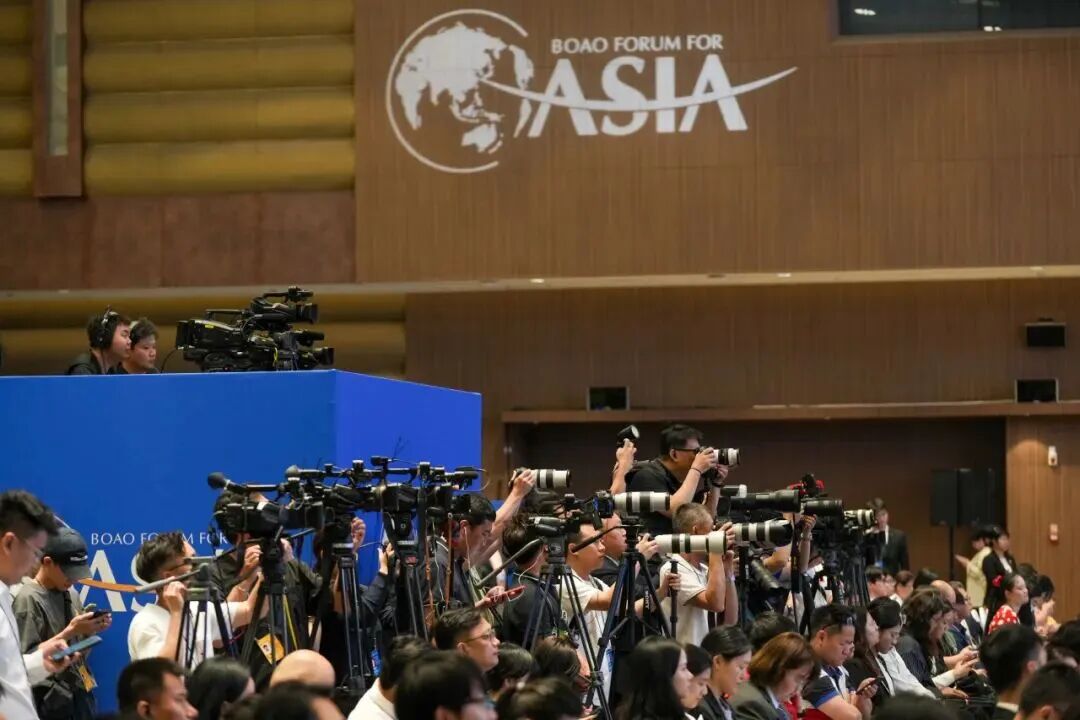
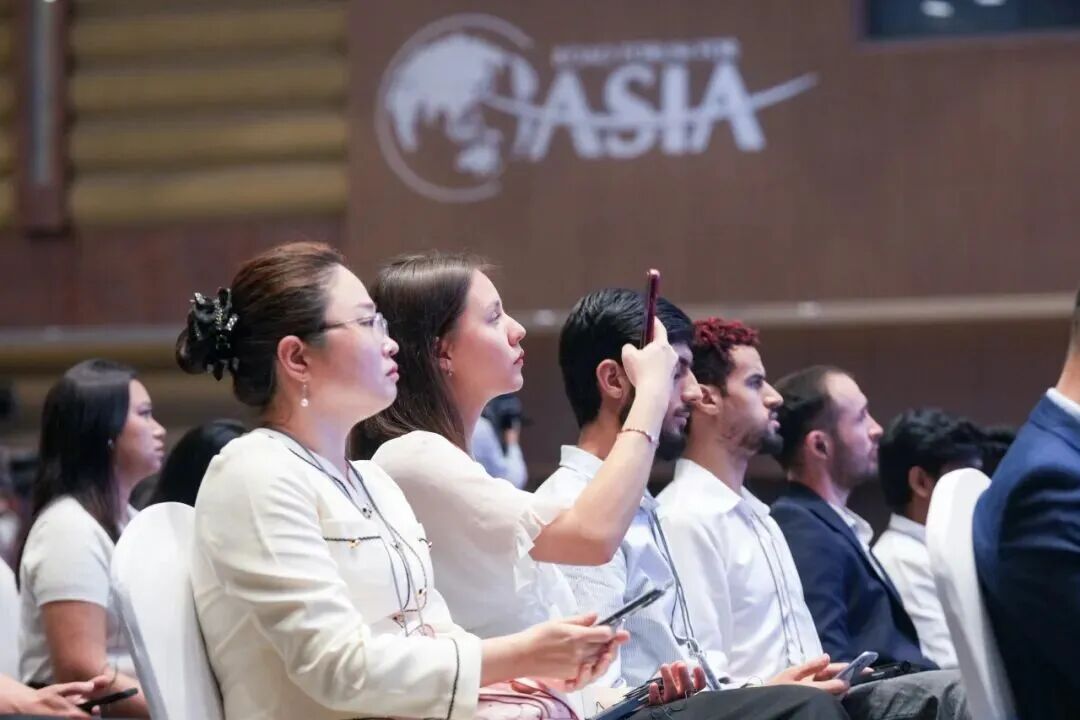
Media representatives participate in the Global Free Trade Ports Development Forum
“We see increasing fragmentation, we see tensions, we see (trends) towards protectionism. From my perspective, we definitely have to actively defend and shape global openness,” said Holger Bingmann, the Executive Board of the International Chamber of Commerce. In his view, free trade zones and free trade ports serve as bridges.
And this year’s forum is themed “Free Trade Ports: Opportunities and Missions as Gateways for Opening-up.”
At a time of growing uncertainty, what kind of free trade port does the world need? George Yeo, former Foreign Minister of Singapore and visiting scholar at the Lee Kuan Yew School of Public Policy, National University of Singapore, offered a key word: security.
According to Yeo, successful free trade zones and ports around the world share common features: security of assets, certainty of rules, and strong adherence by stakeholders to principles, agreements and credibility.
From Venice, Italy to Penang, Malaysia, from Singapore to Hong Kong, China, participants in the high-level dialogue explored a wide variety of development pathways and strengths of free trade zones and ports worldwide. Yet among all examples discussed, the Hainan Free Trade Port was mentioned most frequently.
Just over three months ago, the Hainan Free Trade Port officially launched island-wide special customs operations.
What changes have taken place since then?
During the forum, Hainan's latest achievements in advancing free trade port development were put on display, presenting new progress and tangible results that sparked lively discussion among participants.
“In the past, there were concerns about whether China would continue its commitment to opening up amid rising anti-globalization trends,” said Cao Yuanzheng, Visiting Professor of Management Practice at the School of Economics and Management, Tsinghua University. “The development of the Hainan Free Trade Port demonstrates through concrete action that China remains committed to opening up, and to advancing it at a higher level.”
Jonathan Choi Koon-shum, Chairman of the Chinese General Chamber of Commerce in Hong Kong, described the transformation of the Hainan Free Trade Port as “profound and far-reaching”.
He also highlighted Hainan’s geographical advantages. “With deepening cooperation with ASEAN, combined with policies such as seventh freedom of the air traffic rights and tariff exemptions for value-added processing, I am highly confident in Hainan’s future. The prospects for cooperation between Hainan and Hong Kong are broad,” he said.
Calls for cooperation and mutual benefit were reiterated throughout the discussions.
Jack Perry, Chairman of the 48 Group in the UK and Executive Chairman of LEC Robotics, shared a personal connection: “More than 70 years ago, my grandfather began trading with China.” Continuing this family tradition, Perry said he sees new opportunities in the Hainan Free Trade Port. “If we want partnership with Chinese companies, this is an option for us. I wanted to come here and set up shop in Hainan because the geography and the capability for joint ventures in this area are significant.”
Indeed, cooperation is increasingly moving from vision to reality.
During the forum, a number of international agreements are being signed, including a memorandum of understanding between Hainan Province and Catalonia, Spain; a partnership agreement between the Haikou National High-tech Industrial Development Zone and Mongolia’s Khushig Valley Free Economic Zone; and an online cooperation agreement between the Hainan Harbour and Shipping Holding Company and Ras Al Khaimah Port in the United Arab Emirates.
Through these ‘point-to-point’ partnerships, Hainan is strengthening economic and trade connectivity with free trade ports worldwide.
Each handshake reflects confidence—not only in the opportunities presented by the Hainan Free Trade Port, but also in the certainty it offers amid global uncertainty.
“The strategic goal of the Hainan Free Trade Port is to develop it into a major gateway for China’s high-standard opening up in the new era. Its leading role is already becoming increasingly evident,” said Cao Yuanzheng. He expressed the hope that the Hainan Free Trade Port will set a new benchmark for institutional opening up and inject more stability and positive energy into the world economy.

2026 Hainan International Coffee Expo to Open in August
21:28,10-July-2026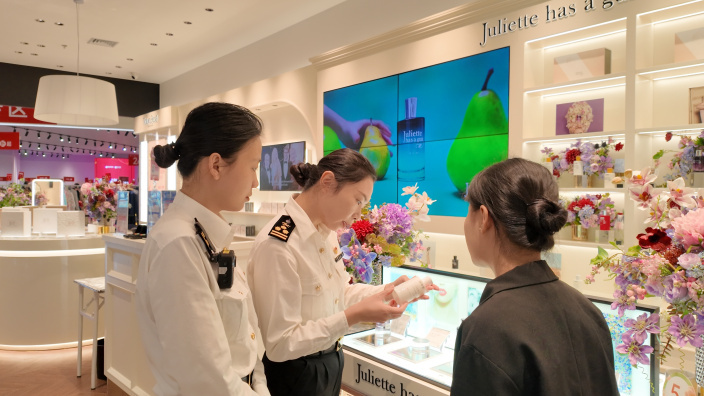
Haikou Customs Issues 7,575 Certificates of Origin in H1
21:28,10-July-2026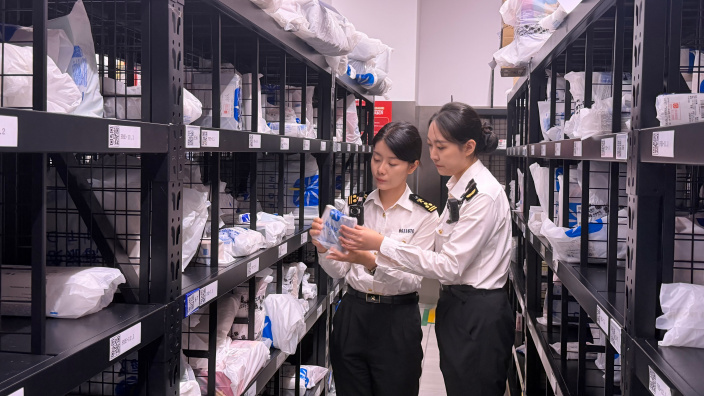
Sanya Airport E-commerce Exports Exceed CNY 300M in H1
17:31,08-July-2026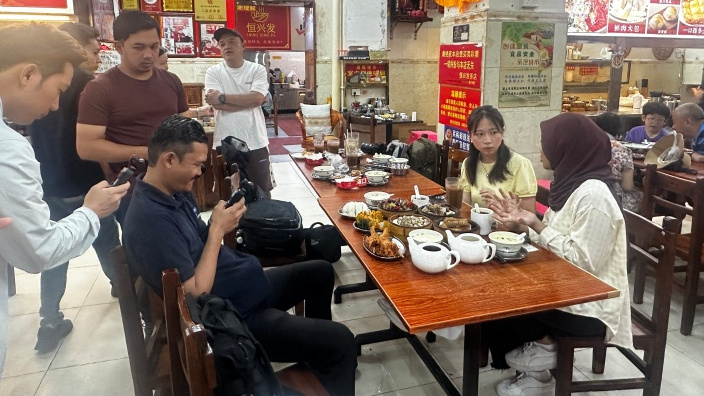
Bernama Crew Arrives in Hainan to Film Documentary on Hainan FTP
17:31,08-July-2026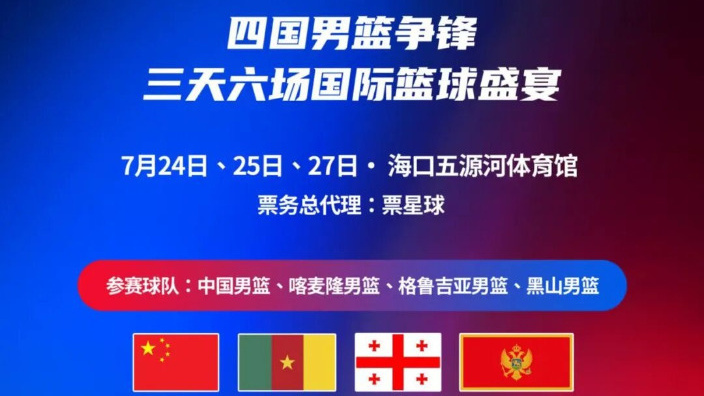
Hainan to Host Series of International Sporting Events in July
17:31,08-July-2026
Lesser Heat | Summer Breeze in Hainan
09:48,08-July-2026

Copyright © 2021 hiHainan.All rights reserved.琼ICP备09005000号-13
 thisishainan@163.com
Partner: Hainan College of Foreign Studies