


Recently, underwater photographer Jiang Guangfeng captured footage of a ‘panda sea slug’ during an ecological survey in the national-level marine ranching demonstration zone off Wuzhizhou Island in Sanya. The creature, measuring approximately 10 centimeters in length, an unusually large size for this species in the coastal waters of Hainan, was seen navigating through the forest of coral, its snow-white body adorned with rows of round black spots.
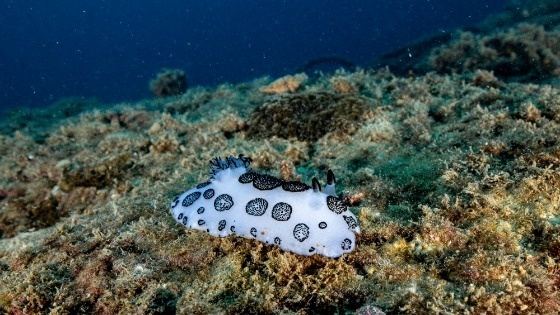
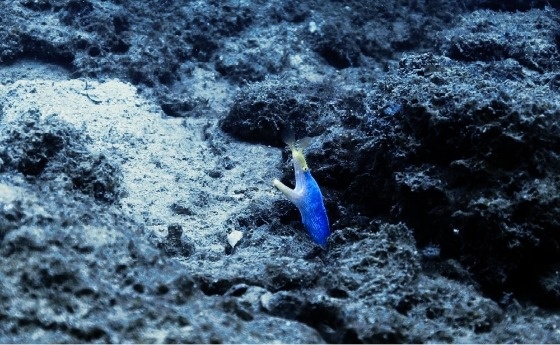
During the same dive, a reticulated nudibranch and a ribbon eel were also spotted. The simultaneous appearance of several rare reef-dwelling organisms indicates that the reef habitat is continuing to improve, creating an increasingly stable ecosystem.
The ‘panda sea slug’, scientifically known as Goniobranchus reticulatus, is a classic indicator species for tropical coastal reefs. Highly sensitive to the surrounding environmental conditions, this sea slug thrives only in healthy marine environments with pristine water quality, intact reef structures, and an abundant food supply. This slow-growing mollusk requires a long-term, stable aquatic environment and a complete food chain to reach full maturity.
According to Jiang Guofeng, these small marine organisms are highly attuned to their environment and tend to disappear if there is any fluctuation in the water quality or health of the reef ecosystem. The presence of so many sensitive species at the same time clearly shows that the habitat on the Wuzhizhou Island reef continues to improve. These sightings, along with previous sightings of species such as the ‘leaf sheep’ sea slug that has begun to settle and reproduce here, show that the biodiversity of Sanya’s coastal waters is on the rise.
This positive change is the result of over a decade of dedicated ecological restoration and conservation efforts. Since 2010, with the support of academic research teams, Wuzhizhou Island has implemented a systematic and sustained ecological restoration program. This includes the deployment of artificial reefs and sunken ship structures to create complex, three-dimensional underwater habitats, providing shelter and breeding grounds for marine fish, crustaceans, and mollusks. Additionally, staff have been actively engaged in transplanting and nurturing young coral to restore damaged reef areas.
To date, over 63,000 square meters of marine habitat have been restored in this area, with more than 70,000 coral colonies transplanted. Live coral coverage has increased from less than 15% to 37.08%, and the survival rate of the transplanted coral has remained consistently stable. In the waters surrounding Wuzhizhou Island, 265 species of coral reef fish have been documented, and fishery resources have seen a significant boost compared to pre-restoration levels. The ongoing, long-term practice of releasing aquatic species into the wild continues to replenish local marine populations.
Today, small reef-dwelling organisms are a common sight in these waters. Wild dolphins and blacktip reef sharks also frequent the area, and rare marine species including whale sharks, sea turtles, and spotted seals have been observed visiting as well. Following more than a decade of conservation and restoration efforts, biological activity in the nearshore reef zones has intensified, with both the habitat and the biological communities showing clear signs of recovery.

Hainan Film Festival Opens Global Call for AI Films, with Features in Focus
10:19,26-October-2026
Restoration Success Story - ‘Panda Sea Slug’ Sighted in Sanya!
10:19,26-October-2026
Shymkent - Sanya - Singapore Route Links Central & SE Asia!
10:19,26-October-2026
Why Do Neighbors Gather Under a 200-Year-Old Tree in China?
17:29,23-October-2026
Dual Submarine Cables Cut Hainan-Singapore Latency by 9 Milliseconds
17:29,23-October-2026
Hainan Through Culture: Shuangjiang – The Island’s Late-Autumn Table
17:29,23-October-2026

Copyright © 2021 hiHainan.All rights reserved.琼ICP备09005000号-13
 thisishainan@163.com
Partner: Hainan College of Foreign Studies