



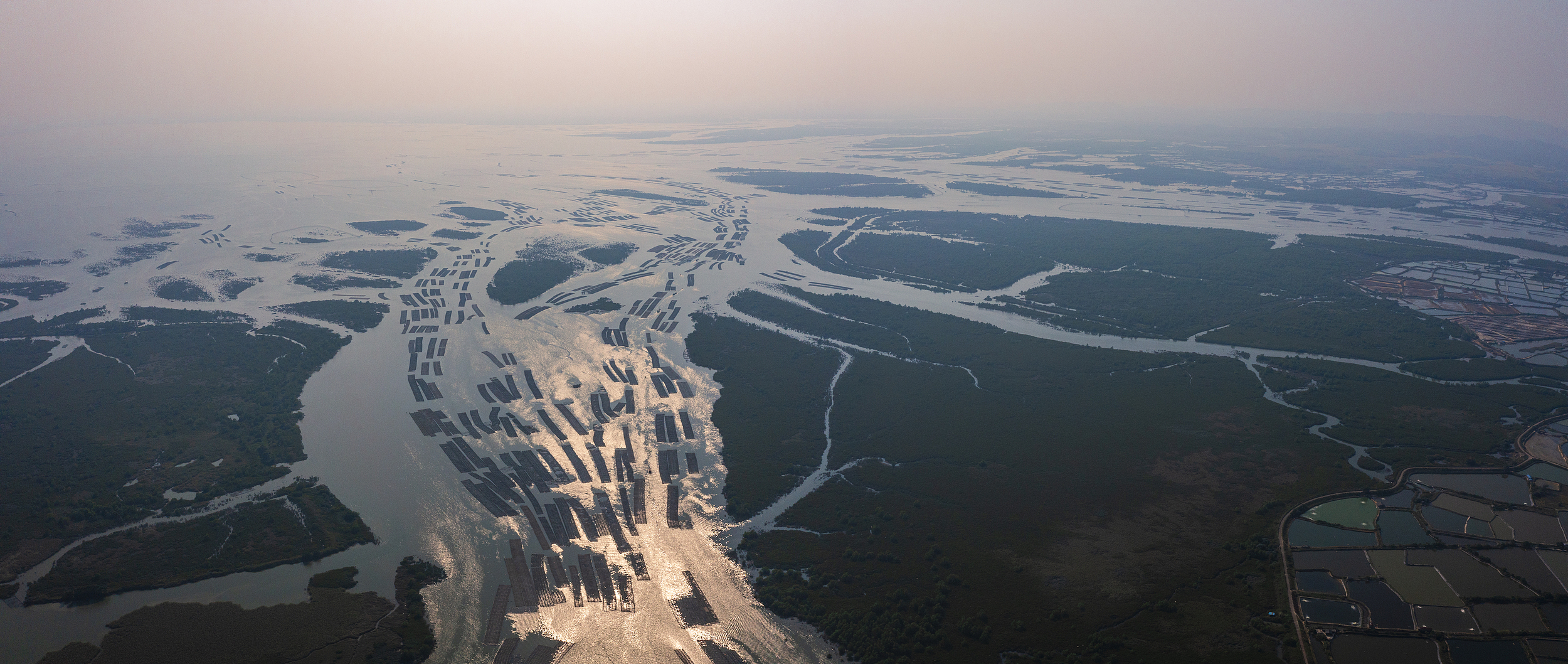
The initial phase of the Pinglu Canal project. (source: vcg.com)
The Pinglu Canal is scheduled to officially open for navigation on September 16. Starting from the Pingtang River estuary in the Xijin Reservoir area of Hengzhou, Nanning, the canal runs south through Luwu Town in Lingshan County, Qinzhou, before reaching the Beibu Gulf via the Qinjiang River.
This project will eliminate the shipping barrier between the Xijiang River mainline and the Beibu Gulf, allowing vessels up to 5,000 metric tons to travel directly between the river and the sea, opening up a new maritime route for goods from Yunnan, Guizhou, and Sichuan.
What makes this 134.2-kilometer canal in a far-flung province key to Hainan's success? The answer lies in its potential to link southwest China with the Beibu Gulf, Hainan, and ASEAN markets.
For Hainan, the Pinglu Canal could significantly expand the economic hinterland reachable via Yangpu.
In the first half of 2026, Sichuan, Chongqing, Guizhou, and Yunnan collectively posted combined GDP exceeding CNY 7.85 trillion. These regions host diverse industries ranging from automobiles, equipment manufacturing, and power batteries to new energy materials, green aluminum, and specialty agricultural products. While not all of these goods will pass through Hainan, additional transportation routes could connect Hainan to a broader industrial hinterland in southwest China.
The connection is bidirectional. Products from Southwest China can access global markets through the Beibu Gulf, while raw materials from ASEAN and other regions can enter Yangpu. There, they can be processed, traded, and supported by supply chain services in Hainan before being shipped to southwest China and other parts of the country.
However, the Pinglu Canal does not automatically benefit Hainan. Qinzhou Port is its primary access point to the sea, and for goods with existing direct shipping routes, exporting through Qinzhou may be more economical. Hainan's true potential depends on what Yangpu can offer that Qinzhou cannot.
Goods arriving at Yangpu can leverage Hainan FTP policies for various purposes beyond just "changing ships." These include international sourcing, warehousing, distribution, value-added processing, and trade services, as well as related activities such as shipping and bonded bunkering.
The Pinglu Canal drains into the Qinjiang River estuary. (source: vcg.com)
So far, 12 container shipping routes operate between Qinzhou Port and Yangpu Port, and their "same-vessel" service for both domestic and international cargo operates consistently.
The Pinglu Canal's primary significance for Hainan is its potential to unlock new economic opportunities for the island. If Yangpu's international shipping network, the institutional benefits of the Hainan FTP, and the industrial demands of southwest China are effectively linked, the canal could expand Hainan's access to a broader economic hinterland, which has been relatively limited in the past.
A canal in Guangxi is connecting southwest China, the Beibu Gulf, Hainan, and ASEAN markets more closely. For Hainan, the key opportunity is to increase cargo, trade, and industrial benefits within this emerging trade network.

Pinglu Canal opens, connecting Southwest China to the sea
11:32,16-September-2026
Why a Guangxi Canal Matters to Hainan?
11:05,16-September-2026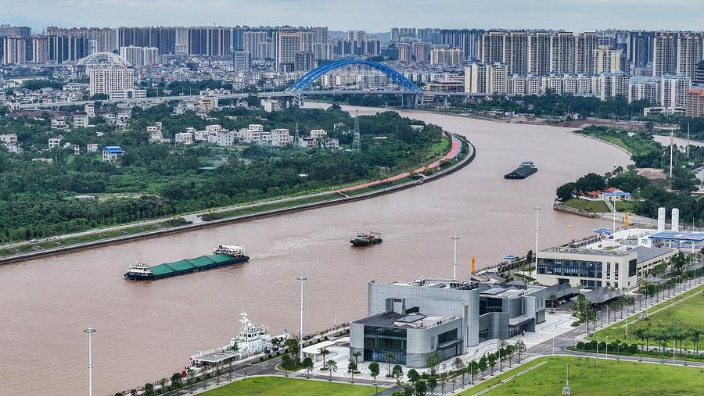
China opens Pinglu Canal, a trade shortcut to Southeast Asia
11:05,16-September-2026
Hainan's Private Rubber Sector Sees First Zero-Tariff Imports
11:05,16-September-2026
Beyond 91 New Species: Five Years of Ecological Revival in Hainan's Rainforests
11:05,16-September-2026
Foreign Teachers Praise Hainan FTP's Convenient Vibe
10:30,12-September-2026

Copyright © 2021 hiHainan.All rights reserved.琼ICP备09005000号-13
 thisishainan@163.com
Partner: Hainan College of Foreign Studies