


“Bolong!” As the Filipino content creators stepped into the Binglanggu Li & Miao Cultural Tourism Zone in Hainan, the warm greeting in the Li language from local young men and women instantly brought the guests closer to this land.
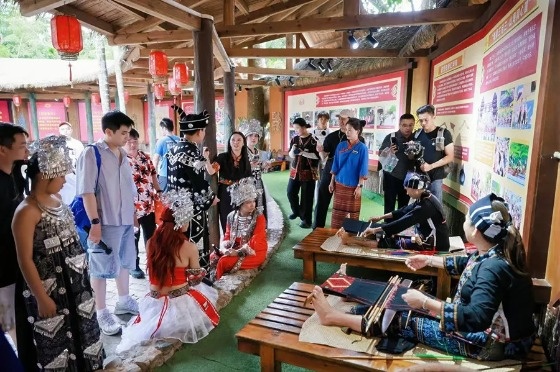
Filipino content creators watch a Li grandmother weaving brocade.
A Li elder played a melodious tune on a leaf, boat-shaped houses nestled among betel nut trees, and a grandmother sat on the ground, working deftly on a waist loom. Filipino content creator Sela Guia paused in the intangible cultural heritage village, took a sip of Shanlan rice wine, and her eyes lit up. “This taste is so familiar!” she told reporters. She said the brewing method of Shanlan wine and the patterns on traditional Li clothing are strikingly similar to indigenous Filipino traditions. “We also have similar rice wine and clothing back home. Being here today doesn’t feel like visiting—it feels more like visiting relatives.”
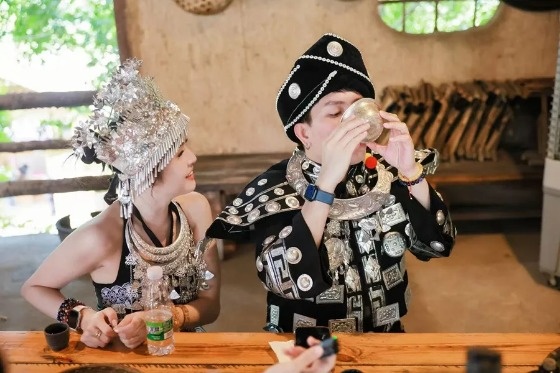
Filipino content creators taste Shanlan rice wine.
The highlight of the day was the large-scale live performance “Binglang Ancient Charm.” Fire-making by drilling wood, weaving Li brocade, pounding rice, and the bamboo dance—young Li performers used song and dance to recreate the labor and festivities of their ancestors. When the melody of “Planting Shanlan” began, the four content creators in the audience couldn’t help but tap along to the rhythm.
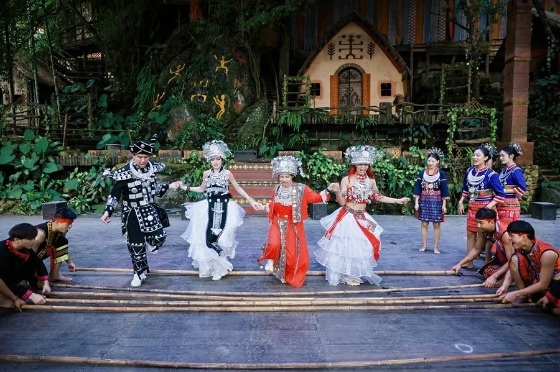
Filipino content creators try the bamboo dance on site.
Then, the bamboo dance interaction ignited the crowd. As soon as the crisp clacking began, Innah Bee, a dancer herself, quickly joined the line and leaped nimbly between the bamboo poles. “The Philippines also has a bamboo dance called Tinikling, which uses two bamboo poles to imitate birds hopping. Hainan’s version has more poles and bigger formations—it’s more like a collective celebration,” she said with a smile. “Although the movements are different, the moment the bamboo starts clacking, I can’t help but want to dance—joy is universal.”
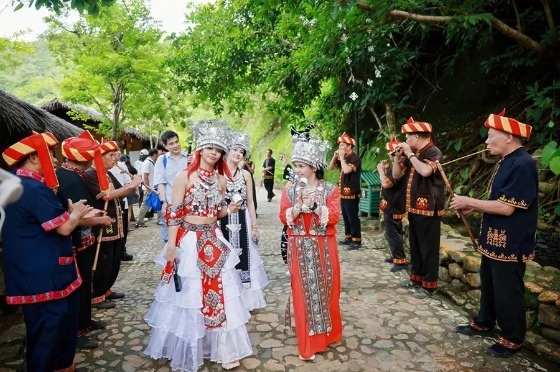
Filipino content creators visit the Binglanggu Li & Miao Cultural Tourism Zone.
Binglanggu is located in Baoting Li and Miao Autonomous County. It is China’s first 5A-level scenic area dedicated to ethnic culture and a signature destination for understanding Hainan’s Li and Miao heritage. Boat-shaped houses, an intangible cultural heritage village, a Li brocade museum, and a tattoo museum—across nine exhibition halls, visitors can see the “Dunhuang murals carved on human bodies” preserved by the last generation of Li women with facial tattoos, as well as national-level intangible cultural heritage items such as bamboo and wooden musical instruments, bark cloth, and primitive pottery.
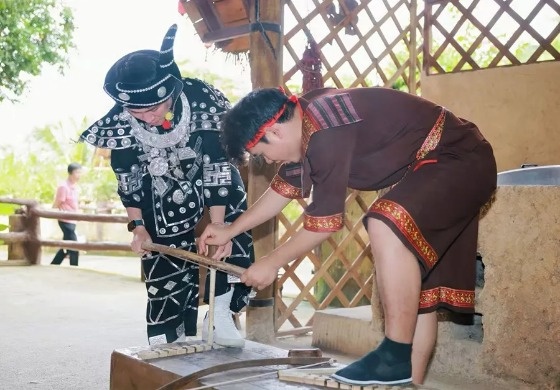
Filipino content creators try fire-making by drilling wood on site.
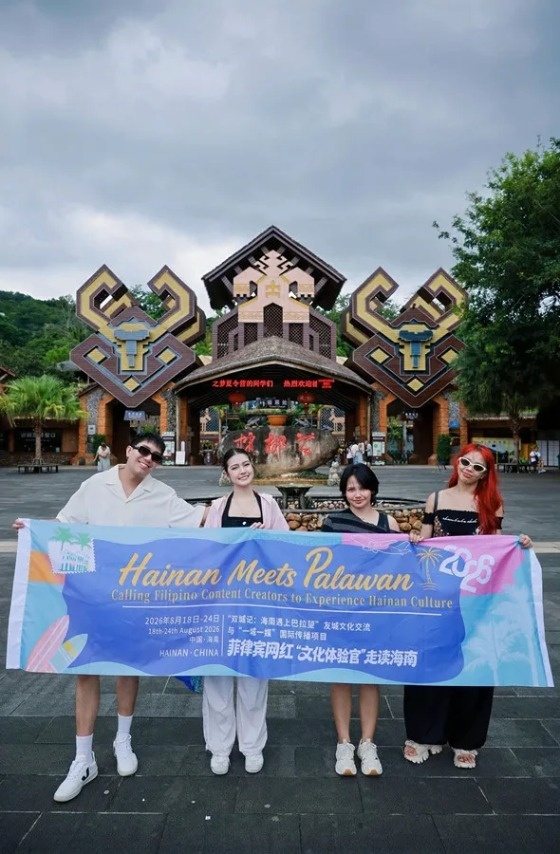
Filipino content creators visit the Binglanggu Li & Miao Cultural Tourism Zone.
What impressed the four Filipino guests most, however, was not the cultural display itself, but the sense of familiarity that transcended mountains and seas—from the Li greeting “Bolong” to the Filipino bamboo dance, from Shanlan rice wine to similar woven patterns. Culture has never been confined by borders; it grows independently over time, only to reunite unexpectedly on an afternoon beneath the betel nut trees.
Friendship Across Mountains and Seas: Echoes of Southeast Asia
17:40,26-August-2026
Between Science and Poetry: How We Tell the Stories of Nature
17:40,26-August-2026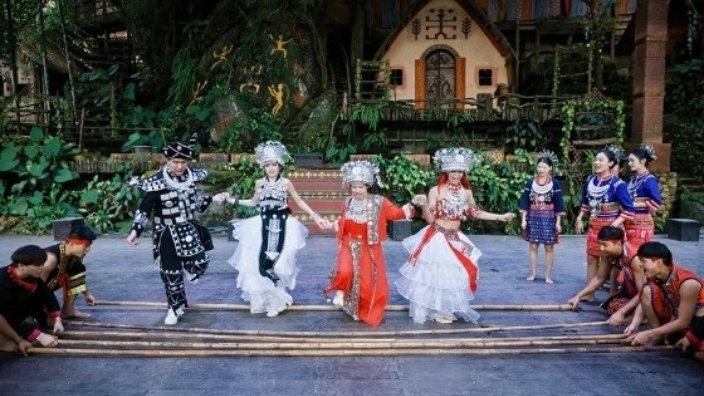
When Li “Bolong” Meets Filipino Tinikling: A Cross-Sea “Family Visit”
17:40,26-August-2026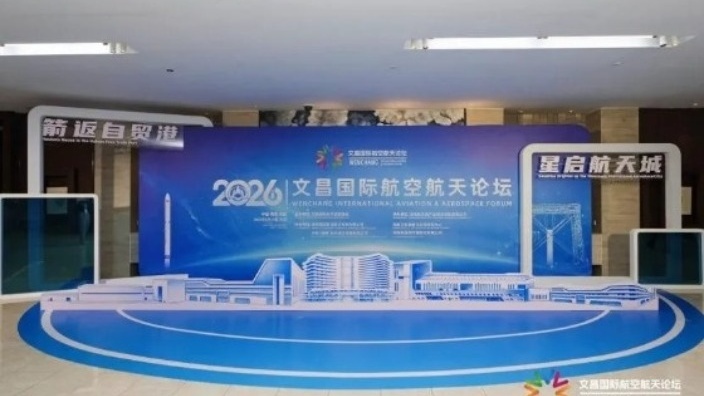
2026 Wenchang International Aviation & Aerospace Forum Opens
17:40,26-August-2026
Unlocking Haikou in 24 Hours: From the Historic Quarter to FTP Development
21:19,24-August-2026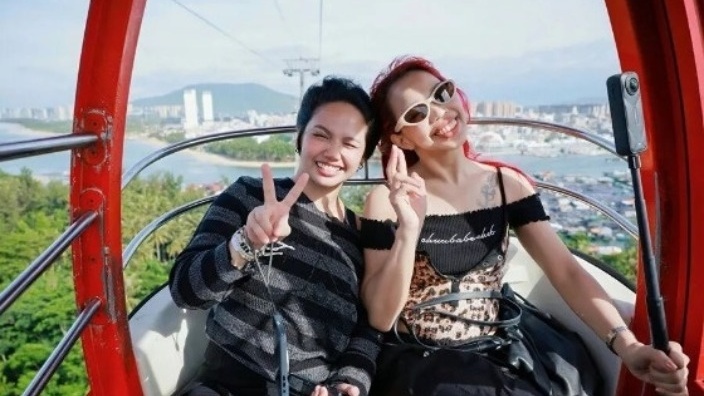
Lingshui: Cable Car Over the Sea, Monkey Islet Encounters
21:19,24-August-2026

Copyright © 2021 hiHainan.All rights reserved.琼ICP备09005000号-13
 thisishainan@163.com
Partner: Hainan College of Foreign Studies