


It's 6 am and dawn is just breaking over Qingshui Bay in Lingshui, on the southeastern coast of Hainan.
Standing on the shoreside, offshore fish farmer Na Zhongtao checks his phone before heading out to sea. Wave height, water temperature, dissolved oxygen levels, and blue-green algae concentrations–dozens of indicators update simultaneously on a smart app.
“Wave height: 1.2 meters. Conditions suitable for heading out to sea.”
After a decade at sea, the veteran fish farmer now checks his phone before every trip.
The young man who got Na into this habit, Xin Peng, stands beside him.
Xin and his team are gradually turning a once invisible and intangible underwater farming environment into data that can be read and stored.
Deep-sea aquaculture, once largely guided by experience, is beginning to bring data into its decision-making.
When Fish Farming Depended on the Weather
After a decade of farming fish at sea, Na keeps a mental ledger of how the work is done.
Yet much of that ledger is filled with the helplessness that comes with the job.
“The biggest risk in our line of work is what we can’t see,” he said, pointing to the offshore fish cages.
Nearshore aquaculture is highly sensitive to changing water conditions. Low dissolved oxygen, algal blooms, or typhoon-driven swells can have a devastating impact on farmed fish in as few as two or three days.
Traditional inspections, however, require farmers to take boats out and observe with their eyes alone. By the time fish are seen gasping at the surface, the best window for action has often already passed.
The second challenge is that the numbers are hard to pin down: how large the fish have grown and how much feed they need.
In the past, farmers had to take a boat out, cast a net, and haul up fish for measuring and weighing. The process took half a day, produced only about 100 fish, and still left a wide margin of error.
Feed accounts for a major share of aquaculture costs, yet the amount used has traditionally depended largely on experience: too little stunts growth, while too much sends money down the drain.
The greatest headache, however, is staffing.
Working at sea can be physically demanding and dangerous. Feeding fish in strong winds and waves can leave workers struggling to maintain their footing on a moving boat, and a moment of carelessness can result in an accident.
Young people are reluctant to enter this industry, leaving fish farms chronically short-staffed.
“The old way, relying on experience, physical labor and the weather, is becoming increasingly difficult to sustain,” Na said.
An unexpected turning point came in 2023, when the world’s first commercial underwater data center began operating in waters off Lingshui with support from local authorities.
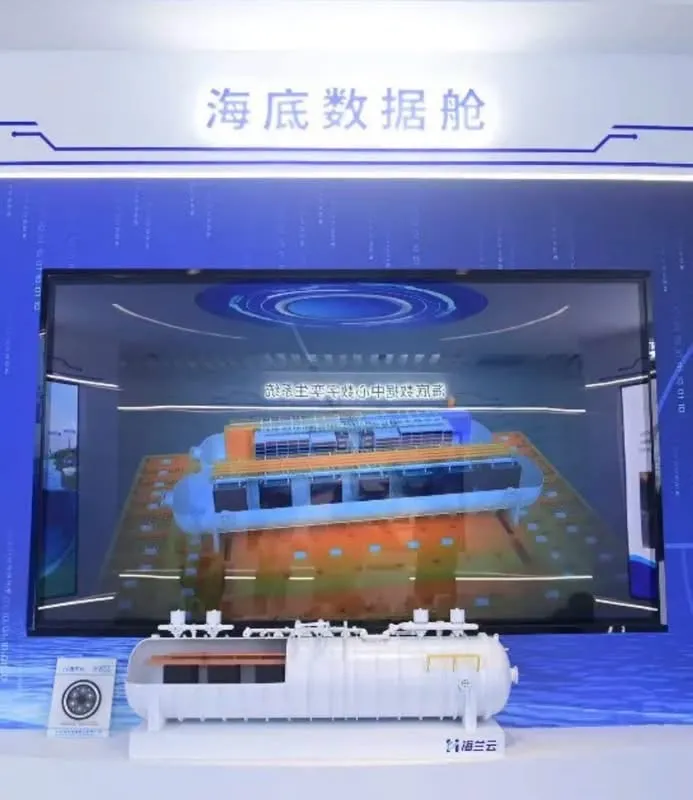
Hainan Underwater Data Center
The facility’s sealed server modules sit more than 30 meters below the surface and use the natural circulation of seawater for cooling. They consume significantly less energy than comparable land-based facilities and offer low network latency. The data center is also only a few nautical miles from the deep-sea fish cages in Qingshui Bay.
Hydrological data collected by surface buoys and images captured by underwater cameras can be fed directly into the nearby underwater computing infrastructure for real-time analysis, without first detouring to an onshore data center. That is how the integrated data system took shape.
Xin said wave-spectrum and ecological buoys on the surface regularly transmit hydrological data.
Below the surface, binocular cameras and sonar have so far been deployed mainly in selected trial cages to monitor the fish.
Once fed into the underwater computing infrastructure, the data is analyzed by AI models, with the results sent to a smart offshore aquaculture service platform. The system is currently open to local aquaculture companies.
Three Ways Data Is Changing Fish Farming
The first use case for this new suite of technologies is turning the once invisible underwater environment into a recordable stream of data.
Dozens of water-quality and hydrological indicators, including dissolved oxygen, water temperature and blue-green algae concentrations, are now collected periodically by surface buoys and stored on the platform.
Together, the records form an objective digital log of the farming environment.
This June, the platform detected and recorded higher-than-usual concentrations of blue-green algae in Qingshui Bay.
For now, Xin said, the system’s role is to continuously record the underwater environment and build up a body of data.
“How we can make better use of this data in the future will take time and more samples to verify,” he said.
Na put it more simply:
“In the past, we had to go out to sea and rely on experience to judge the water quality and whether the fish were doing well. Now, at least, we have records we can save and review later.”
The second application is underwater imaging. In the past, farmers who wanted to know how large their fish had grown had to take a boat out, cast a net, and haul fish to the surface for weighing. The process took half a day and also stressed the fish.
In trial cages equipped with binocular cameras, images of the fish are automatically captured each day.
Using the disparity between the two lenses, AI models estimate the fish’s length and weight and plot a daily growth curve.
Xin pulled up the platform dashboard, which showed the average size, growth rate, and size distribution of fish in the trial cages.
He stressed, however, that the technology is still being tested and optimized in trial cages.
The team is still exploring how far it can reduce the margin of error and whether the technology can be deployed across all cages.
For Na, the practical value is clear.
“For those of us raising fish, the less we can cast our nets and disturb the fish, the better," he said.
Net sampling is labor-intensive, and repeatedly disturbing the fish can affect their growth. Even a rough estimate from the cameras can ease the workload on the farm.
The third application is taking shape in the feeding process.
The team is testing drone-based fish feeding. A drone carries a feed container, follows a preset flight path to the target fish cage, releases the feed, and then automatically returns for recharging and reloading.
Xin said the ultimate goal is to create a closed loop:
Computing generates a plan → tasks are assigned → drones carry them out → underwater cameras provide feedback → the model is further refined.
But the system remains at the testing stage.
More data is needed to determine how much it can improve feed efficiency and reduce operating costs.
“It’s still too early to put a specific number on the benefits,” Xin said.
Na, however, is more concerned with safety.
“On days with strong winds and waves, we won’t have to send people out on boats to feed the fish. That is a real benefit for the people working on the front line.”
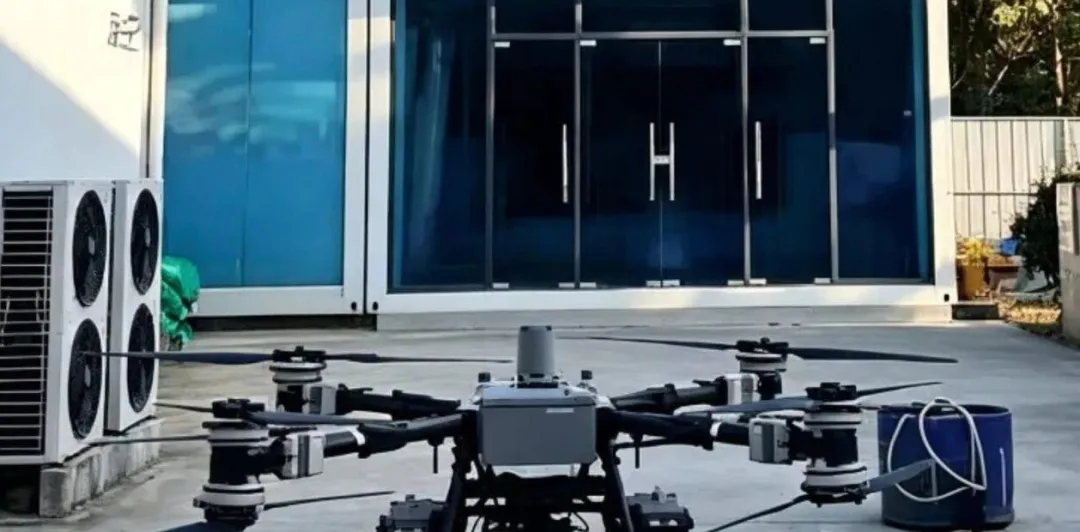
Xin’s team is testing drone-based feeding for offshore fish cages.
From One Fish to a Digital Record
What the system has begun building is a digital record of aquaculture operations.
For each batch of juvenile fish, the number stocked, daily feeding records, transfers between cages, disease treatments, and disposal of dead fish are all recorded online.
The next step is to create traceable digital profiles for fish stocks, allowing consumers to access key information about a fish’s journey from the hatchery to harvest.
“The foundation of a brand is trust, and the prerequisite for trust is transparency,” Xin said.
At the same time, the project is working with research institutions to explore the use of AI in fish disease diagnosis.
The team is working to correlate laboratory dissection and test data from diseased fish with abnormal swimming patterns captured by underwater cameras.
The goal is to shift from taking remedial action after fish die to early detection and intervention.
This work is still under development.
As the computing capacity of the underwater data center gradually expands, the team is also exploring further possibilities.
More buoys and underwater devices could be connected to gradually expand data coverage across a wider area, helping researchers better understand factors such as ocean currents, temperature stratification and nutrient distribution.
Accumulated aquaculture data could also support farming decisions and extend to aquaculture insurance loss assessment, lending and other financial services.
For now, however, these ideas remain at the exploratory stage. Whether they are feasible and how they might be implemented will depend on further progress, making it too early to conclude.
From “Farming by Experience” to Data-Driven Aquaculture
Moving from experience-based fish farming to data-driven aquaculture, Lingshui is exploring new ways to integrate data into farming decisions.
The transition may not happen overnight, but the direction is clear: give data a greater say and reduce the risks borne by experience and intuition alone.
In the early morning, servers quietly run more than 30 meters beneath the sea.
Na boards his boat and heads for the cages; he still likes to see the conditions for himself.
Xin remains onshore, watching the data flicker across his screen.
One heads out to sea; the other stays with the screen.
For now, the team is putting data to use one step at a time and refining the functions that prove most useful.

Reporter Anaïs Z. & Cultural Explorers from the Philippines Dive Into Surfing Culture at Wanning Riyue Bay
14:48,21-August-2026
Haikou Airport Launches 24-Hour Direct Transit Lane
15:43,20-August-2026
China Yangpu Port Registry Tops 100 International Ships
15:43,20-August-2026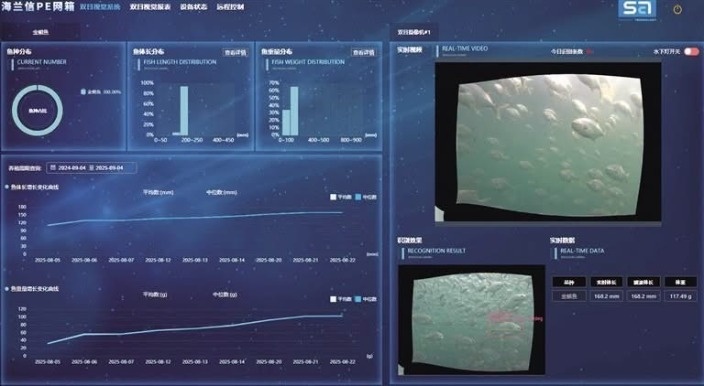
How Data Is Changing Fish Farming in Lingshui
21:50,18-August-2026
11.85 Million Passengers Cross Qiongzhou Strait in 2026 H1
21:50,18-August-2026
Jan - July: Hainan Exported Goods Worth USD 1.12 Billion
21:50,18-August-2026

Copyright © 2021 hiHainan.All rights reserved.琼ICP备09005000号-13
 thisishainan@163.com
Partner: Hainan College of Foreign Studies