


Hainan University announced recently that China’s first pilot demonstration base for “hydrogen production and magnesium extraction through seawater electrolysis” is scheduled to begin construction in June, with the experimental site expected to be completed by the end of this year.
Kang Zhenye, a researcher at Hainan University’s College of Ocean Technology and Engineering, stated that the project is designed to tackle major challenges in the new energy sector.
Kang pointed out that wind power consumption currently faces challenges, with excess electricity during strong winds and shortages when winds die down. Electrolyzer technology offers a flexible adjustment capability, operating between 20% to 120% of its capacity, which helps to stabilize grid fluctuations and supports Haikou’s local energy development strategy.
Haikou’s development plan aims for complete local adoption of new energy by 2030. The Hainan Hydrogen Energy Industry Alliance, formed earlier this year, designates Haikou as the main hub for an “innovation support platform for the hydrogen energy industry,” with Hainan University providing key original technologies.
Furthermore, Haikou and Hainan University are working together to develop the Hainan University Innovation and Technology Zone, with the aim of accelerating the project’s implementation. The development plan outlines that a pilot-scale verification platform will start construction in 2026, with the technology expected to achieve industrial application in offshore wind power projects by 2028.
A representative from Hainan University said the project is currently in the preliminary design phase, with construction estimated to start in June. The initial 10-kilowatt system will be scaled up gradually to a 500-kilowatt large-scale verification. The project aims to develop modular electrolyzers, product-separation facilities, and intelligent control systems, creating a closed-loop, full-value industrial chain.
By the end of this year, the experimental site is expected to be completed, with ongoing operation verification surpassing 2,000 hours to develop a replicable technical process package.
Kang also provided several important figures regarding economic advantages: "For every kilogram of high-purity hydrogen generated, 15 to 18 kilograms of magnesium hydroxide can also be produced.” After 5,000 hours of testing with a pilot prototype, hydrogen purity went beyond 99.99%, and magnesium hydroxide purity exceeded 99.3%.
The current market price of magnesium hydroxide ranges from 5,000 to 8,000 yuan per ton. The revenue from this by-product can substantially offset hydrogen production costs, making green hydrogen production economically competitive.
Once the project is operational, the affordable green hydrogen solution is expected to support a hydrogen energy industrial cluster valued at hundreds of billions of yuan, helping Haikou advance toward becoming a hub for hydrogen energy innovation and industrial growth.
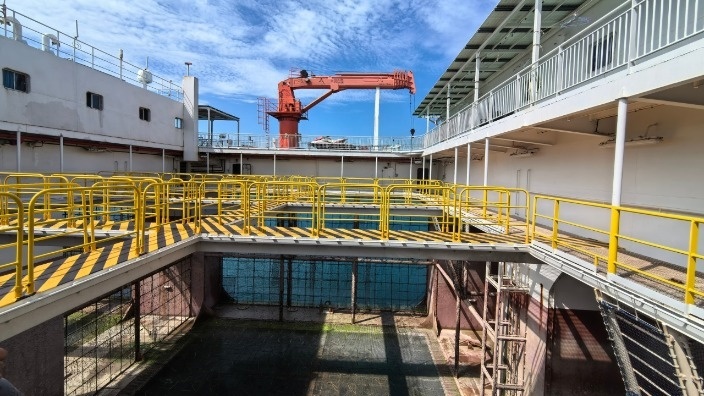
China’s Largest Semi-Submersible Fish Farm to Launch in Sanya
17:33,13-May-2026
Hainan’s New Island Departure Duty-Free Policy: $3.27b in Sales
10:29,13-May-2026
Haiwei: A Coastal Town Linking Wetlands and Fishing Port
10:27,13-May-2026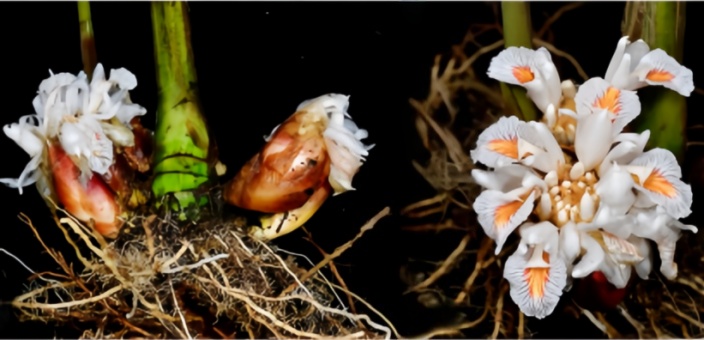
Three New Tropical Plant Species Discovered in Hainan and Xizang
18:39,11-May-2026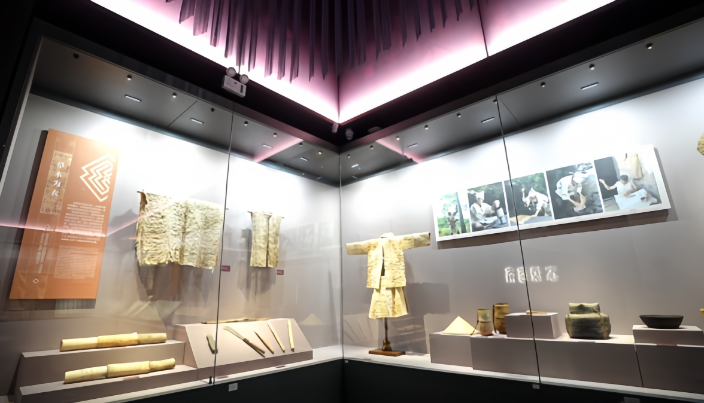
Hainan Int’l Museum Day Activities to Showcase Local Cultures
18:36,11-May-2026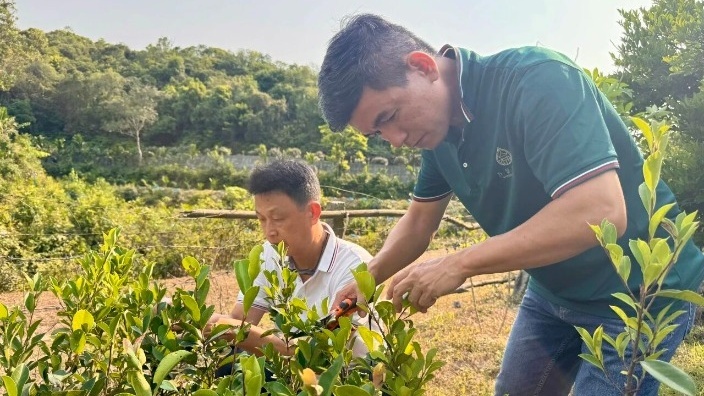
Hainan's Push for High-Value Sustainable Farming with Space-Seeds
22:47,10-May-2026

Copyright © 2021 hiHainan.All rights reserved.琼ICP备09005000号-13
 thisishainan@163.com
Partner: Hainan College of Foreign Studies