


In Hainan, traditional village feasts are held to celebrate weddings, housewarming parties, and traditional festivals, gathering residents for a lively, heartwarming meal filled with a hundred flavors of home.
Compared with the boisterous traditional meals of north China, Hainan village feasts offer fresher ingredients, more generous portions, and many auspicious symbols. These are much more than simple meals - they are emotional bonds connecting locals to their hometown. No matter how far they have roamed, the familiar flavors of these feasts bring memories rushing back and strengthen connections.
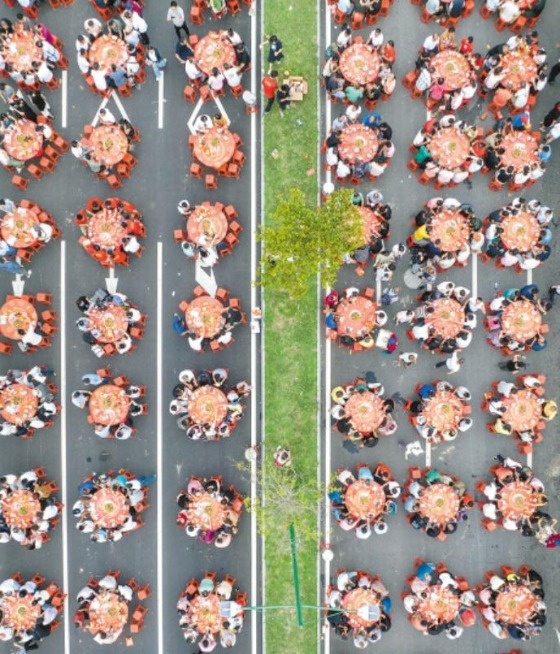
A Wenchang village feast featuring a hundred tables and a thousand diners.
Freshness is the Soul of the Village Feast
There are so many flavors at Hainan village feasts, and all of them are made with fresh, local ingredients.
There are no frozen ingredients shipped from far away or pre-made dishes here. On the day of the feast, the chef and assistants arrive early, setting up makeshift work tables made from wooden planks. They get busy, washing vegetables, cutting meats, and starting the cooking fire. Soon, bright flames emerge, and the broth in the large iron cooking pot begins to bubble. Every part of the meal preparation process is done in public, filling the air of the village with mouthwatering aromas.
First, let’s check out what meat is on the table at Hainan’s village feasts. Tunchang ‘Black Pigs’ are a nationally recognized geographic indication product, and are often the stars of village banquets. Local chefs have their own preparation methods - the forelegs, low in fat and high in collagen, are blanched. Sliced ginger, star anise, cinnamon, and other spices are added to the mixture, which is simmered over low heat for three hours. Once the broth has thickened, the pork skin turns golden brown and an irresistible aroma begins to drift from the pot. Before the pork is served, a layer of pickled cabbage is placed at the bottom of the bowl to absorb excess oil and add flavor.
Dongshan Goat, from Wanning, is another popular village banquet dish. There are as many preparation methods as chefs, ranging from five-spice braised goat to red-roasted goat. First, the meat is lightly stir-fried then ginger slices, dried tangerine peel, red dates, and other spices are added, and the mixture is simmered for two hours to create a complex, tasty flavor. When it’s ready, the meat is so tender that it falls off the bone.
Next on the menu is seafood. Crabs, abalone, prawns… all the bounty of the sea is here. In Hainan, the local specialty is steaming seafood with garlic. Minced garlic is spread generously on top, and the seafood is placed on a bed of rice noodles. As the dish is steamed at high-temperatures, the noodles absorb savory juices. Once the dish is cooked, chopped scallions and chili flakes are sprinkled on top, and hot oil is drizzled over the entire concoction. Just one bite and you’ll be hooked forever!
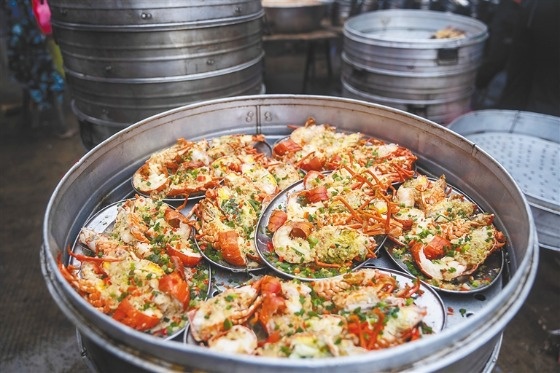
Steamed lobster at a Hainan village feast.
Chicken is Essential for a Hainan Feast
In Hainan, chicken is essential for every feast. Wenchang Chicken, one of Hainan’s four signature dishes, is the star of local village banquets across the island.
Authentic Wenchang chickens are initially raised free-range in the forest, feeding on banyan and insects, resulting in firm meat. Later, the chickens are fattened with peanut cakes, coconut shreds, and other refined feeds, giving the meat a rich flavor. Precise heat control is the key to preparing this dish - the traditional technique involves first boiling over high heat until the chicken skin turns yellow, then simmering over low heat to achieve a flavorful, tender, juicy white-cut chicken with golden skin. Dipped in a sauce made of lime, ginger, and minced garlic, this is the most authentic flavor of Hainan.
In Danzhou, local village banquets feature wampee chicken. Wampee fruit is stuffed into the cavity of the chicken, which is then placed on a bed of wampee leaves and then steamed over low heat, giving the chicken a unique flavor profile.
Another favorite signature village banquet dish is Wenchang’s ‘Family Reunion’. This dish is always served first, and symbolized reunion and happiness. The most distinctive feature of the dish is the abundance of ingredients - up to twenty different kinds, including seafood, different meats, vegetables, and dried goods. Squid, dried shrimp, shiitake mushrooms, dried bean curd, fresh shrimp, pork… all the ingredients are uniformly sliced or cubed and stir-fried in sequence. As the smoke rises from the wok, the aroma of seafood and meat mingles together, and each bite carries the warmth of home.
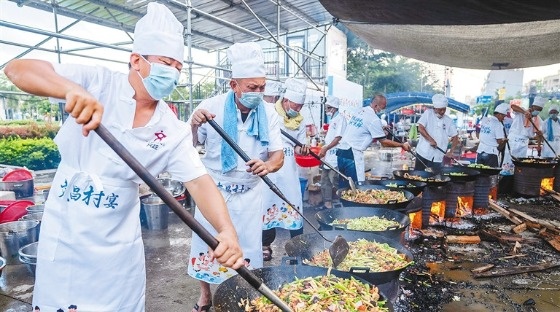
Chefs prepare flavorful dishes for the village banquet.
Innovation Adds More Flavor
Hainanese people love traditional dishes, but village chefs also love trying new recipes.
In Wenchang, whelks and mantis shrimp are new favorites. No matter if they are steamed or salt-baked, the meat is tender and full of flavor. Curry-braised taro incorporates Southeast Asian flavors,. It’s slow-cooked with coconut milk, resulting in soft, flavorful taro. Village chefs in Puqian, Wenchang also cook sandworms with fermented vinegar, creating a sour, spicy, savory soup that is quite popular.
In Ding’an, the local ‘Black Pork’ is prepared in many different ways. The pork skin is soaked, blanched, and chilled, then served with chili, vinegar, and sugar in a cold salad, resulting in a springy, smooth texture that’s both appetizing and refreshing. Coconut ribs are an "upgraded" version of the village feast—ribs are cut and put into coconuts and simmered over low heat, allowing the aroma of coconut and pork to blend perfectly, making both eating the meat and drinking the soup a true delight.
Village banquets are not only a feast for the taste buds but also an emotional celebration. No matter how times change, the warm flavors of home welcome Hainan locals and visitors alike.

30-Day Countdown Begins! The 6th Hainan Expo Invites the World
19:51,15-March-2026
AI Unravels the Mystery of a 500-Year-Old Shipwreck
19:52,14-March-2026
Canadian Chocolate Company Takes Root in Hainan, Aroma Reaches Global Markets
19:52,14-March-2026
Hainan Resident Zero-Tariff Sales Exceed ¥5 Million in 1st Month
20:10,14-March-2026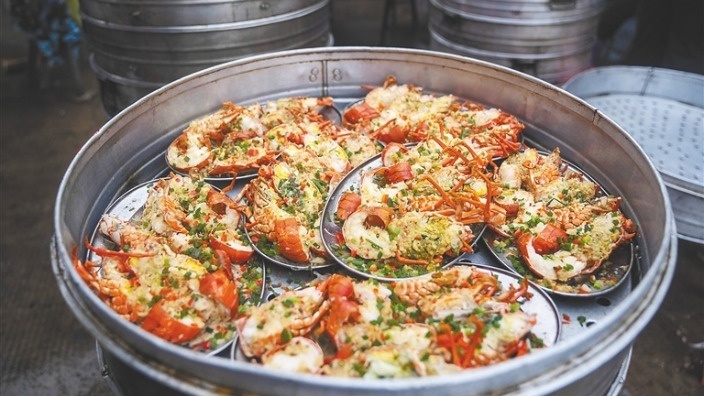
A Hundred Flavors of Tradition - Hainan Village Feasts
18:32,12-March-2026
Hundreds of Students from 25 Countries Compete – COBIS Primary Games Kicks Off at Harrow Haikou
18:30,12-March-2026

Copyright © 2021 hiHainan.All rights reserved.琼ICP备09005000号-13
 thisishainan@163.com
Partner: Hainan College of Foreign Studies