


China’s annual “Two Sessions” convened in Beijing in 2026 against a backdrop of rising global uncertainty. Ongoing conflict in the Middle East, mounting geopolitical tensions, and a fragile global economic outlook have heightened international attention on China’s policy direction. In this context, the signals of openness emerging from the meetings carry particular weight — and the Hainan Free Trade Port has once again become one of the most closely watched topics.
This year’s meetings are also the first since the Hainan Free Trade Port officially launched its special customs operations, a milestone widely viewed as marking a new phase in China’s high-level opening-up strategy. The phrase “go to Hainan for development” has become a recurring refrain in discussions surrounding the meetings, reflecting growing interest from businesses and investors.
At a time when protectionism is re-emerging and global supply chains face renewed disruptions, China’s reaffirmation that “the door of opening-up will only open wider” sends a stabilising signal to international markets. For many observers, how China continues to pursue openness amid global turbulence will shape expectations for the broader trajectory of the world economy.
If the period of China’s 15th Five-Year Plan is seen as an important window through which the international community observes China’s future development path, then the Hainan Free Trade Port could well be the key that unlocks this window of opportunity. As a platform for institutional innovation and high-standard openness, Hainan is steadily building a bridge that links China more closely with the global economy through freer trade, more convenient investment regimes, and enhanced cross-border flows of goods, capital and data.
From an ASEAN perspective, the significance of Hainan extends far beyond that of a regional pilot zone. As China’s economy continues to upgrade and regional supply chains are reshaped, Hainan is emerging as a strategic gateway connecting ASEAN with China’s vast domestic market. In sectors ranging from shipping and logistics to digital trade, cross-border services and consumer markets, the Free Trade Port’s institutional advantages are creating a more flexible and efficient pathway for ASEAN businesses seeking to expand into China.
For Malaysian enterprises in particular, the opportunities are noteworthy. Malaysia already enjoys deep cooperation with China in trade, logistics, financial services and the halal industry. The Free Trade Port’s low-tax regime, simplified tax system, and greater facilitation of cross-border flows could provide an attractive platform for Malaysian companies establishing regional headquarters, trade hubs, or supply-chain management centres within China. Meanwhile, Hainan’s rapid growth in tourism, healthcare, green energy and digital industries offers additional avenues for collaboration.
In an era when certainty and openness have become increasingly scarce, the advancement of the Hainan Free Trade Port carries significance beyond China itself. It represents not only China’s continued commitment to opening up, but also a potential anchor of stability for regional economic cooperation. For businesses in Malaysia and across ASEAN, understanding Hainan, engaging with its evolving ecosystem, and positioning early in this emerging gateway may prove to be a crucial step in capturing the next wave of regional opportunity.

Loh Yee Wei, Editor-in-Chief of Malaysia’s Nanyang Siang Pau, is a veteran figure in the Malaysian Chinese-language media industry. She is also the first woman to serve as the Editor-in-Chief of Nanyang Siang Pau since the newspaper was founded in 1923.

Overseas Media Buzz: 446 Outlets Spotlight Sanya’s Asian Beach Games Venues
19:20,27-April-2026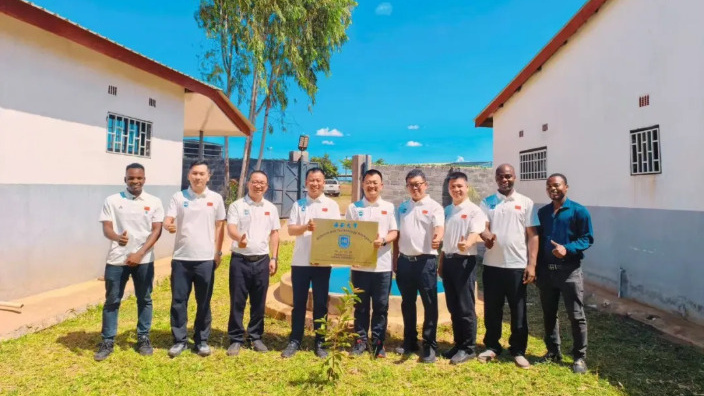
HNU's 1st Overseas Science and Technology Backyard Established in Zambia
19:20,27-April-2026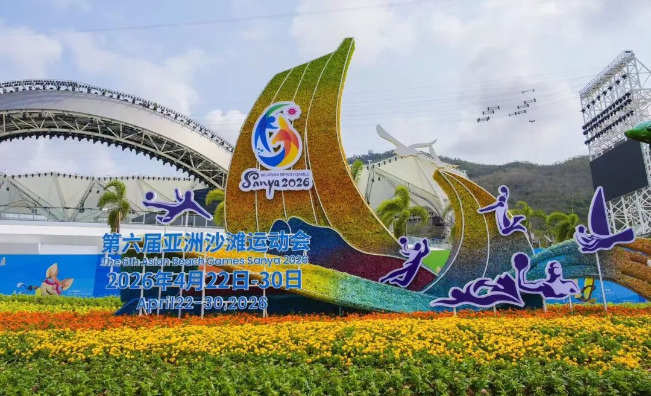
How Sanya Claimed the Asian Beach Games
21:08,22-April-2026
Veteran Singapore Brand Confident in Hainan FTP’s Future
21:03,22-April-2026
Multiple Records Broken at the 6th Hainan Expo
21:20,22-April-2026
China's consumer shift: not just importing, but integrating global supply chains
21:19,22-April-2026

Copyright © 2021 hiHainan.All rights reserved.琼ICP备09005000号-13
 thisishainan@163.com
Partner: Hainan College of Foreign Studies