


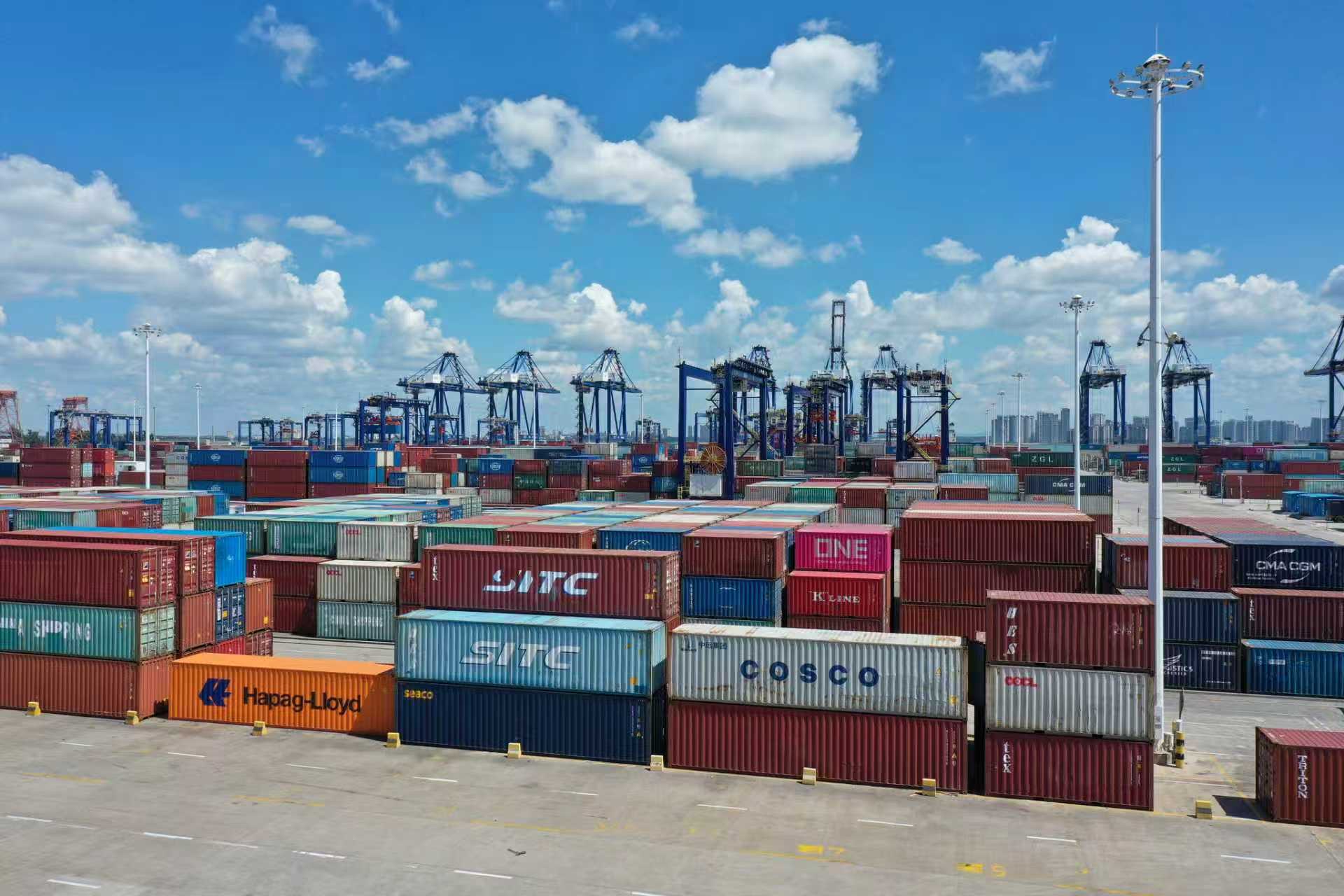
 Yangpu Port
Last year marked a historic turning point for the Hainan Free Trade Port (FTP) with the official launch of island-wide special customs operations. This milestone is not just a standalone achievement but also a cornerstone of Hainan’s role in China’s 15th Five-Year Plan (2026–2030), transforming the island into a leading gateway for high-standard opening-up.
For Hainan (and arguably for China), the core event of 2025 was the launch of island-wide special customs operations on December 18. This turned the entire 35,000-square-kilometer province into a special customs supervision zone, governed by a “freer access at the first line (international) and regulated access at the second line (to the Chinese mainland) customs management system. These changes brought immediate results. First, the scope of zero-tariff goods expanded dramatically. For example, on the very first day, a 179,000-ton shipment of zero-tariff petrochemical materials arrived at Yangpu Port, saving enterprises nearly CNY 10 million in costs. Second, goods processed locally now qualify for tariff-free access to the mainland if they meet a 30% value-added threshold. For example, 3,300 boxes of chocolate from a local joint venture cleared customs for domestic sale, cutting costs by about 10%. Third, policy dividends fueled strong growth. Industrial value-added grew by 9.9%, and paid-up foreign capital surged by 19.9% —rates among the highest in China. Over 26,800 new market entities were registered, and the island welcomed more than 100 million visitors. Fourth, a new review mechanism for foreign nationals’ work and residence permits was implemented, streamlining the process to as few as four days.
The Role of the Hainan FTP in the 15th Five-Year Plan (2026–2030)
China’s 15th Five-Year Plan frames high-standard opening up as a core development strategy, with the Hainan FTP serving as its most concrete institutional expression. The provincial government’s 2026 work report, aligned with the national plan, sets an ambitious average annual GDP growth target of over 6% for this period, exceeding the national 2026 annual growth target range announced at the start of the Two Sessions by Premier Li Qiang, of 4.5-5%.
A strategic priority of the new plan includes “promoting high-standard opening-up” as a “key task” integral to Chinese modernization for 2026-2030. The strategy emphasizes a fundamental shift toward “institutional opening-up,” with the Hainan FTP described as the new standard bearer for harmonizing rules, regulations, and standards.
More than a mere policy upgrade, these reforms assert an “institutional leap” aiming to align domestic rules with high-standard international trade frameworks like the Comprehensive and Progressive Agreement for Trans-Pacific Partnership (CPTPP) liberalization and Digital Economy Partnership Agreement (DEPA), while solidifying alignment with existing Regional Comprehensive Economic Partnership (RCEP) trade rules. These reforms will allow China to upgrade existing trade pacts and prepare for accession to new ones, and will be complemented by expanding the list of visa-free countries and introducing more facilitation measures for foreign enterprises.
In addition to leading institutional opening up, Hainan will focus on three additional pillars. These include deepening the flow of production factors, e.g., improving the “Port of Yangpu” ship registration system, promoting cross-border use of the Renminbi (RMB), and implementing a negative list for cross-border data flows. Additionally, Hainan will emphasize hub connectivity, aiming to create a strategic intersection of domestic and international markets under the “dual circulation” strategy. The goal is to create “two headquarters bases” (i.e., for Chinese companies going global and international firms entering China) and “two hubs” (i.e., for international shipping and aviation). Finally, close attention will be paid to risk prevention, including continuous improvements to systems to prevent and control risks related to “zero-tariff” goods, illegal financial activities, and tax evasion.
By 2030, Hainan will transform its industrial landscape. Its four pillar industries (tourism, modern services, high-tech, and high-efficiency tropical agriculture) are projected to account for 73% of regional GDP. High-tech industries are targeted to contribute 20% of GDP, with the digital economy core reaching 9%. Infrastructure will also see major upgrades, with construction starting on the Zhanjiang-Haikou High-speed Railway and laying the groundwork for the new Sanya Airport.
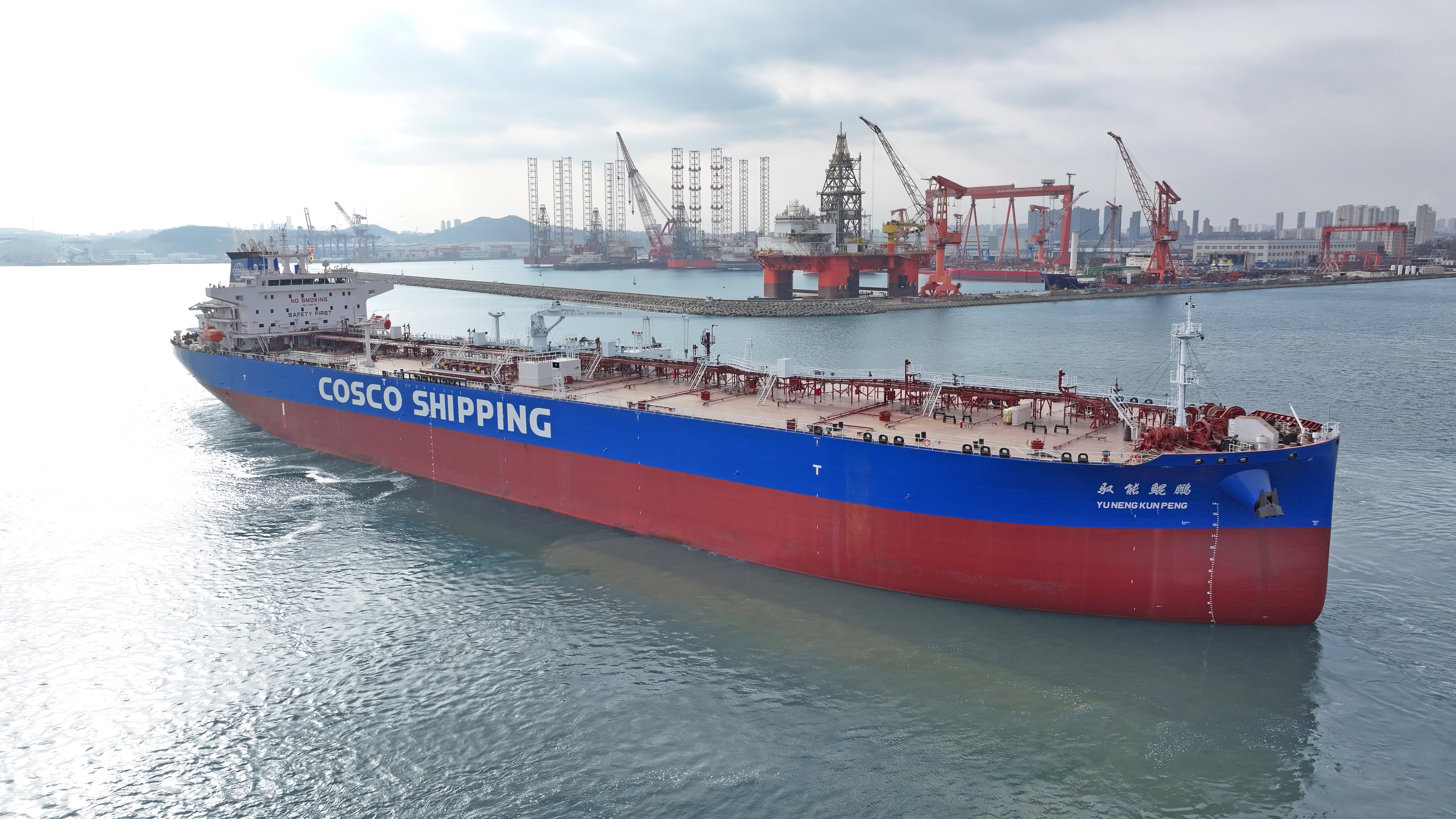 Yangpu Port
Key Opportunities Associated with these Reforms
First and foremost, in an era when market disruptions due to US-instigated trade wars and military aggression aim to cause and exploit polycrises that spoil global trade, energy security, supply chains and development opportunities, especially for emerging markets and the Global South as a whole, the continued rise of the Hainan FTP in tandem with the 15th Five-Year Plan offers the world a more open, transparent and predictable market.
The focus will remain on cutting non-tariff barriers and continuously refining negative lists for foreign investment, cross-border services, and goods trade. Above all, certain target sector opportunities will exceed others, backed by the expansive “Encouraged Industries Catalog.” For example, in advanced manufacturing and tech development, opportunities exist in the deep processing of imported foods, biomedical R&D, and manufacturing for yachts and aircraft. Reform is also actively courting ventures in brain-computer interfaces, embodied AI, green hydrogen, and marine bio-manufacturing. In the service sector, Hainan seeks global partners to expand cross-border e-commerce platforms and financial services, and to develop the Lingshui Li'an International Education Innovation Pilot Zone, which aims to host over 15,000 students and faculty.
Complement, Not Compete
Importantly, the development of the Hainan FTP is designed to complement, not compete with, established centers like Hong Kong. While Hong Kong remains the premier global financial hub, Hainan focuses on policy experimentation and industrial upgrading for the real economy, creating a powerful partnership for global businesses. More fundamentally, the national development strategy accounts for the well-being of Hong Kong, and is completely opposed to a zero-sum strategy of “robbing Peter to pay Paul,” or to express this in an equivalent Chinese idiom, “tearing down the east wall to repair the west wall” (拆东墙补西墙). Except, of course, these reforms have more to do with tearing down all walls, most especially those in the Greater Bay Area, including Hong Kong, and those that still exist with other countries.

Josef Gregory Mahoney is a professor of politics and international relations and director of the Center for Ecological Civilization at East China Normal University in Shanghai. He is also a senior research fellow with the Institute for the Development of Socialism with Chinese Characteristics at Southeast University in Nanjing.
Global focus on China's 'two sessions' for development certainty
22:21,06-March-2026
Two Sessions Press Conferences Highlight Hainan's Crucial Role
22:21,06-March-2026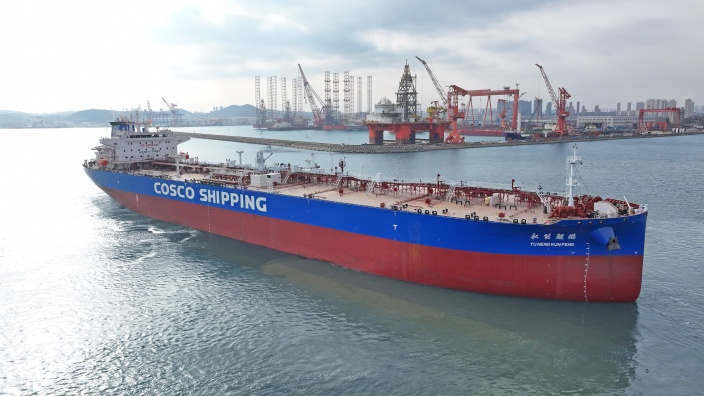
Hainan to Play a Core Role in China’s Development and the Global Economy
22:21,06-March-2026
Qionghai Boao Airport Opens 1st International Cargo Flight Route
22:21,06-March-2026
NPC deputies to deliberate key draft bills, legislative items focus on ethnic unity, environment, development planning
22:21,06-March-2026
Jingzhe (Awakening of Insects) Arrives as Nature Awakens
22:49,05-March-2026

Copyright © 2021 hiHainan.All rights reserved.琼ICP备09005000号-13
 thisishainan@163.com
Partner: Hainan College of Foreign Studies