


In Wenchang’s historic Qilou streets, 92-year-old Grandma Fu, a returned overseas Chinese, still maintains her traditional habits: enjoying a pot of coffee brought to Hainan by her relatives, eating kaya toast, and listening to a Malaysian folk song. She softly hums a Malay lullaby—a lullaby her mother used to sing her to sleep with in Penang, and that she now sings to her great-grandson born in Hainan.
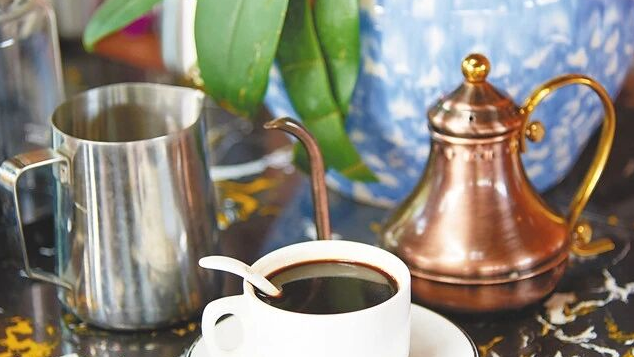
Southeast Asian style coffee. Photo: Yuan Chen, Hainan Daily
This cultural transmission from one generation to the next shows the enduring influence of southeast Asia on Hainan. As Grandma Fu says: “Our generation has two hometowns.”
There and Back Again
From the late 19th to the early 20th century, wave after wave of Hainan residents took off for different parts of southeast Asia, with nearly one-third of Hainan families having members working there at the height of the movement. These ambitious travelers brought back not only their hard-earned wages but also the living seeds of many southeast Asian cultures.
In many southeast Asia countries, ‘Little Hainan’ neighborhoods have taken root, filled with overseas Hainanese who brought the culinary customs of their hometowns abroad, and brought the lifestyles of southeast Asia back home as well. In Xinglong, Hainan, the locals speak Mandarin with a strong southeast Asian influence, and many of their words can be traced back across the South China Sea. This two-way cultural flow makes Hainan one of China’s most heavily southeast Asian influenced areas.
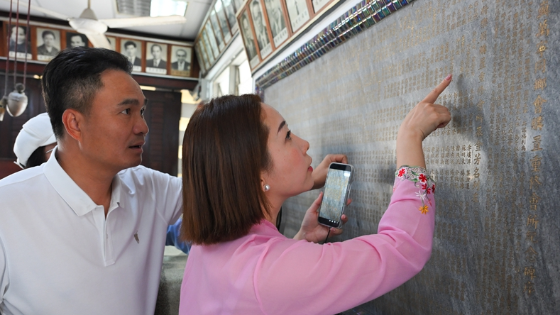
Searching for a great-grandfather’s name at the Wanning Association in Penang. Photo: Li Houqing
Interestingly, the flow of culture, like the tides of the South China Sea, has never stopped. Today, as the older generation of returned overseas Chinese begins to age, the new generation has gone abroad in search of their cultural roots. Many young people make special overseas trips to bring these disappearing cultural memories back to life.
Southeast Asian Cuisine on Hainan Dining Tables
Perhaps the clearest influence of southeast Asian culture on Hainan can be seen by taking a seat at a local island dining table.
In Hainan, in striking contrast to the tea-drinking habits of most Chinese, it’s common to start the day with a strong cup of coffee. This habit originated in southeast Asia, especially the love for black coffee, known as “gebi’ou”. While chatting at an Old Dad’s Teahouse or enjoying a quick pick-me-up at the office, this coffee-drinking habit has become a familiar part of life in Hainan. Coffee is also cultivated here on the island, grown from the descendants of the first coffee beans brought back and lovingly planted in the rich soil of Hainan years ago by overseas Chinese.
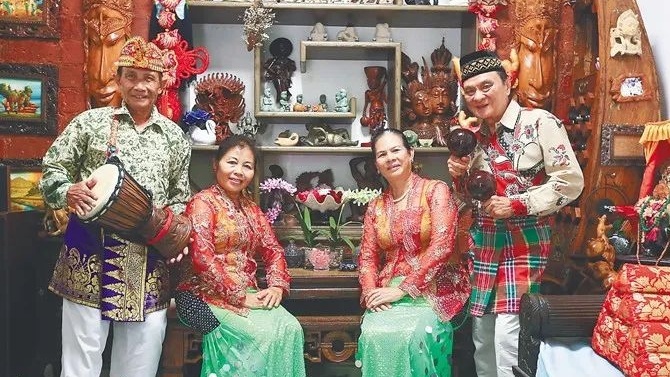
Overseas Chinese returned from Indonesia at the Xinglong Farm in Wanning. Photo: Zhang Jie, Hainan Daily
In Xinglong, Wanning, restaurants owned by descendants of overseas Chinese use traditional southeast Asian ingredients such as pandan leaves, coconut milk, lemongrass, and curry. These southeast Asian flavors blend seamlessly into locally-made seven-layer cakes, Qingbuliang dessert soup, and other popular Hainanese dishes.
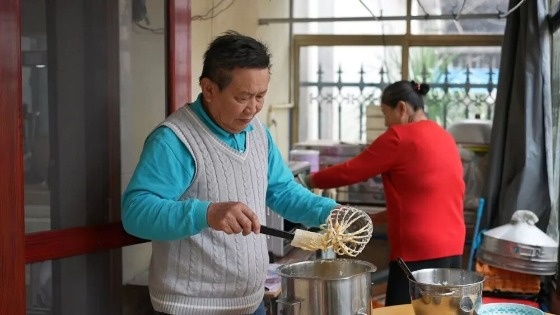
Cai Jiamei, a returned overseas Chinese from Indonesia, makes a thousand-layer cake. Photo: Li Duojiang, Xinhua
The best example of this culinary cultural fusion is Hainan Chicken Rice. This dish, honored as a ‘national dish’ of both Singapore and Malaysia, originated from Hainan’s very own Wenchang Chicken. After going abroad and getting a stylish makeover by Southeast Asian chefs, who serve it with chicken-oil rice and pandan leaves, a special dark soy sauce, and a zingy chili sauce, the beloved chicken dinner returned to Hainan, where it was heartily welcomed and given top billing in many local restaurants.
Architectural Aesthetics
Walking through Haikou’s historic Qilou streets is like stepping into the pages of a living architectural history book. Here, there are not only southern Chinese but also many visible southeast Asian influences: exquisitely decorated parapets, continuous lines of qilou arcades, louvered windows, and brightly colored facades bring to mind the streetscapes of Penang. The open-plan ground floor design follows the smart design of southeast Asian commercial ports.
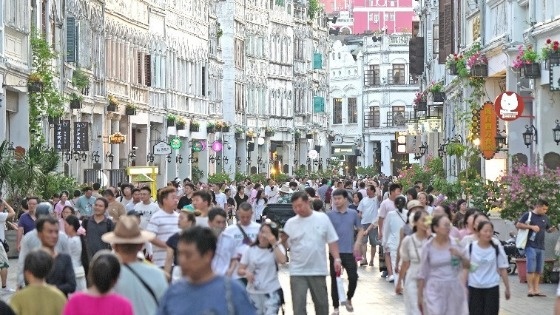
Haikou’s historic qilou streets are often full of sightseeers. Photo: Wang Chengxian
In Wenchang, the fusion is even more remarkable. Chinese couplets are inscribed on the lintels of the old houses, while the window frames are decorated with southeast Asian inspired geometric patterns. Chinese bonsai are displayed in the courtyards, while the railings feature Western-style cast iron patterns.
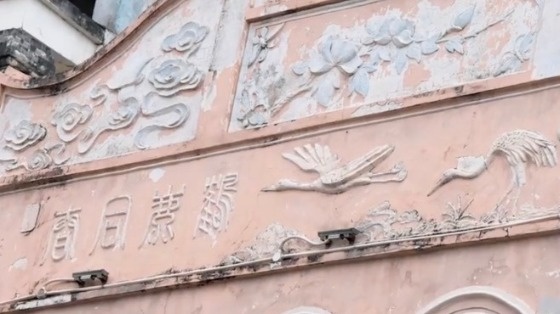
The window lintels, pillars, wall designs, lines, balconies, railings, carvings, and colorful floral patterns on the walls, parapets, arcades, colonnades, and open corridors of the qilou buildings are full of southeast Asian style while also incorporating local Hainan cultural themes. Photo: Li Hao
Even more remarkably, these structures have not only stood the test of time, but continue to function as living cultural spaces. Many of the Qilou buildings still feature shops on the ground floor, while the second levels serve as homes for returned overseas Chinese and the third as design studios. Tradition and modernity, local and international elements all coexist in harmony here.
Modern Southeast Asian Style
Today, cultural exchanges between southeast Asia and Hainan continue in new forms.
More and more educational and cooperation platforms are being established, promoting interaction between China and ASEAN countries in the academic, cultural, and media sectors. The digital age has also provided new avenues for people-to-people exchanges: many young people in Hainan learn about contemporary southeast Asian culture through social media platforms, while southeast Asians get acquainted with daily life in Hainan through the work of popular vloggers.
This connection across time and space is perhaps the most moving characteristic of southeast Asian culture: it allows Hainan to be deeply rooted in the local context while always keeping the wider world in focus.
A Continuing Dialogue
The influence of southeast Asian culture on Hainan is not a one-time, one-way, simple transfer, but a deep, wide-ranging conversation that has lasted for over a century and still continues today. These exchanges have reshaped the local cuisine, architecture, language, and lifestyle, while also subtly influencing how Hainanese people view the wider world - cherishing the island rooted forever in their hearts while also yearning for the many wonders of the distant sea.
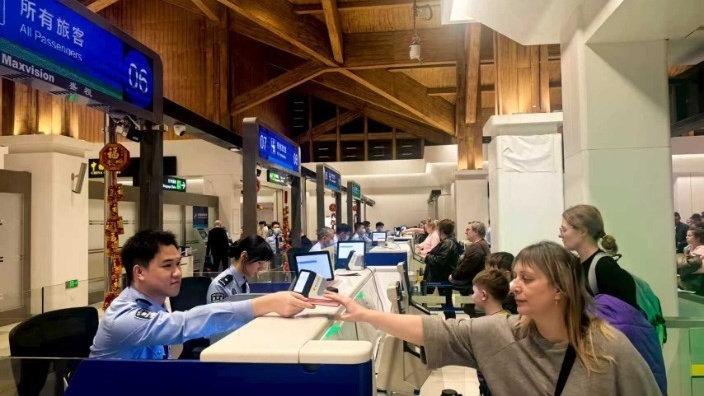
Strong Start: Hainan's Cross-Border Travel Up 31.8% in January
09:52,03-February-2026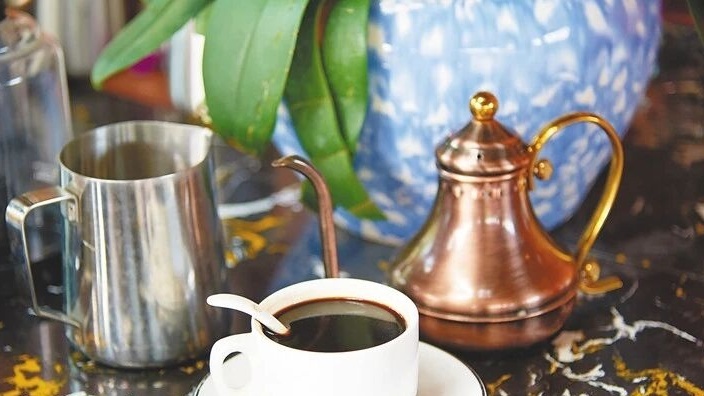
South Sea Breezes: Southeast Asian Influences on Hainan
09:52,03-February-2026
Hainan Through Culture Ep. 1: The New Year Approaches
10:15,22-January-2026
Hainan Events for Nature, Art, and Sports Enthusiasts
11:14,02-February-2026
Hainan's Sour Flavors: A Taste of Island Life in Every Bite
11:14,02-February-2026
Symbols of Luck in Hainan Folk Culture
11:14,02-February-2026

Copyright © 2021 hiHainan.All rights reserved.琼ICP备09005000号-13
 thisishainan@163.com
Partner: Hainan College of Foreign Studies