


It’s the twelfth month of the lunar calendar, and Haikou’s historic Qilou streets are already vibrant with colorful tangerines and Spring Festival couplets conveying a festive Chinese New Year atmosphere. In Hainan, as the seasons change, different symbols of luck and happiness appear, reflecting the rhythm of daily island life and the optimistic attitude of the local people.
Auspicious symbology is an integral part of life and work in Hainan. From the brightly shining lanterns and other colorful decorations of Spring Festival to the vibrant, fresh flowers of the Lantern Festival and the splish-splash of green leaves dipping into ‘dragon water’ during the Dragon Boat Festival, the magpies and flowers that decorate homes, and the well-wishes woven into each Li Brocade pattern, the tradition of planting palm trees to celebrate weddings, and holding special annual ceremonies to signal the beginning of the fishing season, there are so many ways that the Hainanese express the universal hopes for happiness, health, and prosperity.
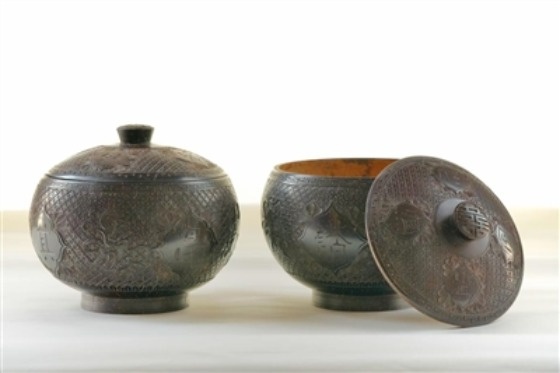
Carved coconut wedding gift containers made by Wu Mingju, a highly regarded Hainan artisan. Photo: Wang Yiyou
New Year’s Customs: Red Envelopes & Fish Lanterns
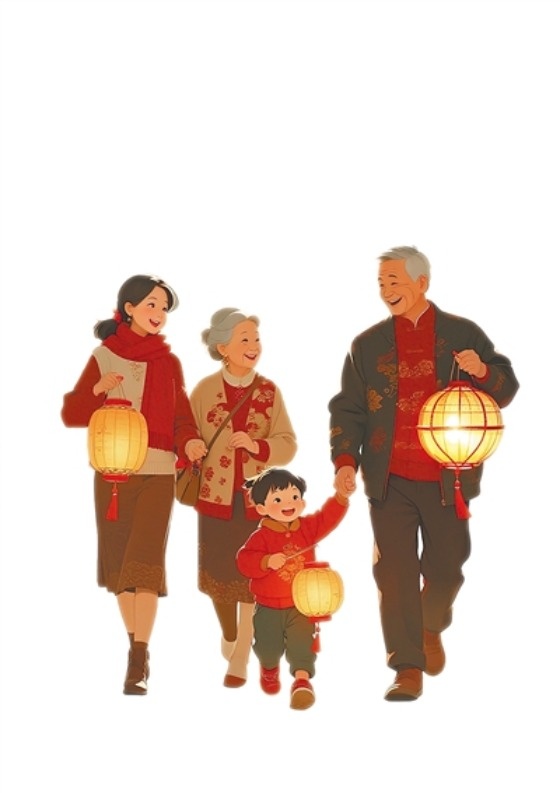
During the Spring Festival period, gold and red are the dominant colors. Every household displays tangerines, since the word ‘tangerine’ sounds similar to the word ‘lucky’ in Chinese. CNY couplets are pasted up around doorframes, lanterns are lit, and red envelopes are given away. These all feature a predominantly red and gold color scheme, adding to the holiday atmosphere. The word for the ‘lucky money’ in the red envelopes traces its origins to an ancient saying about profits from trade, and later developed into a symbol of good luck and good fortune. In Hainan, red envelopes emblazoned with words like ‘luck’, ‘wealth’, and ‘safe travels’ are also pasted onto door lintels and ancestral shrines in the hopes of warding off evil and bringing in good fortune.
In Hainan, Lantern Festival is celebrated with all kinds of different lanterns, including special lanterns shaped like frogs or fish. In Chinese, the word ‘lantern’ sounds like ‘male descendant’, symbolizing a prosperous family, and the word for ‘carp’ is a homophone of the word for ‘profit’, representing hopes for abundance year after year.
CNY Dishes: Green Onions & Cooked Garlic Take All Your Troubles Away
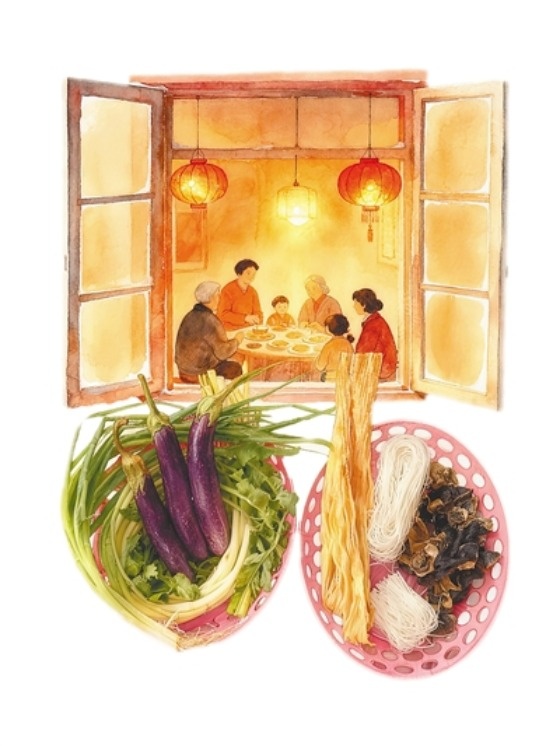
The food served at festive Hainan meals is also full of meaning. Eight-treasure rice cakes and brown sugar cakes eaten at wedding and birthday banquets symbolize a sweet life and happy family reunions. Dishes on the Spring Festival table, such as ‘white-cut’ chicken (symbolizing good fortune), fish (symbolizing abundance), water celery (symbolizing diligence), and the hodgepodge dish called ‘family reunion’ (symbolizing completeness), all embody hopes for a prosperous new year.
The veggie stew traditionally eaten on the first day of the Lunar New Year in Hainan is particularly meaningful. Many different auspicious ingredients such as ‘long thread moss’ (a homophone for ‘get rich’), dried bean curd (which sounds like ‘abundance’), and sweet treats (symbolizing a sweet life) are combined to create a dish that symbolizes a bountiful and harmonious New Year. A Hainanese folk saying about green onions and cooked garlic sounds similar to ‘prosperous and easy, no worries or troubles’ - resulting on local dishes that are not only tasty but also show an optimistic outlook on life.
Weddings: Gift Containers & Palm Trees
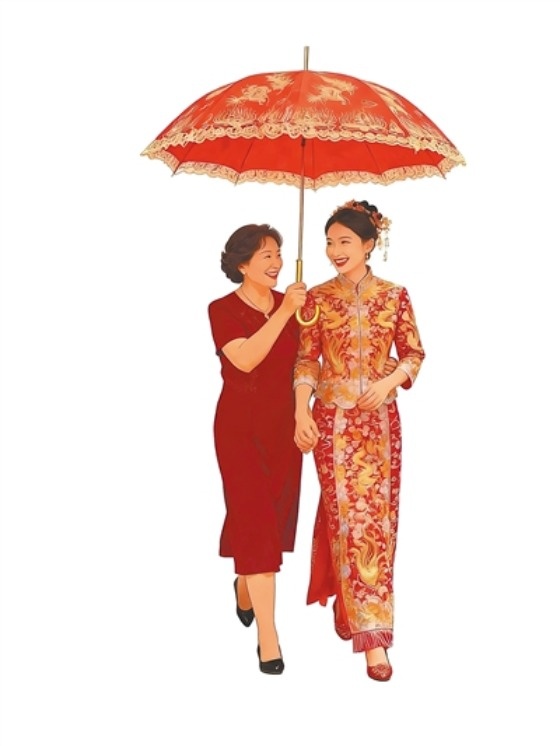
In Hainan, there are many interesting local wedding customs. The bride is escorted to the ceremony by an elder carrying a red umbrella, symbolizing protection from wind and rain and a blessed life. In some parts of Hainan, such as in Qiongzhong, there is a traditional ‘stepping over the fire’ ceremony that symbolizes protection from evil and welcoming good fortune. In north Hainan, there is a special ‘pressing the new bed’ custom that carries wishes for a loving and long-lasting marriage.
Palm trees, a symbol of the tropical province of Hainan, are also closely associated with marriage on the island. In Wenchang and other areas, newlyweds plant palm trees together, symbolizing strong love and unity. In some villages in eastern Hainan, palm leaves are used to decorate wedding venues, expressing wishes for everlasting love. In Haikou’s Yangshan District, it’s popular to carve wedding gift containers decorated with pairs of lucky patterns and words from coconut shells. The word for ‘container’ is a homophone for ‘harmony’ and ‘union’, and the coconut shell symbolizes vitality, making this gift a unique handicraft filled with blessings and wishes for family harmony and prosperity.
Fishing Villages: Boat Eyes and First Fish
During the fishing season, fishing villages along Hainan’s coasts hold ceremonies to thank the ocean for her bounty. They also adorn their boats with auspicious phrases such as ‘smooth sailing’ in hopes of safe voyages and a large catch. The first fish caught at the start of the annual fishing season is highly prized, and the tradition of auctioning them off in places like Sanya continues due to the symbolic significance of good fortune and a bountiful harvest.
Traditional wooden fishing boats are often painted with eye patterns that, according to local lore, can observe meteorological conditions and where the fish are schooling, ensuring a safe and prosperous voyage. Although these ‘boats with eyes’ are less common these days, many Hainan fishing boats still feature red bows, which symbolize hopes for good fortune.
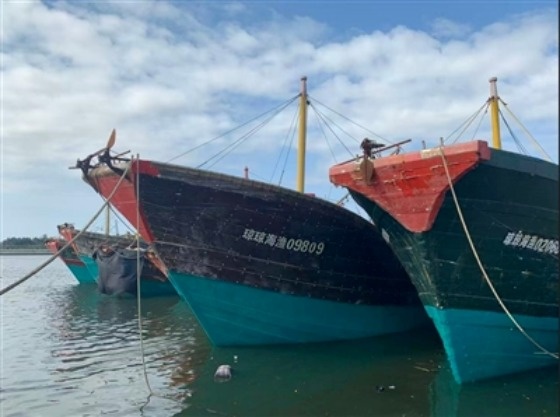
Fishing boats with red bows in Tanmen, Qionghai. Photo: Wang Yiyou
Architecture & Artifacts: The Embodiment of High Hopes
In traditional Hainanese architecture, carvings, plasterwork, and murals often employ auspicious themes such as magpies and plum blossoms (symbolizing joy), and lotus flowers and carp (symbolizing abundance year after year). These motifs appearing on lintels and beams quietly convey aspirations for wealth, peace, and longevity.
In the culture of the native Li people, the traditional patterns featured on textiles and pottery also carry deep meaning. Frogs symbolize fertility, fish represent abundance, birds are associated with love, and gourds signify peace.
These auspicious symbols that show up again and again in the details of daily life are not only an integral part of Hainan's folk culture, but also demonstrate the hard-earned wisdom of the elders and a strong emotional attachment to living in harmony with nature and creating a better life for current and future generations of island residents.
Strong Start: Hainan's Cross-Border Travel Up 31.8% in January
09:52,03-February-2026
South Sea Breezes: Southeast Asian Influences on Hainan
09:52,03-February-2026
Hainan Through Culture Ep. 1: The New Year Approaches
10:15,22-January-2026
Hainan Events for Nature, Art, and Sports Enthusiasts
11:14,02-February-2026
Hainan's Sour Flavors: A Taste of Island Life in Every Bite
11:14,02-February-2026
Symbols of Luck in Hainan Folk Culture
11:14,02-February-2026

Copyright © 2021 hiHainan.All rights reserved.琼ICP备09005000号-13
 thisishainan@163.com
Partner: Hainan College of Foreign Studies