


Of the four great incenses prized by the ancients—agarwood, sandalwood, frankincense, and musk—none were considered to surpass agarwood.
The agarwood of Hainan, in particular, is of such "crowning" quality that it has inspired prose and poetry for over a millennium. In nature, the formation of agarwood—the resinous wood of the Aquilaria sinensis tree—is induced by naturally occuring phenomena, such as bug infestations, branches snapped in the wind, and lightening strikes, as well as particular environmental conditions favorable to bacteria and fungus, that wound or infect the tree.
In response, the tree produces a sticky resin that permeates the wood, akin to how platelets form scabs to cover wounds. It is these clumps of resin-infused wood that are known as agarwood.
The various phenomena that form agarwood also shape its characteristics. In his work, On the Heavenly Incenses, Ding Wei, a prime minister of the Northern Song Dynasty, categorized agarwood into four main types according to their shape, namely: Chenxiang ("sinkwood," the densest form of agarwood derived from resin-rich heartwood, which would sink when placed in water), Zhanxiang ("half-sinkwood," a medium-grade agarwood that neither fully sinks or floats in water), Shengjie ("fresh-knot," agarwood freshly formed by a tree that is actively healing), and Shujie ("mature-knot," harvested from a dead or dying tree). The twelve shapes were given colorful names by Ding, including Chonglou ("left behind by bug infestation") and Yilou ("left behind by ant infestation), which respectively refer to the critters whose assaults on the Aquilaria tree were seen off by its resinous secretions. Wild agarwood was hard to come by in ancient times, and by the Ming Dynasty, following widespread deforestation to make way for agriculture, sourcing it was about as easy as finding a needle in a haystack.
A dearth of naturally occurring agarwood set against growing demand led to humans proactively growing Aquilaria sinensis trees from clippings and developing artificial methods for inducing resin formation—the "hot-poker piercing method," "cold-drilling method," and "hacking method." The latter, which is now the most commonly employed method, results in both the highest output and quality of agarwood.
Plant scientists have also begun developing new cultivars of Aquilaria sinensis to boost yields and incense characteristics. The agarwood produced by these "super trees" can be harvested in as little as three years, greatly shortening the production cycle.
Improved methods and varieties have led to a "democratization" of Hainan agarwood, with higher yields than ever before enabling more and more to appreciate an incense that was once worth its weight in gold.

Hundreds of Students from 25 Countries Compete – COBIS Primary Games Kicks Off at Harrow Haikou
18:30,12-March-2026
The 15th Five-Year Plan and Hainan Free Trade Port: Creating New Opportunities for Openness to Malaysia and ASEAN
18:17,10-March-2026
Thrilling Highlights from Sanya 2026 Beach Volleyball Test Event
17:32,09-March-2026
e-Polina on the Two Sessions | The Future is Now: Hainan as China's Tech "Super Engine" Proving Ground
17:32,09-March-2026
China’s Two Sessions Signal Greater Openness: Hainan Free Trade Port Opens a New Window of Opportunity for ASEAN
14:59,09-March-2026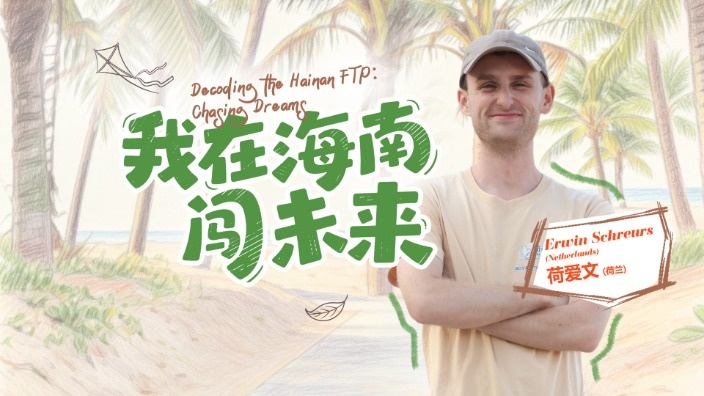
Young Dutchman Brings English Education into the Great Outdoors
08:58,08-March-2026

Copyright © 2021 hiHainan.All rights reserved.琼ICP备09005000号-13
 thisishainan@163.com
Partner: Hainan College of Foreign Studies