


On July 18, the 2026 5th Hainan Cultural and Natural Heritage Day Intangible Cultural Heritage Publicity Exhibition, themed ‘Intangible Cultural Heritage Improves Lives’, was held at the event’s main venue, the Hainan Intangible Cultural Heritage Exhibition Center. A variety of activities were held during the event, including dance performances, Li Brocade handicraft workshops, and intangible cultural heritage mystery box challenges that brought ancient arts into the present in tangible, relatable ways.
Four dances opened the day’s activities, flowing across the stage like four colorful painted scrolls. Solemn drumbeats heralded the start of the Hainan Miao Panhuang Dance. Attired in traditional costumes, the dancers swept through the first, middle, and final segments of the dance - their steady steps and solemn movements transporting the audience to the sacred atmosphere of a Miao ancestor honoring ceremony. Chen Xiuxing, a Miao Panhuang Dance heritage representative, said that “The Panhuang Dance is our ‘living scripture’, recording our history and honoring our ancestors. Every movement and beat of the drum carries a profound meaning. We hope that these performances will allow young people to learn more about the reverence these ancient movements hold.”
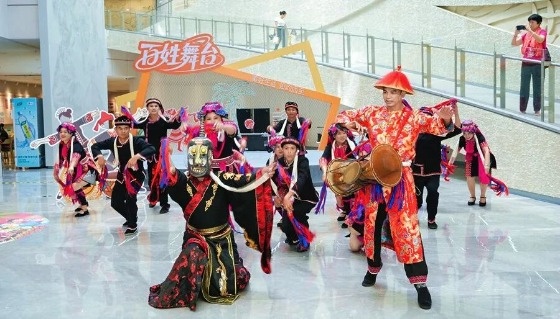
The Hainan Miao Panhuang Dance.
Then, the dance style shifted, with the Li folk dance ‘Donglingjia’ instantly captivating the onlookers with a tense combat scene. Two dancers, one wielding a stick and the other a knife, acted out fluid attacks and nimble defenses as bells rang and blades flashed, causing the audience to gasp and applaud. Next, the Wenchang Bowl and Plate Dance brought an infectious joy to the stage with a lively rhythm created by chopsticks striking porcelain dishes. In this dance, a ‘bride’ and ‘groom’ interact humorously with a clown, bringing amused laughter from the audience through their witty performance. Ms. Li, from Haikou, summed up the dance performances by saying: “From the solemnity of the ancestor honoring ceremony to the joy of the harvest, the four dances were like four paintings depicting the lives of different Hainan communities. The only way to truly appreciate the power of these intangible cultural heritage dances is to see them performed live.”
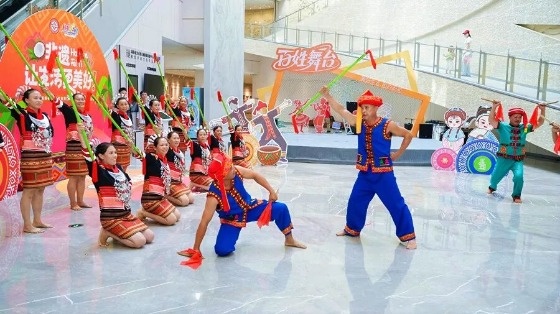
Li folk dance ‘Donglingjia’.
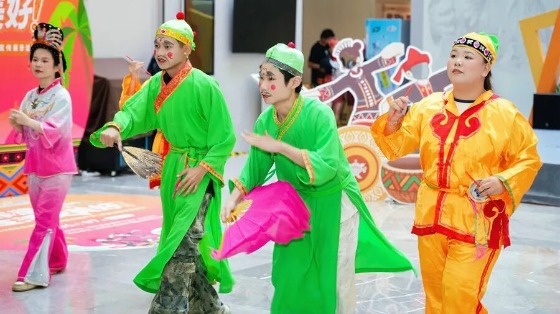
Wenchang Bowl and Plate Dance.
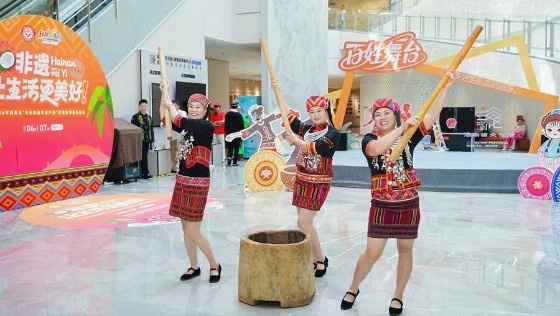
Li Rice Pounding Dance.
The beauty of these dances remains vibrant, showing the warmth of intangible cultural heritage. Fu Yingna, a Li Brocade heritage representative, held two classes that day, transforming the event into a creative workshop filled with happy laughter. The traditional textile techniques of Li Brocade have been listed by UNESCO as a Representative Intangible Cultural Heritage of Humanity. In the morning’s introductory class, Fu taught students how to use the traditional foot loom, allowing them to experience the subtle interplay of colored threads winding over and under and over again, creating brightly patterned woven cloth. What at first seemed very simple proved quite difficult to master. “Just straightening these few threads has left me in a sweat. I can’t imagine how much work it takes to create a complete Li Brocade piece,” said student Xiao Chen with a smile. When he successfully completed a small piece of smooth fabric, however, he was filled with a profound sense of accomplishment.
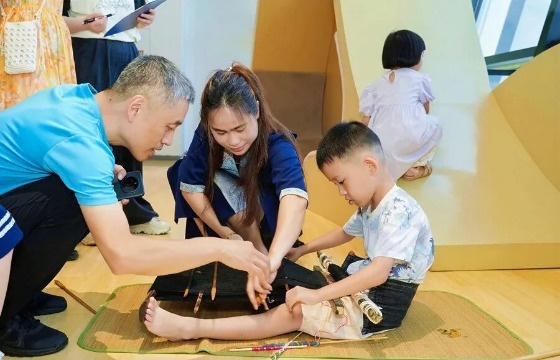
Students learned how to weave Li Brocade at the event.
The afternoon parent-child workshop was even more creative. Instructor Fu Yingna demonstrated how to incorporate beautiful Li Brocade patterns into handicrafts, creating Li Brocade refrigerator magnets from colorful fabrics, thread, and magnets. With the help of their parents, the kids carefully cut and pasted the patterns, turning traditional Li Brocade patterns such as the God of Strength, frogs, and fish into unique hand-held miniature works of art. Ms. Lin, who participated in the event along with her seven-year-old daughter, held up the fish-pattern refrigerator magnet she had just finished and exclaimed happily: “I used to think that intangible cultural heritage was far removed from daily life, but now I can put this on my refrigerator and see it every day. This is such a wonderful way to bring the art back to life!”
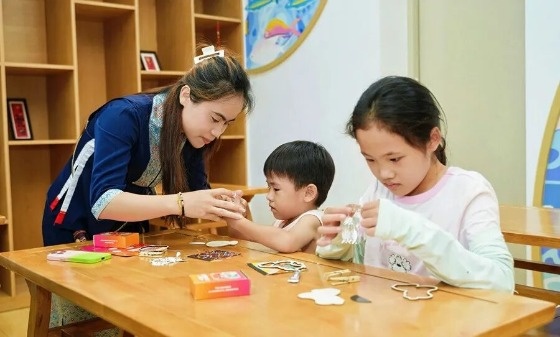
Families enjoyed the intangible cultural heritage handicraft workshop.
The Mystery Box Adventure: Intangible Cultural Heritage Exploration interactive area, which opened in the afternoon, invited participants to complete fun tasks to learn more about intangible cultural heritage. Challenges included piecing together fragmented Li Brocade patterns, answering intangible cultural heritage quiz questions, matching patterns, and participating in flash mob activities. Only by collecting all the pieces of a Li Brocade pattern could they unlock exclusive mystery boxes. Each challenge was met with cheers of happy surprise. "When was the Panhuang Dance listed as a national intangible cultural heritage art?" "In which dynasty did the Wenchang Bowl and Plate Dance originate?" These questions and answers encouraged families to work together, while the puzzles tested their eyesight and patience. Mr. Chen, who successfully completed the challenge with his 10-year-old son, remarked with excitement: "The questions and puzzles helped us learn a lot about intangible cultural heritage without even realizing it. This is much more fun than rote memorization."
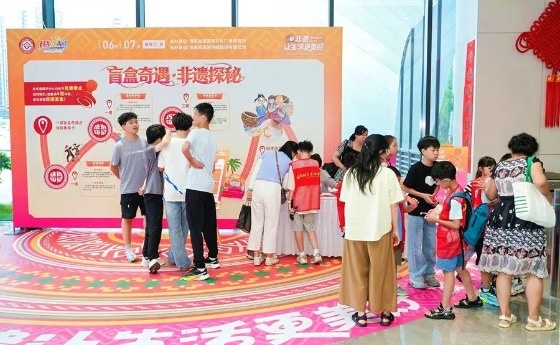
Families participated in the Mystery Box activity.
The in-person events were fun and entertaining, while the online interactions were equally exciting. An intangible cultural heritage quiz and the "Taste of Intangible Cultural Heritage: A Culinary Journey" voting event, which runs through July 18th, have already attracted a large number of participants. Many online winners made special trips to redeem their prizes, extending their online enthusiasm into real life. One winner who traveled from Chengmai to pick up a prize said happily: "The online challenges were highly entertaining, educational, and rewarding, making participation really worth my time."
From the ancient dances of Miao valley villages to magnificent musical performances on stage, this five-week-long intangible cultural heritage event brings traditional culture into modern life in a vivid, approachable manner, shining a bright light on these colorful arts that transcends both time and space.
Beachcomb Responsibly. Protect Hainan's blue sea and golden shore.
14:40,23-July-2026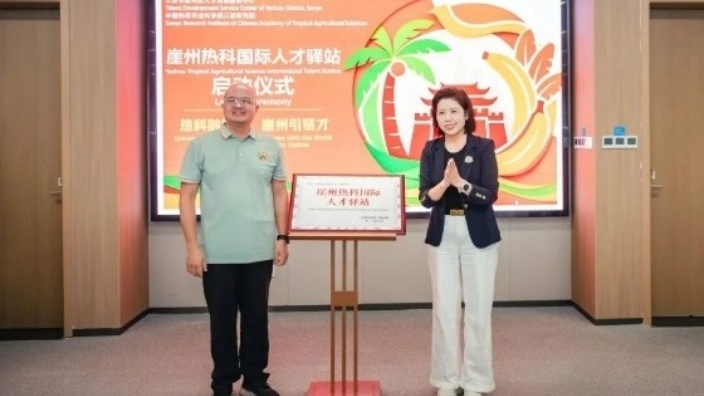
20+ Global Researchers Join Yazhou Talent Station in Sanya
14:40,23-July-2026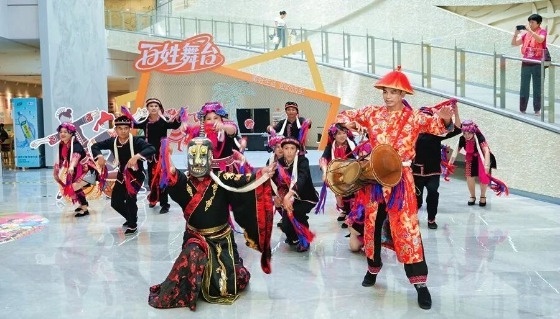
2026 Hainan Intangible Cultural Heritage Publicity Exhibition Concludes
11:13,22-July-2026
Haikou Bay Night: Hawaii Youth's First Glow
17:32,22-July-2026
Journey Across a Century with Savina| Wuzhishan
11:13,22-July-2026
Journey Across a Century with Savina| Lingshui
11:13,22-July-2026

Copyright © 2021 hiHainan.All rights reserved.琼ICP备09005000号-13
 thisishainan@163.com
Partner: Hainan College of Foreign Studies