


Qiaopi—part remittance, part letters sent by overseas Chinese—were both a lifeline for those left behind and a reassuring connection for migrants in far-flung places. In Fenghui Village, Wenchang City, more than 150 precious qiaopi letters spanning over a century of these letters have been preserved, alongside xinfengbing (lit. “envelope wafers”) baked to carry wishes for safety and care, reflecting generations of struggles and devotion among the Hainanese.
Aging Pages Reveal a Century of Longing Across Seas
On June 8, 2026, our reporter visited Fenghui, a sleepy village nestled among coconut groves. Lin Jianle, Party Branch Secretary and Director of the Village Committee, took out a stack of qiaopi from an old chest. Each letter had been carefully cataloged and preserved. The paper, worn by time, showed slightly curled edges; some pages bore traces of insect damage, and the ink had faded, yet the warmth and sense of responsibility in every word still resonated deeply.
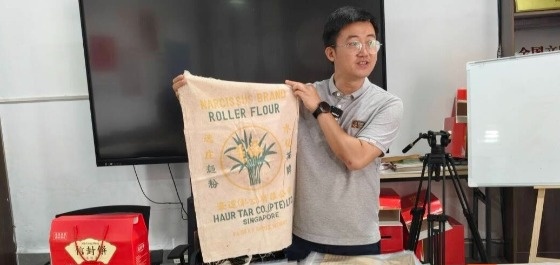
Lin Jianle, Party Branch Secretary and Director of the Village Committee, showing the qiaopi that were collected. (Photo: Wu Yuewen)
Most of these letters came from Malaysia and Singapore, spanning from the Republic of China era to the early years of the People’s Republic of China. They were discovered years ago during inspections of old, dilapidated houses in the village. By that point, the walls had begun to collapse, and their wooden structures were rotting; had the discovery been delayed, these invaluable historical records might have been lost to dust.
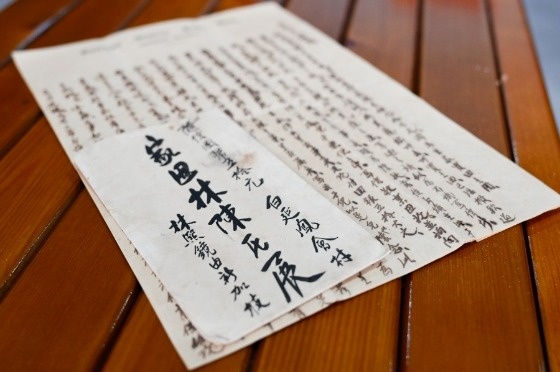
Precious qiaopi preserved in Fenghui Village.
(Photo: Li Houqing)
Qiaopi were a unique form of correspondence among overseas Chinese that combined letters home with remittance records, carrying loving sentiments and much-needed funds. In earlier times, many residents of Fenghui were forced by poverty to leave home and work in Southeast Asia. In an era of limited transportation and communication, a single letter often took months to cross the ocean, becoming the greatest hope for family members left behind.
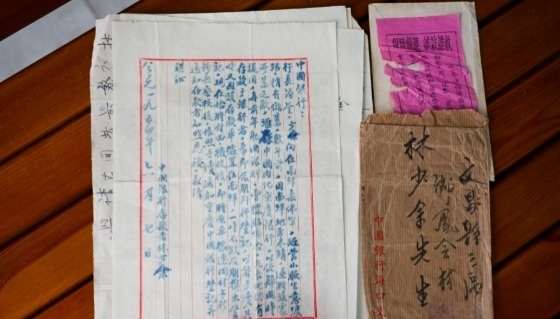
Precious qiaopi preserved in Fenghui Village.
(Photo: Li Houqing)
Reading through the letters, one finds no elaborate language—just simple, everyday words. In 1956, Lin Ziming, a Hainanese overseas Chinese in Malaysia, wrote a few lines to his elder brother, recounting the hardships of earning a living: business in Southeast Asia was poor, he was ill, yet he still managed to send fifty Hong Kong dollars home. Even in difficult circumstances, he did not forget his family. Another letter from the Republic of China period shows that Lin Xijing in Singapore was carefully saving money, sending 190 silver dollars back home with instructions for his mother to buy land and stabilize the family estate. Every penny earned far from home by these overseas Chinese was hard-won, and their families back home always came first.
“The content of most letters is simple: a greeting, a welfare update, and a note on the remittance amount and its intended purpose,” Lin Jianle reflected. Yet, behind the plain language, each letter bears witness to a generation’s sense of duty and attachment. Overseas Chinese worked diligently, lived frugally, and sent any savings immediately back home to support their families and neighbors. Hundreds of letters, hundreds of stories—these thin sheets of paper carry a weight far greater than the mountains and seas they crossed.
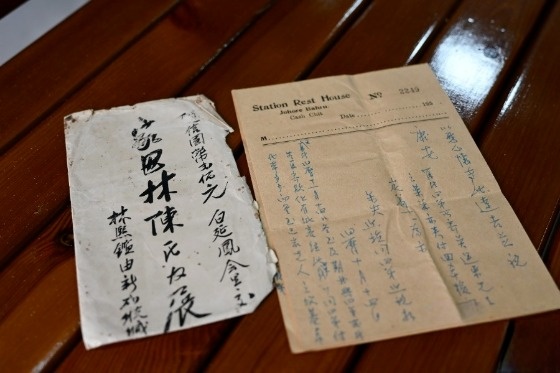
Precious qiaopi preserved in Fenghui Village. (Photo: Li Houqing)
Envelope Wafers That Provided Nourishing Reassurance
In Fenghui, qiaopi are not the only symbols of homesickness. Xinfengbing (“envelope wafers”) also carried the sentiments of overseas Chinese. For many elderly emigrants who could not read or write, putting pen to paper was impossible. Instead, they transformed their longing for home into a simple delicacy, allowing food to replace words.
The origins of these wafers are closely tied to the history of Hainanese migration to Nanyang (Southeast Asia). During the 1930s and 1940s, large numbers of Fenghui’s residents traveled to Nanyang in search of a livelihood. With communication difficult and many migrants unable to write letters, they instead used readily available ingredients, including glutinous rice, shredded coconut, and eggs, grinding them into a batter and baking it into thin wafers before folding them into envelope shapes. Kinspeople traveling home would carry them back to relatives, conveying the message: “ To see the wafer is to see the sender; to receive it is to know that all is well.”
Today, xinfengbing have become a signature festive delicacy of Wenchang’s overseas Chinese communities. During the Spring Festival, overseas Chinese often have them sent from home, savoring each bite as a comforting taste of family, memory, and enduring nostalgia.
Even today, villagers working away from home continue to send these simple snacks to family and friends, with both the flavor and the affection they represent remaining unchanged. Letters may fade with time, and wafers may eventually be eaten, but the longing for home rooted deep in people's hearts endures across generations.
Passing Down a Legacy of Giving Back
In 1965, Lin Tingqiu, from Fenghui, returned from Singapore and became a teacher in the village while also taking part in local water conservancy projects. At the time, correspondence between relatives in Southeast Asia was frequent, and many letters were written in English. As few villagers could understand the language, Lin volunteered as a translator, helping residents read and respond to letters both at home and in local teahouses.
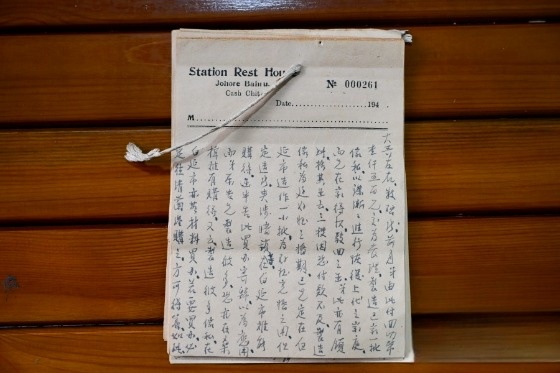
Precious qiaopi preserved in Fenghui Village.
(Photo: Li Houqing)
The spirit of giving back to one’s hometown is evident throughout Fenghui Village. In the 1920s and 1930s, overseas Chinese community leader Lin Zhaoying, who had settled in Malaysia, raised funds to build roads, improve irrigation systems, and establish schools in the village. Many of these facilities remain in use today, standing as lasting reminders of the dedication and generosity of earlier generations of overseas Chinese.
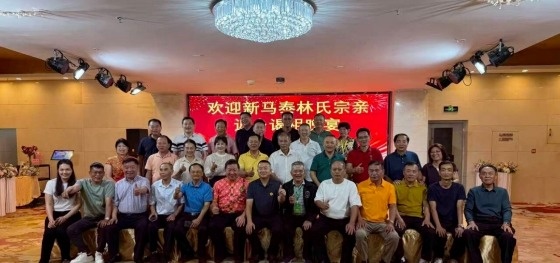
Overseas Chinese from Singapore, Malaysia, and Thailand return to Wenchang to participate in the Nanyang Cultural Festival. (Photo provided by interviewee)
Generation after generation, overseas Chinese have contributed resources to improve local infrastructure and promote development. Today, Fenghui is expanding tropical specialty agriculture, helping increase villagers’ incomes. Through e-commerce platforms, local agricultural products are reaching broader markets. The village has also developed study-tour, camping, and other rural tourism projects, creating employment opportunities close to home. While earlier generations crossed oceans in search of livelihoods, today many villagers can build prosperous lives right on their doorsteps.
Family Ties Enduring Across Time and Distance
Qiaopi may be lost, and correspondence may cease, but family bonds remain unbroken. For years, Pan Pingman, an overseas Chinese descendant, has relied on qiaopi, family genealogies, and other historical records to help overseas Chinese trace their roots. In the past two years alone, she has helped reunite more than 30 families separated by time and distance.
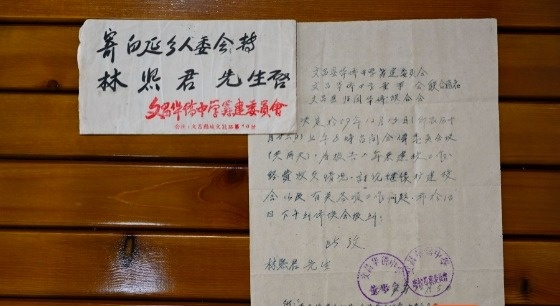
Precious qiaopi preserved in Fenghui Village. (Photo: Li Houqing)
Among the many reunion stories, that of Fan Gaofeng, a member of the Nanyang Volunteer Drivers and Mechanics Corps, is particularly moving. During the War of Resistance Against Japanese Aggression, Fan, then living in Malaysia, returned to China to support transportation efforts along the Burma Road. After the war, he returned to Southeast Asia. Despite financial hardship, he continued to support his cousin’s child through university. Over time, however, contact between the two families was lost.
Through extensive research and outreach, Pan eventually located the descendants of the family Fan had supported. Not long afterward, relatives living overseas made a special trip back to their ancestral hometown, allowing family members separated for decades to reunite and bringing a long chapter of estrangement to a heartfelt close.
“Tracing families is not just about helping people find their relatives,” Pan said. “It is also about preserving the stories of those who ventured to Nanyang and carrying forward the deep attachment overseas Chinese have to both their families and their homeland.” She believes these bonds, maintained across the miles, deserve to be passed on from generation to generation.
Revolutionary Spirit and Overseas Chinese Traditions Living On
Fenghui’s century-long history of qiaopi carries not only enduring bonds but also a legacy of revolutionary spirit. The red heritage and the devotion of the overseas Chinese community coexist and intertwine, shaping the spiritual life of generations of villagers.
Among the village’s treasured old photographs, a group portrait of young overseas Chinese from the early years of the People’s Republic of China stands out. These youths, who had been living comfortably in Southeast Asia, gave up their prosperous lives abroad to return home and contribute to the construction of New China. To pass on the spirit of overseas Chinese and the revolutionary legacy, Fenghui has curated exhibitions of qiaopi, old photographs, and stories of ancestors, sharing with younger generations the narratives of devotion and dedication to one’s hometown and country. Lin Jianle noted that qiaopi are more than mere family letters—they are spiritual vessels that reflect the Chinese nation’s solidarity and love for the homeland. Safeguarding these historical relics is, in essence, preserving the roots and soul of the overseas Chinese community.
Today, Fenghui hums with a new energy. A single qiaopi carries the weight of past hardships and longing, while a rejuvenated village answers the hopes and dreams of its forebears.
China's Cross-Region Tax Refund Recognition Expanded
18:13,16-June-2026
Hainan Sees First Import of Non-Medicinal Functional Foodstuff
21:33,15-June-2026
Hainan Launches 2026 International Tourism Promotion Ambassador Recruitment Drive – Join Us to Discover New Island Adventures
21:33,15-June-2026
Asian U18 Men's Volleyball Championship to Be Held in Haikou in July
21:33,15-June-2026
Hainan FTP Doubles Zero-Tariff Imports in Past 6 Months
18:24,12-June-2026
Two Major International Maritime Events Kick Off in Sanya, Hainan
16:37,09-June-2026

Copyright © 2021 hiHainan.All rights reserved.琼ICP备09005000号-13
 thisishainan@163.com
Partner: Hainan College of Foreign Studies