


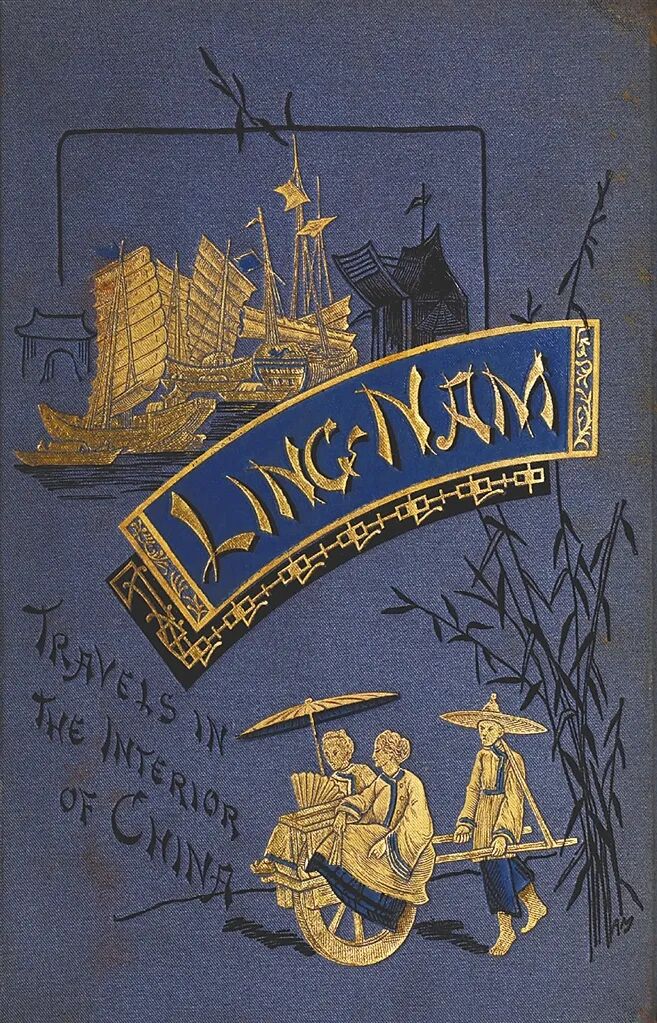
The original cover of Ling-Nam; or, Interior Views of Southern China, Including Explorations in the Hitherto Untraversed Island of Hainan. (Source: Hainan Daily)
The Qiongya Wenku (Qiongya Collection), a body of works that are considered to best represent the history, culture, geography, society, and natural environment of Hainan, has welcomed its latest addition—a Chinese translation of Ling-Nam; or, Interior Views of Southern China, Including Explorations in the Hitherto Untraversed Island of Hainan, written by American missionary Benjamin Couch Henry (1850–1901), known to history as B.C. Henry, and translated by Professor Xin Shibiao of Hainan University.
Henry arrived in China in 1873 and spent much of his time in Guangdong, where he became familiar with the local language, society, and culture. In 1886, he published Ling-Nam; or, Interior Views of Southern China, Including Explorations in the Hitherto Untraversed Island of Hainan in London.
This superbly crafted work documents Henry's first-person account of the natural environment, history, society, culture, and economy of southern China in the 19th century. It attracted attention from English-language academia almost immediately after publication and was later featured in journals such as Nature and the Proceedings of the Royal Geographical Society.
In the autumn of 1882, American missionary Benjamin Couch Henry (1850–1901), known to history as B.C. Henry, set out with companions to explore Hainan, hoping to cross the island on foot through its interior. Though the expedition did not go entirely as planned, it produced a valuable account of life in 19th-century Hainan, offering a unique historical perspective on the island's past, ethnic cultures, and natural environment.
Henry began his Hainan expedition in Haikou and traveled through Qiongshan, Chengmai, and Lingao before entering the Li communities of Baisha. He followed the Nanwan River upstream, crossed Baishi Ridge, and reached the Changhua River basin in today's Qiongzhong. Though he could not complete his planned crossing of the island, his observations provided valuable firsthand material for studying Hainan's interior in the 19th century.
His accounts of the Li people are especially significant. At the time, outside descriptions of Hainan's Li communities were often incomplete or inaccurate. Drawing on direct encounters, Henry recorded their social customs and everyday interactions, remarking on their friendliness and hospitality. His observations provided a more accurate picture of Li society and an important reference for international audiences seeking to understand Hainan's ethnic cultures.
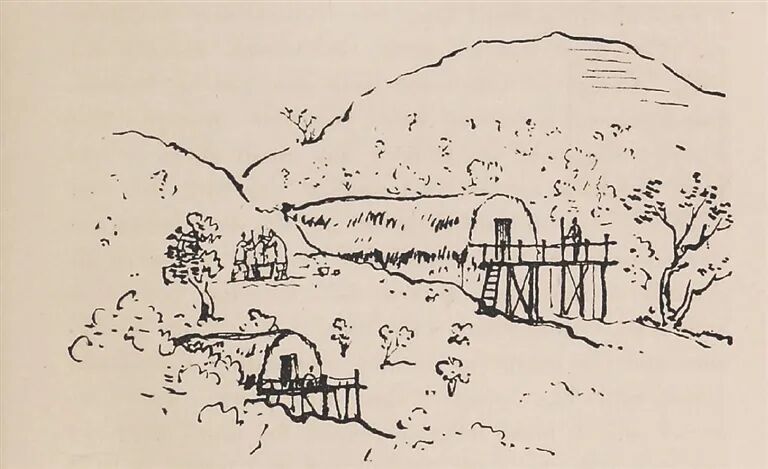
A sketch depicting daily life in a Li village, from the original edition of Ling-Nam; or, Interior Views of Southern China, Including Explorations in the Hitherto Untraversed Island of Hainan. (Source: Hainan Daily)
Beyond his interest in local communities, Henry also studied botany. Of the plant specimens he collected in Hainan's interior, 55 species were identified as new to science. He also recorded where wild large-leaf tea trees grew and how they were used, noting that they grew naturally in local forests and seemed native to the area.
More than 140 years later, Henry's records continue to inform researchers studying Hainan's ethnic cultures, natural resources, social and economic history, and international exchanges. His journey offers a view of Hainan through the eyes of an early foreign observer and provides historical material for exploring the island's cultural heritage and fostering cross-cultural understanding.
Hainan × Wicklow: The Connection Betweeen Hainan and Wicklow Has More Possibilities
20:56,10-November-2026
An American Missionary's 1882 Journey into Hainan's Interior
19:08,10-November-2026
Hainan Shares Green Transition Efforts with the World at COP31
19:06,10-November-2026
Interview with the Moroccan Ambassador to China
19:05,10-November-2026
International Rice Researchers Gather in Sanya to Cultivate New Personal Growth
19:04,10-November-2026
Where My Heart Finds a Home: Yazhou Bay in Sanya, China
19:04,10-November-2026

Copyright © 2021 hiHainan.All rights reserved.琼ICP备09005000号-13
 thisishainan@163.com
Partner: Hainan College of Foreign Studies