


Editor's Note: Marian Rosenberg, an American and one of HIMC's foreign proofreading experts, has lived in China for over 20 years and now calls Hainan home. A translator, cycling enthusiast and content creator, she runs a translation company and founded the "Hainan Foreigners" WeChat group. Through translation, storytelling and community building, Marian helps international residents bridge information gaps, navigate daily life and feel more at home in China.
With the breakneck speed of development that has taken place in China over the past 50 years, the grandchildren of people who only got their first landline telephone as adults are incapable of remembering a time without smartphones or social media. From the perspective of mature economies and mature technologies, it is hard to imagine that there are people graduating high school this year who had to deposit their smartwatch at the school gate when they were in kindergarten.
With everything from dating to shopping starting online and mostly on mobile phones, the reality of life for China’s Gen Z is a constant digital-physical interaction. The approval or disapproval of strangers online can feel just as important as that of people they know offline. That context helps explain why a small app called “Wallet Wait” has gone viral, and what it says about how young Chinese people think about money, desire and social connection.
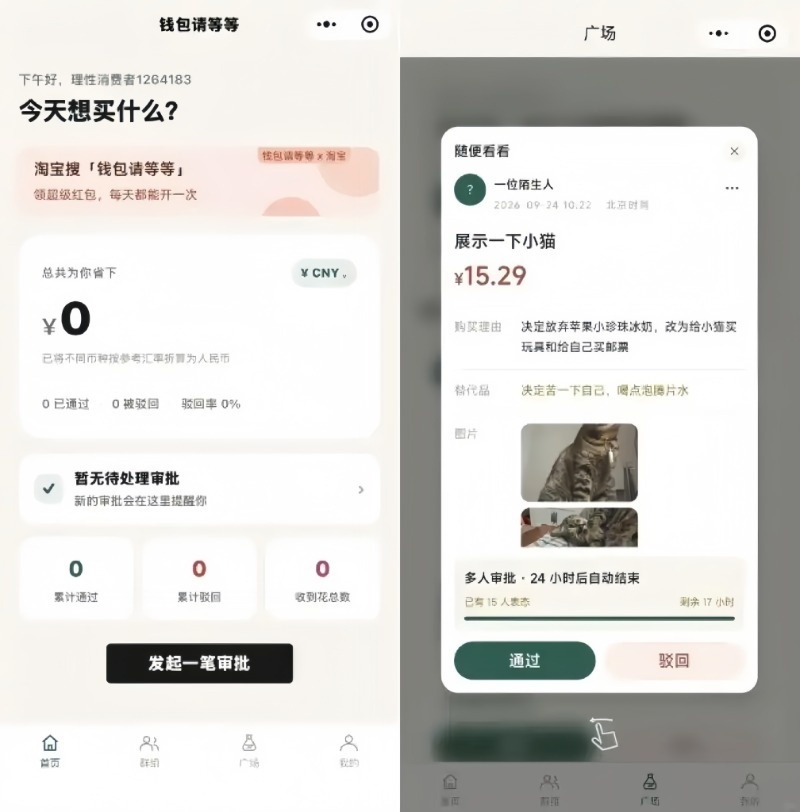
Screenshots of the Wallet Wait WeChat mini-program show its home page and public square, where users can browse and respond to spending requests. (Photo: E-Commerce Magazine)
Users anonymously upload descriptions of items they want to buy, the cost, and the reasons they feel unable or not entitled to make the purchase. Then the internet votes on whether they should go through with it. Rather than a payment tool or a crowd-funding platform, the app is closer to a public square for private dilemmas: part spending brake, part discussion forum about what is and is not worth buying.
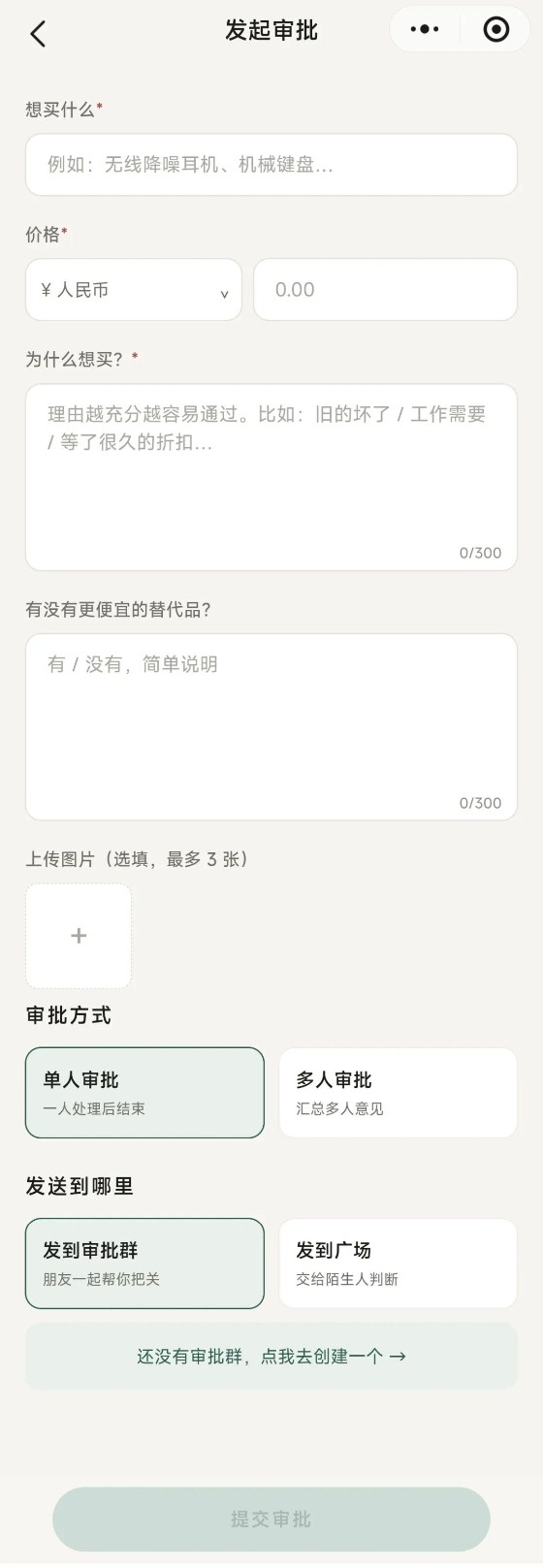
The request form asks users to list an item, its price and reasons for buying, and to choose how others may review it. (Photo: Qianjiang Evening News official WeChat account)
The origin story is one that young people anywhere can recognize. A developer born after 2000 used AI tools to move from initial concept to a live product in a little over a week—eight days, by some accounts—and within two months the app had already reached a million users.
For some readers, the surprising thing may be that young Chinese people would outsource a decision to the crowd. But nobody is forced to obey, and the point is less about permission than about conversation. Wallet Wait is a Chinese-style social media and lifestyle experiment: it turns a private moment of hesitation into a shared, anonymous, and often kind public exchange.
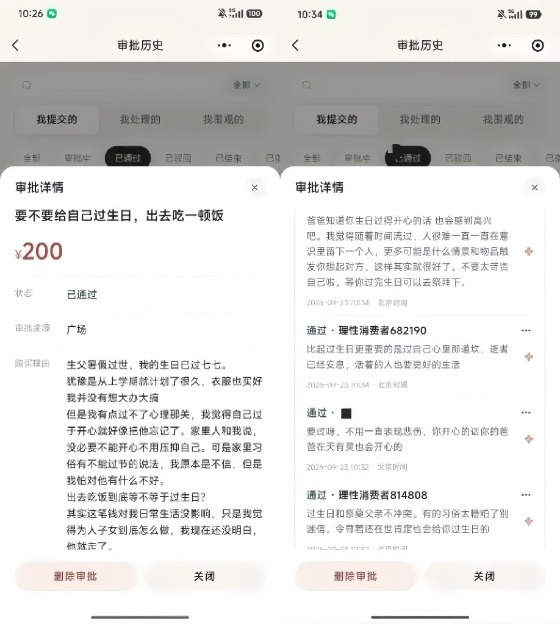
A user seeks advice about spending 200 yuan on a birthday meal after her father's death; other users leave supportive comments. (Photo: E-Commerce Magazine)
Will it stick around, or be replaced by the next Big Thing? With Double Eleven around the bend and Chinese New Year after that, its active user base will probably keep growing for at least a few months. But its real significance is not retention. Its real significance is that it gives young people a place to pause, to be heard, and to be gently advised. Even if the app disappears, the need to be heard will remain. What many young users want is not a stranger’s permission to buy something. It is permission to hesitate, and proof that someone out there is listening.

Haikou Customs Q1-3 Certificates of Origin Worth ¥10.6b, up 60% YoY
09:19,02-November-2026
Nearly 30 Hainan Specialties Featured at Haikou's Historic Qilou Old Street Food Market
09:17,02-November-2026
Should Strangers Vote on Whether You Buy It? A Chinese Social Experiment in Consumption, Loneliness and Kindness
09:17,02-November-2026
Viewing the Free Trade Port from an ASEAN Perspective
09:17,02-November-2026
Haikou Hosts Two Asia-Pacific Exchange Events Focusing on Economic and Trade Cooperation and Urban Governance
20:04,29-October-2026
Hainan Welcomes 70% YoY Rise in Malaysian Visitors in Q1-3
20:02,29-October-2026

Copyright © 2021 hiHainan.All rights reserved.琼ICP备09005000号-13
 thisishainan@163.com
Partner: Hainan College of Foreign Studies