


Recent observations along the coastal waters of Changjiang, Danzhou, Lingao, and Chengmai in Hainan Province have shown changes in water clarity and color.
Local authorities have identified this as a "red tide," or harmful algal bloom, a recurring marine ecological phenomenon currently classified at a Level III alert level.
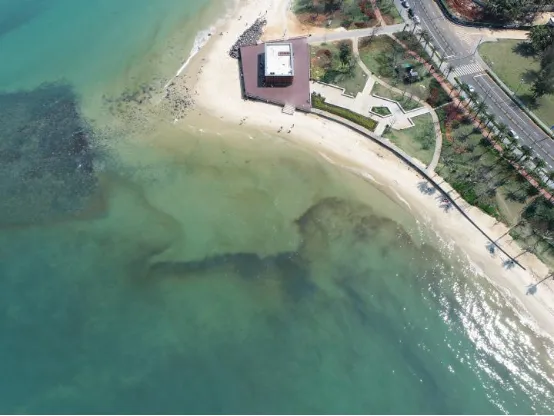
The bloom was first detected on June 25 and, as of this report, has persisted for three days, covering a maximum area of approximately 187 square kilometers. Several nearshore aquaculture zones have been affected.
Preliminary Scientific Assessment
According to marine biologists from Jinan University, the bloom is preliminarily believed to be mainly caused by a dinoflagellate belonging to the genus Cochlodinium. The organism is taxonomically related to Pheopolykrikos hartmannii, the species initially suspected by provincial monitoring authorities. Both belong to the order Gymnodiniales within the phylum Dinoflagellata.
Researchers note that the organism involved in the current event appears to differ from previously documented red tide species reported in Chinese coastal waters, and further laboratory tests are underway to confirm the exact identity of the species.
Ecological Impact and Mitigation
Although toxins produced by the bloom are highly toxic to fish, marine experts emphasize that there is currently no evidence that these toxins bioaccumulate through the food chain to levels that pose a public health risk. Aquatic products that have passed routine food safety inspections remain safe for consumption.
The rapid proliferation of the algae has caused a drastic decline in dissolved oxygen levels in the affected waters, leading to the suffocation and death of fish in local mariculture enclosures. Teams have been rapidly mobilized to remove the deceased marine life and ensure harmless disposal.
Emergency Response
To mitigate the environmental and economic impact, Hainan has implemented a comprehensive surveillance network made up of remote satellite sensors, drones, and water-quality monitoring stations.
Local authorities are providing disaster prevention guidance to aquaculture farmers, and strict safety inspections are being carried out on aquatic products from the affected regions.
What Exactly Is a Red Tide?
Despite its name, a red tide does not necessarily turn seawater red.
Scientifically referred to as a harmful algal bloom, a red tide occurs when microscopic marine algae multiply rapidly under favorable environmental conditions, disrupting the ecological balance of coastal waters.
The color of affected seawater varies depending on the dominant algal species and may appear reddish, brown, yellowish, green, or unusually turbid, rather than bright red.
Hainan's coastal waters are particularly susceptible during summer, when high sea surface temperatures, relatively calm conditions, and nutrient-rich nearshore waters provide favorable conditions for algal growth. June through August is considered the province's peak season for harmful algal blooms.
Why Are Harmful Algal Blooms So Damaging?
Harmful algal blooms can affect marine ecosystems through several mechanisms:
Oxygen depletion: Dense algal populations consume dissolved oxygen, particularly at night and during decomposition, leading to hypoxic conditions that can suffocate fish and other marine organisms.
Toxin production: Certain algal species release toxins capable of killing marine life. Some toxins may accumulate in shellfish, although current monitoring indicates this is not the case for the dominant species involved in the present event.
Ecosystem disruption: Extensive algal mats reduce light penetration, impair photosynthesis in submerged vegetation, and disturb marine food webs, with ecological recovery often taking considerable time.
Public Safety Guidance
Authorities advise that the public may continue to visit unaffected beaches and coastal recreational areas.
However, people should avoid entering waters visibly affected by the bloom and should not collect or consume dead fish, shellfish, or other marine organisms found along the shoreline.
Seafood purchased through licensed supermarkets and regulated seafood markets remains safe, as Hainan has intensified routine testing and prohibited the sale of aquatic products failing food safety standards.
Consumers are nevertheless advised not to purchase or eat wild-caught seafood of unknown origin from affected coastal waters, since harmful algal toxins, where present, are generally heat-stable and cannot be completely eliminated through cooking or washing.
How to Recognize an Affected Area
Marine experts recommend avoiding coastal waters exhibiting one or more of the following characteristics:
Noticeable discoloration, including brown, yellowish, green or unusually turbid water.
Dense surface foam or gelatinous floating material.
Large numbers of dead fish, shrimp, or shellfish washing ashore.
An unusual fishy or foul odor.
Chinese Film My Ma'an Ling Screens in Africa, with Morocco as First Stop
10:30,01-July-2026
Four Hainan Athletes Named to China's Roster for 2026 Asian Games
22:33,30-June-2026
World's 1st Epidermolysis Bullosa Therapy Administered in China
22:33,30-June-2026
Red Tides: Understanding the Recent Marine Phenomenon in Hainan
22:36,30-June-2026
A Loyal Heart Across the Blue Sea - the Tale of Lady Xian
08:53,29-June-2026
Huang Daopo: A Thread Through Time
08:53,29-June-2026

Copyright © 2021 hiHainan.All rights reserved.琼ICP备09005000号-13
 thisishainan@163.com
Partner: Hainan College of Foreign Studies