


EDITOR'S NOTE
Hainan is China's gateway to the world. As a key engine driving the nation's high-standard institutional opening-up, the Hainan Free Trade Port is fast becoming a premier destination for global capital and talent.
Marking the six-month milestone of Hainan's island-wide special customs operations, Hainan Daily Press Group — through the ASEAN liaison office run by its international communications arm, Hainan International Media Center — has partnered with Malaysia's Star Media Group Berhad and Nanyang Siang Pau to launch two joint interview series: "New Land and Sea Opportunities: Invest in Hainan Free Trade Port" and "Nanyang Siang Pau Spotlight: Eyes on Opportunities in China's Largest Free Trade Port." These programs bring together ASEAN scholars, institutional investors, and corporate leaders to demystify the port's core policies, competitive industries, and investment prospects.
The consensus across these diverse voices is striking: under the Free Trade Port's policy framework, Hainan is transforming from blueprint into reality as a high-standard open zone oriented toward ASEAN and connected to the global economy. This is demonstrated by the fact that many ASEAN enterprises have already adjusted their strategies to seize the first-mover advantage.
Since the launch of island-wide special customs operations on December 18, 2025, the Hainan Free Trade Port has completed its first six months of full-scale development.
At the 100-day mark, Nanyang Siang Pau and Hainan Daily Press Group jointly released a survey report on ASEAN enterprises' investment intentions in Hainan, drawing widespread attention at home and abroad.
Now, at the half-year juncture, the two partners revisit the subject with a follow-up video series titled "Nanyang Siang Pau Spotlight: Eyes on Opportunities in China's Largest Free Trade Port," launched on June 18. In it, interviewees analyze Hainan's growth potential and investment opportunities for ASEAN companies, offering concrete recommendations on how to turn interest into action.
A Historic Entry Point to China
Driven by sustained reform and opening-up, Hainan is rapidly evolving from a traditional tourism island into one of China's most open economies.
Economists interviewed say ASEAN, as Hainan's immediate neighbor, cannot afford to overlook the historic opportunity to access the Chinese market through the island.
"For Hainan, the convergence of policy incentives represents a golden window over the next decade. Companies should take Hainan seriously and fully leverage this ten-year policy advantage."
— Chen Bo, Senior Research Fellow, East Asian Institute, National University of Singapore
“In the six months since special customs operations began, Hainan has seen rapid growth in foreign trade-registered enterprises, with particularly noteworthy developments in the high-end manufacturing sector.”
— Dr. Saizi Xiao, Professor of Politics, International Relations and Economics, University of Nottingham Malaysia
Dr. Xiao identifies high-end manufacturing and processing — including chip packaging and testing, premium food processing, aircraft maintenance, green energy, medical devices, and biopharmaceuticals — as the sectors most likely to benefit.
"Tourism will certainly remain a pillar of Hainan's economic growth. But for greater expansion, the island needs to identify new growth drivers and build additional pillars."
— Chen Bo, East Asian Institute, NUS
Dr. Chen points to five emerging industries: medical and wellness tourism, biopharmaceuticals, high value-added industries, high-tech sectors such as commercial rocket launches and AI data services, tropical agriculture, and deep-sea technology.
Hainan: ASEAN's Springboard into China
Located at China's southernmost tip and a stone’s throw away from ASEAN nations across the Beibu Gulf, Hainan offers a natural geographic advantage. 21 Asia-Pacific countries are accessible lie within the island’s four-hour flight radius, making it an ideal springboard for ASEAN companies entering the Chinese market.
Dr. Xiao notes that Hainan differs significantly from other coastal free trade zones in China, which focus primarily on finance, international trade, and shipping. Hainan, by contrast, encompasses multiple industries and applies zero-tariff policies across the entire island.
"Hainan also has the advantage of being an international tourism destination. With 106 million domestic and international visitors in 2025, it is an excellent testing ground. Foreign investors can test the waters at relatively low cost before scaling into the mainland and global markets."
— Dr. Saizi Xiao, University of Nottingham Malaysia
"Hainan's current open-door policies are its greatest strength. Southeast Asian companies looking to use Hainan as a springboard into the mainland must conduct thorough field research and pay close attention to the specific incentives available to them."
— Chen Bo, East Asian Institute, NUS
Do Your Homework First
The previous survey report, "ASEAN Enterprises' Willingness to Invest in Hainan Against the Backdrop of Special Customs Operations," identified foreign exchange settlement as one of the top concerns for foreign investors.
To address this, Hainan has introduced the multi-functional free trade account system — known as EF (Electronic Fence) accounts — designed to facilitate seamless cross-border fund transfers between onshore entities in Hainan and overseas accounts.
"With the exception of specific securities businesses, virtually all other transactions can be conducted smoothly through EF accounts without prior approval or quota limits. By the end of 2025, 11 banks in Hainan had launched EF account services, enabling fund flows with 91 countries and regions."
— Dr. Saizi Xiao, University of Nottingham Malaysia
"As more success stories emerge, ASEAN businesses' confidence in Hainan's financial system will continue to grow, and cross-border capital flows will become increasingly smooth."
— Dr. Ronald Pua Eng Teck, Secretary-General, ASEAN-China Economic and Trade Promotion Association; Industry Commentator, Nanyang Siang Pau
Highlighting this historic opportunity, economists and market observers advise ASEAN enterprises to conduct thorough internal assessments before making decisions. If the Chinese market is part of their future growth strategy, they should enter Hainan early while the policy dividends are still running hot.
"The key assessment criterion is industry fit. If your business falls within the encouraged categories — high-end manufacturing, technology, aircraft maintenance, food processing, green energy, medical devices, or biopharmaceuticals — the time to act is now."
— Dr. Saizi Xiao, University of Nottingham Malaysia
Transparent Rules, Controllable Risks
In the past, foreign companies' biggest fear was "incomprehensible rules." Today, Hainan offers transparent regulations and manageable risks.
"Every country in the world is courting investment, but the Hainan Free Trade Port is sending out remarkably clear policy signals. Policy transparency is what makes business costs predictable."
— Dr. Ronald Pua Eng Teck, ASEAN-China Economic and Trade Promotion Association
Dr. Neil Foo, Executive Advisor to the Hainan Association of Malaysia, observes that an increasing number of people in his circle are adding Hainan to their travel and business tour itineraries.
"Companies want to know what institutional frameworks Hainan offers to enable them to land feet-first. Certain sectors can move first — particularly professional services such as legal, accounting, and investment consulting. I recommend that companies establish an early presence and actively seek local partners."
— Dr. Neil Foo , Executive Advisor, Hainan Association of Malaysia
Weighing Costs, Policy, and Talent
From wait-and-see to understanding, then to assessment and entry — the logic driving ASEAN investment in Hainan is undergoing a fundamental shift.
ASEAN business representatives interviewed generally agree that the Hainan Free Trade Port holds considerable promise. However, for companies considering setting up operations or regional headquarters there, the bottom line comes down to three questions: Are costs reasonable? Are policies stable? Is talent available?
"A thriving economy requires diverse talent and services. For Hainan to attract Singaporean and ASEAN companies and professionals, it needs at least two or three leading enterprises or industries to serve as anchors."
— Ang Yuit, President, Association of Small and Medium Enterprises Singapore
He reveals that Singaporean companies already invested in Hainan tend to be of considerable scale, primarily in architecture and infrastructure — such as housing construction and industrial parks.
"For Hainan Free Trade Port to attract ASEAN companies, it needs to provide more policy information in local languages across these countries."
— Kla Tangsuwan, Chief Executive Officer, WiseSight, Thailand
"Under the 'first-line' liberalization policy of the Hainan Free Trade Port, Asian business communities are eager to explore the opportunities. If the Hainan government can provide one-stop services covering visas, contracts, and regulations during investment promotion, it would be far more attractive to ASEAN merchants."
— Dr. Ben Li, Honorary President, Cambodia Chinese Chamber of Commerce; Chairman, CI Capital; Group CFO, Hong Kong Kam Ngai Group
An Open Ecosystem Builds Investor Confidence
Even before the half-year mark, many ASEAN enterprises had already made their move.
OSIM International, a Singaporean wellness brand with deep roots in the Chinese market, opened its first directly operated store in Hainan in 2021. In 2025, leveraging Free Trade Port policies, the company expanded the store's footprint and saw sales nearly double.
"It's clear that Hainan Free Trade Port represents a new level of openness for China. It is building a more efficient, more internationalized business ecosystem."
— Patrick Cai, Head of Brand Management, OSIM International (China)
"Since special customs operations began, Hainan's business environment has become increasingly open, with markedly improved international convenience and market vitality. That gives us greater confidence."
— Patrick Cai, OSIM International
He adds that OSIM plans to increase investment in Haikou, Sanya, and Wanning over the next two to three years.
Collaboration in healthcare is equally robust. Dato' Sri Cheah Su Tong, Executive Director of KL Wellness City, reveals that he joined a Nanyang Siang Pau delegation to Hainan in November 2024. "We learned that Boao Lecheng International Medical Tourism Pilot Zone is the only such zone in China approved at the national level. Its development direction aligns closely with KL Wellness City's vision. We signed a strategic medical partnership agreement in July 2025."
"The Free Trade Port’s policies signal Hainan's further opening-up, giving overseas companies the opportunity to participate in China's new wave of development and market growth."
— Dato' Sri Cheah Su Tong, Executive Director, KL Wellness City
From watching to wading right in, from concept to reality — six months into island-wide special customs operations, the Hainan Free Trade Port is attracting a growing number of ASEAN enterprises through its transparent rules and controllable risks. As the interviewees agreed: so long as firms conduct a thorough internal assessment and identify the right industry fit, this dynamic island will serve as a golden hub connecting China and ASEAN.
Episode 1: Island-Wide Special Customs Operation Transformation – From Window to Gateway
Episode 2: Institutional Stability – From Experiment to Reassurance
Episode 3: Efficiency Evolution – From Barriers to Dividends
Episode 4: Capital Connectivity – From Flow to Circulation
Episode 5: The Gateway of Perception – From Seeing to Seizing
Episode 6: The Momentum of Win-Win – From Connection to Integration

Norwegian Company Eyes Hainan Factory to Tap 30% Value-Added Policy
17:59,18-June-2026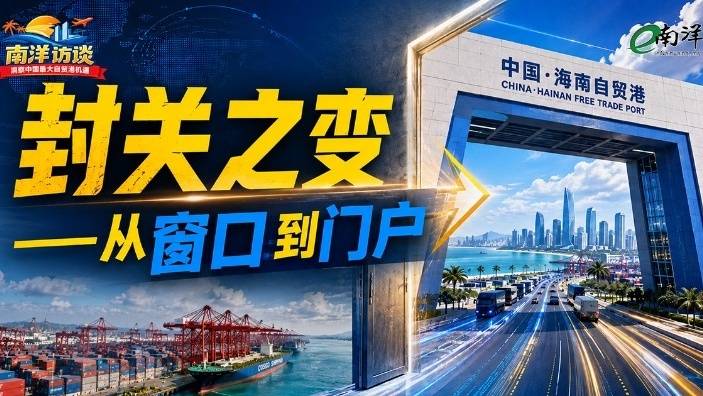
ASEAN Taps New Opportunities in China's Opening-Up
21:16,17-June-2026
Hainan: Where the World Converges
23:14,17-June-2026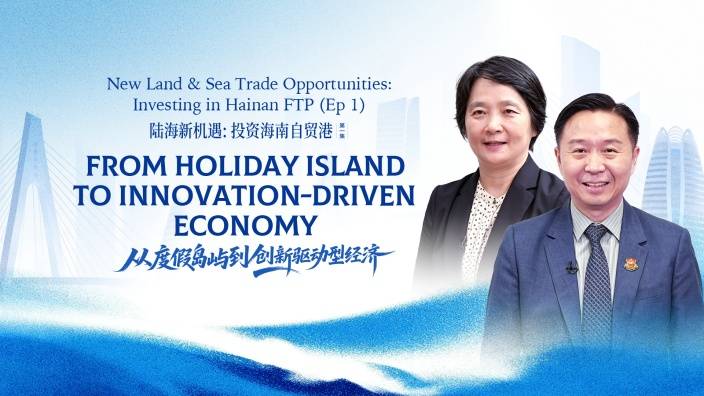
Star Media Group and Hainan International Media Center Launch Major Video Interview Series Tracking Transformation of China's Flagship Free Trade Port
21:08,17-June-2026
Hainan Fresh Leopard Coral Grouper Exported to U.S. for the First Time
23:14,17-June-2026
The Long Way Home: A Dutch Adoptee's Search for Her Roots
23:14,17-June-2026

Copyright © 2021 hiHainan.All rights reserved.琼ICP备09005000号-13
 thisishainan@163.com
Partner: Hainan College of Foreign Studies