


Haikou, December 18, 2025
On a warm afternoon touched by lakeside breezes, the Hainan Science and Technology Museum officially opened its doors to the public, and with it, a new chapter of experiential learning and cultural exploration began in the heart of China's southern island province. People who had booked their free visit to the museum through the official account or by scanning the museum's QR code, queued eagerly outside the sweeping, fluid-shaped entrance, sunlight glinting off the distinctive façade. Children played beside gleaming sculptures of turtles and coconuts, their laughter rising above the waters of the surrounding lake. My own children, energized by the festive atmosphere, ran from one interactive display to another, eager to explore every corner of the five-story museum. This was no ordinary museum launch. It was a celebration of curiosity, scientific imagination, and a bold architectural vision that seamlessly blends science, nature, and innovation.


Visitors engage with interactive science displays at the Hainan Science and Technology Museum on December 18, 2025. (Photo: Eva Molaro)
A Building Inspired by Clouds and Rainforests
The design of what my son still calls the "Typhoon Museum", definitely feels like an invitation to wonder. Conceived by MAD Architects, led by Ma Yansong, the Hainan Science and Technology Museum rises on Haikou's west coast with a form inspired by cloud formations and the surrounding monsoon rainforest. Unlike traditional museum structures, its silhouette appears to float above the landscape, a biomorphic shape that evokes an "updraft" of warm tropical air rising from the earth. The exterior curtain wall is crafted from fiberglass-reinforced plastic (FRP) panels designed to withstand Hainan’s humid, rainy climate while reflecting the light in shimmering, living hues. From afar, the building looks almost alive, as if a cloud formed from imagination itself has descended into the city.

The Hainan Science and Technology Museum on December 18, 2025. (Photo: Eva Molaro)
This architectural ambition, to create a structure that is both futuristic and in dialogue with its natural environment, was at the heart of MAD's vision. Ma Yansong and his team deliberately sought to merge nature and technology, encouraging visitors not just to learn about science, but to feel its presence in the landscape and in the spaces that surround them. This new cultural venue is a museum of immersive learning for all ages. Stepping inside, the museum unfolds its narrative of engagement and discovery across five floors, each dedicated to a specific theme, which visitors can explore through immersive experiences and hands-on activities, transforming into engaged scientist and curious explorers, and learning about discoveries and prominent scientific figures through very detailed and accessible bilingual displays.

A little visitor admires the sciece-themed children art exhibition held on the ground floor of the museum. (Photo: Eva Molaro)
Ground Floor: Welcome, Wonder, and First Encounters
The museum begins on the first floor, a vibrant gathering space buzzing with energy. Here, visitors were greeted with welcome performances and science experiment demonstrations, including a 5D screen display that delighted visitors of all ages. A concurrent children art exhibition added another layer of emotional engagement, blending imagination with scientific themes. Not all areas on this floor are open yet, but staff member Huang, a representative from the museum's PR department, told me that cultural tourism gadgets and souvenirs are in development, and more services and entertainment options will be available next year, including interactive workshops and themed events.
Second Floor: Light, Sound, and AI
On the second floor, the hall called Curious World houses exhibits devoted to light and sound, electromagnetic forces, and artificial intelligence invited visitors to hands-on experimentation. Here, my son realized a small dream of his: playing Chinese chess against a robot, watching the machine's calculated responses with both awe and competitive fire. Elsewhere, visitors engaged with displays illustrating sound vibrations, air dynamics, shadows, and magnetic forces, all through accessible tools designed to make complex scientific principles intuitive and fun.
Third Floor: Tropical Lands and Natural Forces
The third floor is dedicated to Tropical Land Exploration, a series of exhibition halls where visitors can explore the volcanic origins of the island, animal evolution, Tropical fauna and flora and even enter a Natural Disaster Experience Room, where groups of 10 people can experience a Typhoon or an Earthquake under safe, supervised conditions. Here children can also engage in interactive games involving Tropical Forest animals and enter an immersive forest room, where one feels really surrounded by a tropical forest changing from day to night, from season to season.
Fourth Floor: Oceans and Deep Time
The fourth floor broadened the lens from land to sea and deep time. Exhibits here explored the underwater world, deep sea exploration, the evolution of Earth's landscape, and the intricate interconnectedness of life. An especially striking installation was a globe surrounded by a circular dial, allowing visitors to shift the representation of continents and oceans to different geological eras. Set the dial to "Jurassic," and the globe reshapes itself, showing the world as it was 150 million years ago, a powerful reminder of Earth’s ever-changing form and the endurance of life amidst shifting landscapes.
Fifth Floor: The Final Frontier
The fifth floor brought us beyond Earth entirely, into the realm of space exploration. Visitors could walk through an immersive lunar soil exhibition, walk through a realistic space station environment, and join a VR journey to Mars. Displays delved into the mysteries of the cosmos, from the physics of black holes to the technology that makes space travel possible. It was one of those moments when you could see in the eyes of both children and adults a spark of something bigger than curiosity, a sense of possibility and dreams of future discoveries.
A Notable Exhibit: Agriculture and Human Innovation
A thoughtful exhibit dedicated to rice crops and agriculture offered visitors a grounding counterpoint to high tech. Here, visitors learn about the origins of staple foods, and the scientific research that enabled modern agricultural systems, including China's long history of innovation in rice cultivation. It was a timely reminder that science is not just about rockets and robots, but about understanding the fundamental systems that sustain human life.
Human Moments in a High-Tech Space
It would be incomplete to describe the museum solely through its exhibitions. What made the day unforgettable were the human interactions, from a security guard, fluent in English, who kindly offered my children bottled water from his own stash, to the museum staff leader whose warmth and fairness guided crowd flow with grace and calm. Even the uniforms worn by staff incorporated Li ethnic cultural elements, a subtle and meaningful gesture celebrating the diversity of Hainan's local heritage. Such details remind visitors that science and technology are ultimately human endeavors, rooted as much in kindness and cultural identity as they are in data and discovery.
A Museum for Hainan, and for the World
The Hainan Science and Technology Museum is more than a building. It is a living, breathing invitation to discover, imagine, and explore — for families, students, scientists, and wanderers alike. Its architecture bridges environment and innovation; its galleries bridge knowledge and wonder; and its spirit bridges generations. As my children and I left — still chattering excitedly about robot opponents and simulated storms — it was clear that this museum will not just educate. It will inspire, and in an age where curiosity is one of humanity's greatest engines, that is precisely what a science museum need to do.
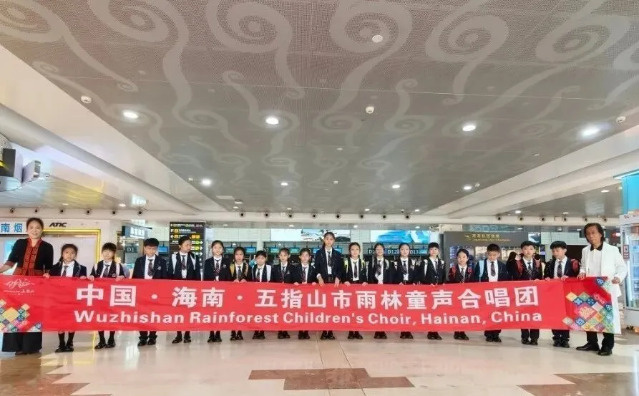
Children’s Choir from Wuzhishan, Hainan Departs for Cultural Exchange Events in Italy
18:18,21-May-2026
Hainan has become an important gateway for Polish companies to enter the Chinese market
18:18,21-May-2026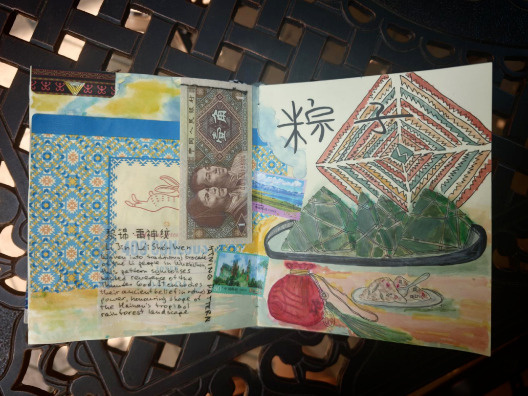
Inspired by Li Brocade - Stories from Around the Globe ①: Human Geography Connects Cultures
18:18,21-May-2026
Haikou-Jakarta Route to Expand to Six Weekly Flights from June 6
18:18,21-May-2026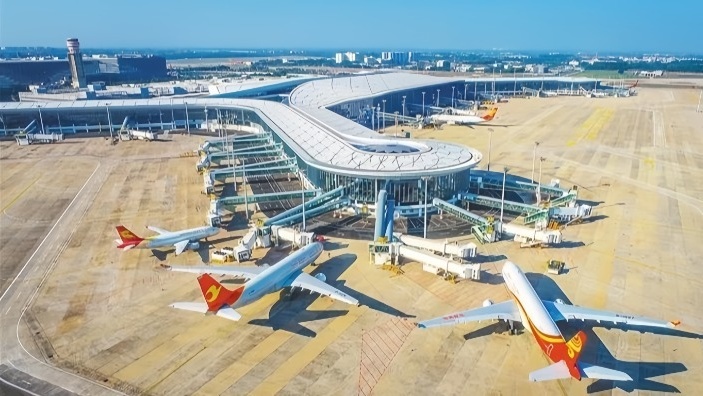
Hainan Optimizes Online Approval for Outbound Transport Repairs
18:18,21-May-2026
Bringing Hainan’s Intangible Cultural Heritage Out of the Mountains and Onto the Global Stage II
18:18,21-May-2026

Copyright © 2021 hiHainan.All rights reserved.琼ICP备09005000号-13
 thisishainan@163.com
Partner: Hainan College of Foreign Studies