


Following the launch of the island-wide special customs operations of the Hainan Free Trade Port (FTP), how can Hainan seize this window of opportunity to transform policy advantages into industrial advantages? How can enterprises maximize policy incentives to reduce costs, increase efficiency, and upgrade their industries? In this episode of Expert Talks on the FTP, we sit down with Professor Liu Yuanchun, President of Shanghai University of Finance and Economics. He believes that developing the Hainan FTP is a crucial cornerstone in building China's new development paradigm, creating a “corridor effect” that will provide fresh momentum for both domestic and international dual circulation. He stated that after special customs operations commence, Hainan needs to realign its industries, leveraging its policy dividends to enhance its competitive strengths, to accelerate the establishment of a modern industrial system that plays to Hainan’s strengths.
Island-wide special customs operations bring new momentum into domestic and international dual circulation
Wang Si (W): You've been following the development of the Hainan FTP closely. What changes have impressed you the most during this visit to Hainan?
Liu Yuanchun (L): First, from top to bottom, Hainan has been bustling with all-round preparations for the FTP, showcasing a vibrant and fresh atmosphere across the whole island. Second, in recent years, Hainan has made significant progress in various fields, including industrial development, technological innovation, and fundamental research, all of which are centered on opening up. This highlights the province's tremendous development potential and growing capabilities.
W: In the proposals for the 15th Five-Year Plan adopted at the Fourth Plenary Session of the 20th CPC Central Committee, it was emphasized to “build the Hainan Free Trade Port with high standards.” What's your take on this?
L: This indicates that building the Hainan FTP is a national strategy. It's not a short-term measure, but rather a project that will steer China's development into a new stage in the coming years, serving in particular as a centerpiece of high-standard opening-up during the 15th Five-Year Plan period. And this initiative isn't just about Hainan; it's also a fundamental cornerstone in building China's new development paradigm.
At present, as China integrates with the world, we face a global economy lacking momentum, rising anti-globalization sentiment, and heightened geopolitical tensions. By leveraging the Hainan FTP as a special customs zone to fully engage with the world, we can effectively capitalize on its role as a cooperating channel. Additionally, China's domestic circulation needs a new impetus. As we further integrate into globalization, we must highlight the new competitive capabilities we've developed through industrial upgrading and technological innovation. Therefore, the launch of island-wide special customs operations will serve as a new strategic bridge both domestically and internationally, creating fresh momentum to elevate dual circulation further.
Leveraging policy to integrate resources and build globally competitive enterprises
W: Special tax arrangements are a key safeguard in the development of the Hainan FTP. Hainan's FTP tax policies differ significantly from those in other free trade zones in China. In your view, what aspects of the Hainan FTP's fiscal and tax system design, such as its “zero tariffs” and low tax rates, make it unique?
L: First, broadly speaking, a free trade port is a higher stage than a free trade zone, a brand-new platform for more comprehensive opening-up built on the FTZ framework. Accordingly, we see that for “zero tariffs,” Hainan adopts a negative list approach. Most FTZs also use negative lists, but theirs are very long, whereas Hainan FTP's negative list is much shorter. The second crucial feature is its low tax rates, especially the “dual 15%” income tax cap policy. This indicates that the Hainan FTP is not merely an “upgraded version” of earlier free trade zones.
W: The Hainan FTP has policies such as the “import tariff exemption policy for products with no less than 30% added value after processing.” How will policies like this impact the way companies structure their global value chains?
L: China has long and complete industrial chains, and its market is both deep and broad, which provides an excellent foundation for the processing trade. This allows industries around the globe that carry out advanced processing in China while enjoying tax advantages to converge in the Hainan FTP, creating integrated innovation and economies of scale. Looking ahead, Hainan will integrate across the entire processing trade chain, linking both domestic and international industrial chains, to achieve deep integration and all-round development.
W: How can enterprises maximize policy dividends to reduce costs, boost efficiency, and upgrade their industries?
L: Many companies can consolidate their resources within the FTP, thereby saving costs. Enterprises can leverage advanced technologies, capital, and talent from both domestic and international sources to form new combinations, achieving improvements across the board in technological capabilities, capital utilization models, and talent level. Naturally, this will also expand their scale and elevate their governance standards, leading to the emergence of globally competitive companies.
Creating a "chemical reaction" between policy and industry for new competitive advantages
W: Once the Hainan FTP officially launches island-wide special customs operations, how should Hainan seize this window of opportunity to convert policy advantages into industrial advantages and speed up the creation of a modern industrial system with unique characteristics and strengths?
L: First and foremost, Hainan should thoroughly integrate its existing industries so that, in the short term, its policies and incumbent industries can produce a “chemical reaction.” Furthermore, it must leverage China’s vast market and unique competitive advantages across global industrial, supply, innovation, and talent chains. By “grafting” policy dividends onto these strengths, Hainan can establish a new platform that showcases China and facilitates the dual circulation of domestic and international markets, thereby creating new competitive advantages for the Hainan FTP.
W: What advantages does the Hainan FTP have in attracting and utilizing foreign investment?
L: First, in terms of investment facilitation, streamlining various procedures has dramatically reduced the administrative and time costs of establishing a new enterprise in Hainan. Second, through a range of tax reductions and exemptions, Hainan substantially reduces costs for investors. Third, the FTP has introduced many innovations in capital financing methods and funds settlement/exchange. Notably, it has transformed the FT account system into an Electronic Fence Account (EF Account) system, further facilitating capital flows for foreign investment. It has also implemented mechanisms such as QDLP (Qualified Domestic Limited Partner) and QFLP (Qualified Foreign Limited Partner) to provide greater convenience for financial investments, particularly in capital markets. These conveniences are not available in other parts of the Chinese mainland, and they help achieve economies of scale, further reducing financing costs, while also enabling international capital to gather in Hainan.
“Investing in Hainan is investing in the future.” Here, you can find technologies, talent, and financing resources that are all geared toward the future.
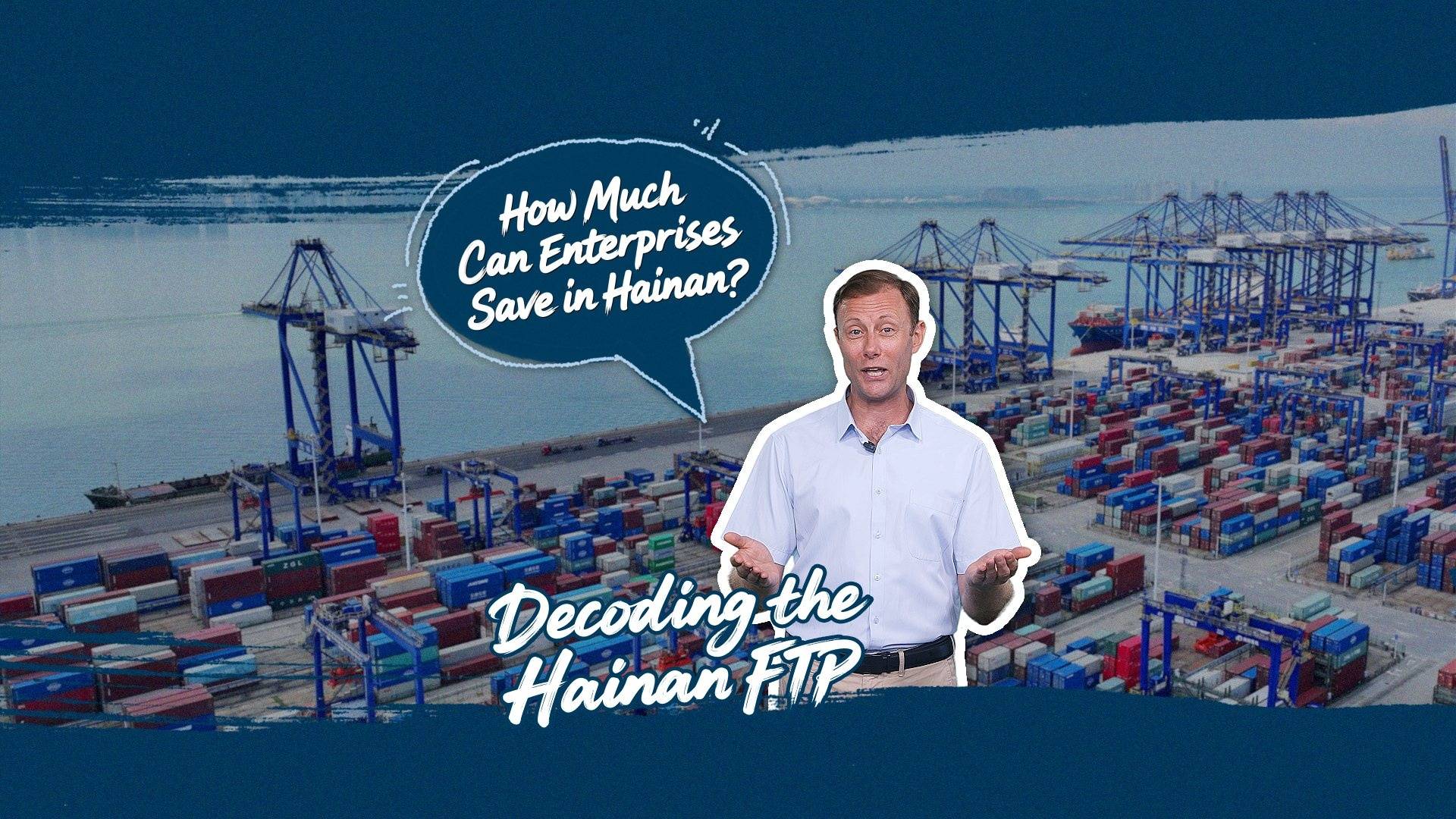
Decoding the Hainan FTP: How Much Can Enterprises Save in Hainan?
16:34,17-December-2025
Expert Talks: Hainan FTP—A Cornerstone for China's New Growth
16:34,17-December-2025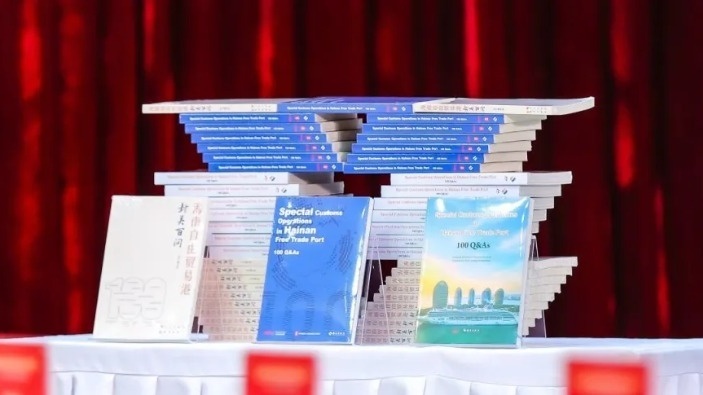
New Hainan FTP Special Customs Operations Q&A Book Published
17:26,16-December-2025
Decoding the Hainan FTP: Chasing Dreams E2 | The Dual Life of an American Youth in Chengmai
22:31,15-December-2025
Cold-Weather Vehicle Testing Launches Heihe onto Global Stage
10:13,15-December-2025
Decoding the Hainan FTP: How do international goods get through customs efficiently?
18:08,12-December-2025

Copyright © 2021 hiHainan.All rights reserved.琼ICP备09005000号-13
 thisishainan@163.com
Partner: Hainan College of Foreign Studies